The changing dynamics of the society in Bangladesh since the fall of the Sheikh Hasina government has gone a long way in disrupting these cultural ties between the Bengalis of the two countries, writes Dr Sakariya Kareem
From the legacy of poet laureate Rabindra Nath Tagore to literature, cinema and culinary habits, the cultural heritage of Bangladeshis has much in common with that of the Bengali-speaking Indians. The changing dynamics of the society in Bangladesh since the fall of the Sheikh Hasina government has gone a long way in disrupting these cultural ties between the Bengalis of the two countries.
During the rule of Mohammed Yunus, an axe had fallen on the legacy of Tagore; even at the cost of the loss of a rich heritage of Bangladesh. Under the current Bangladesh Nationalist Party government led by Prime Minister Tarique Rahman there is an attempt to rebuild these ties with India.
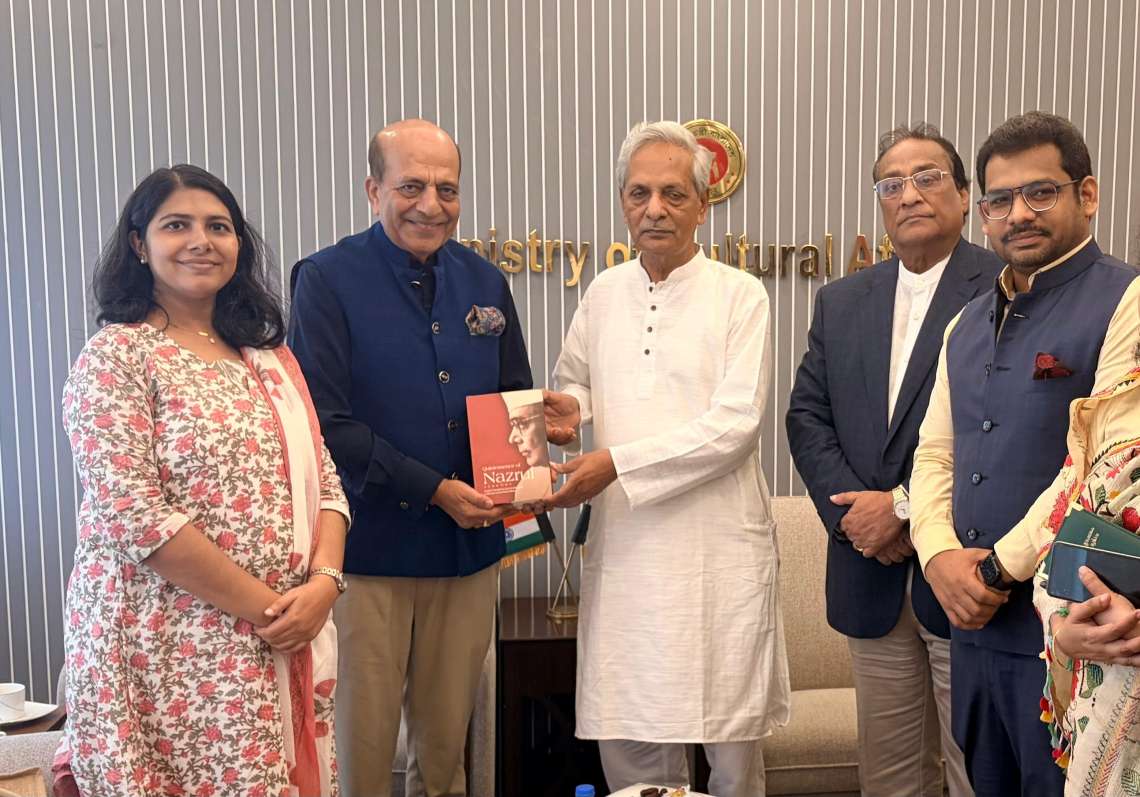
India too has made attempts at their revival. Indian High Commissioner in Bangladesh Dinesh Trivedi has lately taken the initiative to meet with Cultural Affairs Minister of Bangladesh Nitai Roy Chowdhury to discuss ways of Indian participation in a year-long celebration in Bangladesh of the birth anniversary of poet Kazi Nazrul Islam.
Born in 1899 in the Burdwan district, now in the Indian state of West Bengal, Nazrul was like a cultural bridge between the two Bengals. The poet was given citizenship of Bangladesh in 1972 and declared the national poet of Bangladesh.
Rabindranath has the unique distinction that two of his compositions have been chosen as the national anthems of two different countries: India and Bangladesh. An objection had been raised from Jamaat-e-Islami, which was one of the key forces for the downfall of Sheikh Hasina government in 2024, that Tagore’s composition ‘Amar Sonar Bangla Ami Tomae Bhalobasi …’ was not suitable to be the national anthem of Bangladesh, that it was imposed by India in 1971 and reflected the colonial past of the country. The criticism that Tagore’s Bengali is “Sanskritised” and a reflection of his “Hinduness” was the result of trying to view culture through the prism of politics and religion.
But the national anthem issue was not the only assault on Tagore’s legacy during the Yunus regime. On June 10, 2025, ‘Kacharibari,’ the ancestral home of Tagore and his favourite place for writing in the Sirajganj district of Bangladesh, was vandalised. A mob broke into ‘Kacharibari’ and broke everything they could lay their hands on.
The authorities in Bangladesh have tried to save the situation. Mohammed Yunus had not succumbed to pressure by agreeing to change the national anthem of Bangladesh; nor has the Tarique Rahman government encouraged the idea. After the vandalism at ‘Kacharibari’ the Cultural Affairs Ministry of Bangladesh had explained that no artefact or structure associated with Rabindranath Tagore was damaged. There was no political or communal motive behind the attack and security had been reinforced at ‘Kacharibari.’
These attacks on the legacy of Tagore were a measure of the changing public sentiment in Bangladesh in the wake of radical changes in the political spectrum of the country after Sheikh Hasina’s departure. The Islamist Jamaat-e-Islami branded Tagore as a mascot of the previous Awami League government and his composition ‘Amar Sonar Bangla’ an important symbol of the secularist traditions of Bangladesh.
The partition of India in 1947 and the requirements of passport and visa for cross-border travel to East Pakistan could not snap the cultural links between the two Bengals anchored on literary traditions of people like Tagore and Nazrul. The cultural bond between Bangladesh and the Indian state of West Bengal was cemented further by the language movement in East Pakistan that finally led to the formation of Bangladesh in 1971.
When Urdu was declared the sole state language of Pakistan, leading to the language movement of 1952, Bengalis of East Pakistan found support and solidarity from the Bengali-speaking Indians. It was an assertion of cross-border cultural identity. Later in 1971, during the independence movement of Bangladesh, people of West Bengal extended to the people across the border political support too.
After the formation of Bangladesh, the cultural links through language, literature and music were strengthened. Shared festivals like ‘Poila Boishakh,’ the Bengali New Year’s Day, had strengthened these links. Authors and publishers from Bangladesh started participating in a big way in the Kolkata International Book Fair.
The change of regime in Bangladesh in 2024 was, in a way, the negation of the values that had led to the liberation struggle of Bangladesh in 1971. As Sheikh Hasina left for Delhi, statues of Father of the Nation Sheikh Mujibur Rahman were vandalised. Several liberation war memorials were attacked. In an attempt to erase the legacy of the liberation war, in February 2025 the house of Sheikh Mujib was ransacked, set on fire and demolished. During the tenure of the interim government led by Mohammed Yunus, anti-India rhetoric too flourished.
The attacks on the memories of the liberation movement no doubt had the tacit blessing of the interim government, but these were also a measure of how the common people of Bangladesh were rejecting the ideals of the liberation war. This had its unavoidable effect on the cultural bond between people of Bangladesh and the Bengali-speaking Indians. Since 2024, cultural exchanges between the two Bengals have dwindled. Publishers, film producers and festive organisers are no longer planning cross-border projects. The divisions of faith and borders have divided people as well.
The severance of cultural ties has been marked in the field of literature. The Bangladesh section of the Kolkata Book Fair was initiated in 1996 with about 15 stalls and expanded to about 50 stalls by the beginning of the last decade. Bangladesh was the theme of the Kolkata Book Fair in 1999 when Sheikh Hasina as Prime Minister attended the fair. In 2022, too, in celebration of the birth centenary of Sheikh Mujibur Rahman and the golden jubilee of the independence of Bangladesh, the focal theme of the Kolkata Book Fair was Bangladesh.
Since the 1990s, West Bengal, too, had been participating in the ‘Amar Ekushey Grantha Mela,’ the book fair in Dhaka; with leading publishers from Kolkata sending delegates.
Not in 2025 though. For the first time in 30 years, Bangladesh did not figure in the list of participating countries in the Kolkata International Book Fair. Since 1996, Bangladesh had participated in every edition of the annual event. The participation of West Bengal, too, was muted in Ekushey 2025. That the common people of the two Bengals have accepted this vacuum in the respective book fairs is a measure of the growing mental divide.
The UNESCO-recognised ‘Mangal Shobhajatra’ that was being held in Dhaka since 1990 to celebrate the Bengali New Year Day is now known as ‘Baishakhi Shobhajatra;’ allegedly under fundamentalist pressure. Islamist clerics have argued that ‘Mangal’ is a term too close to Hindu culture. The participation of Bengalis from India in the event has gone down. The vibrant collaboration between the two countries in the field of cinema has come to a halt.
The silver lining is that the new BNP government is taking the initiative for the revival of these cultural ties.