China used the World Economic Forum in Davos to warn against protectionism and unilateralism, as Vice-Premier He Lifeng urged global cooperation, free trade and dialogue…reports Asian Lite News
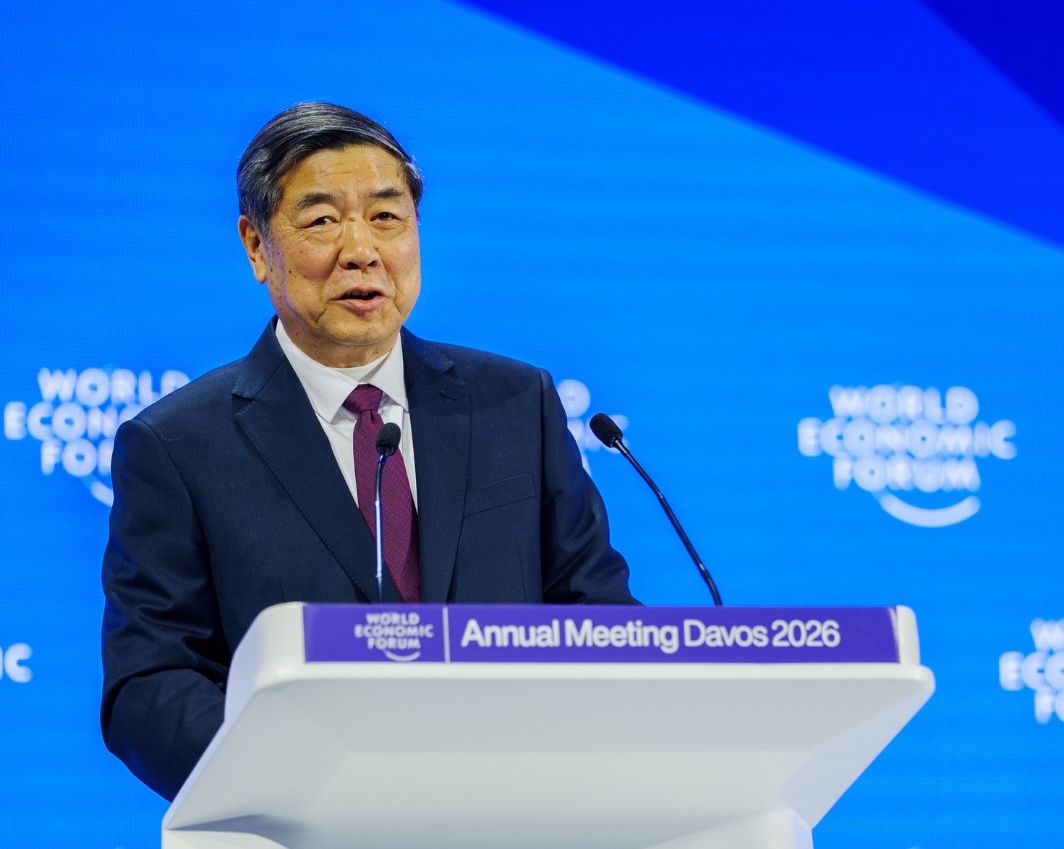
China delivered a forceful defence of free trade, multilateralism and dialogue at the World Economic Forum in Davos on Tuesday, as Vice-Premier He Lifeng warned against a return to what he described as the “law of the jungle” in global affairs. His comments were closely watched by European policymakers and business leaders grappling with growing uncertainty in transatlantic relations and a more confrontational stance from Washington.
Speaking at the annual meeting of the World Economic Forum in Davos, He said global rules must apply equally to all countries, cautioning against unilateral actions driven by narrow national interests. “Everyone should be equal before the rules; a very small number of countries should not enjoy the privilege of pursuing their own selfish interests. The world must not return to the law of the jungle, where the strong prey on the weak,” he said.
He framed his remarks against what he described as accelerating global changes “unseen in a century”, urging the international community to uphold free trade, defend multilateralism and resolve disputes through cooperation and dialogue. He also underlined the importance of stable relations between major powers, particularly China and the United States, saying that cooperation benefited both sides while confrontation harmed them.

He reiterated that China and the US should support each other’s success and pursue shared prosperity, striking a conciliatory tone even as political and economic frictions between Washington and several of its partners intensified. The message was aimed as much at Europe as at the US, with Beijing seeking to present itself as a defender of open markets at a time of rising protectionism.
Turning to China’s domestic economy, He acknowledged that average consumption levels in China still lag behind those of developed economies. He said Beijing remained committed to boosting domestic demand and raising incomes, while further opening China’s market to high-quality foreign goods. Weak demand for imports, contrasted with China’s strong export performance, has become a sensitive issue in China’s economic relations with Europe and other trading partners.
China recorded a trade surplus of $1.19 trillion in 2025, despite a sharp fall in exports to the US. Exports were redirected towards Europe, Latin America and Southeast Asia, fuelling concern in some capitals about trade imbalances. China’s surplus with the European Union reached $291.7 billion in 2025, up 18.08 per cent year on year. Its surplus with Germany more than doubled to $25.4 billion.

Addressing these concerns, He said China was not seeking persistent trade surpluses and was willing to become “the world’s market” as well as its factory. He added that responsibility for imbalances did not rest solely with China, arguing that growing tendencies to frame economic and trade issues in terms of national security sometimes prevented China from buying what it wanted from abroad. “China is willing to leverage the advantages of its vast market, further expand imports, strengthen win-win industrial cooperation, and enable all countries to better share in the opportunities created by China’s development,” he said.
He also rejected accusations that China’s economic performance was driven by state subsidies, saying its achievements stemmed from innovation, reform and opening up. The comments were clearly directed at critics in Europe and the US who have accused Beijing of distorting global markets through industrial policy.
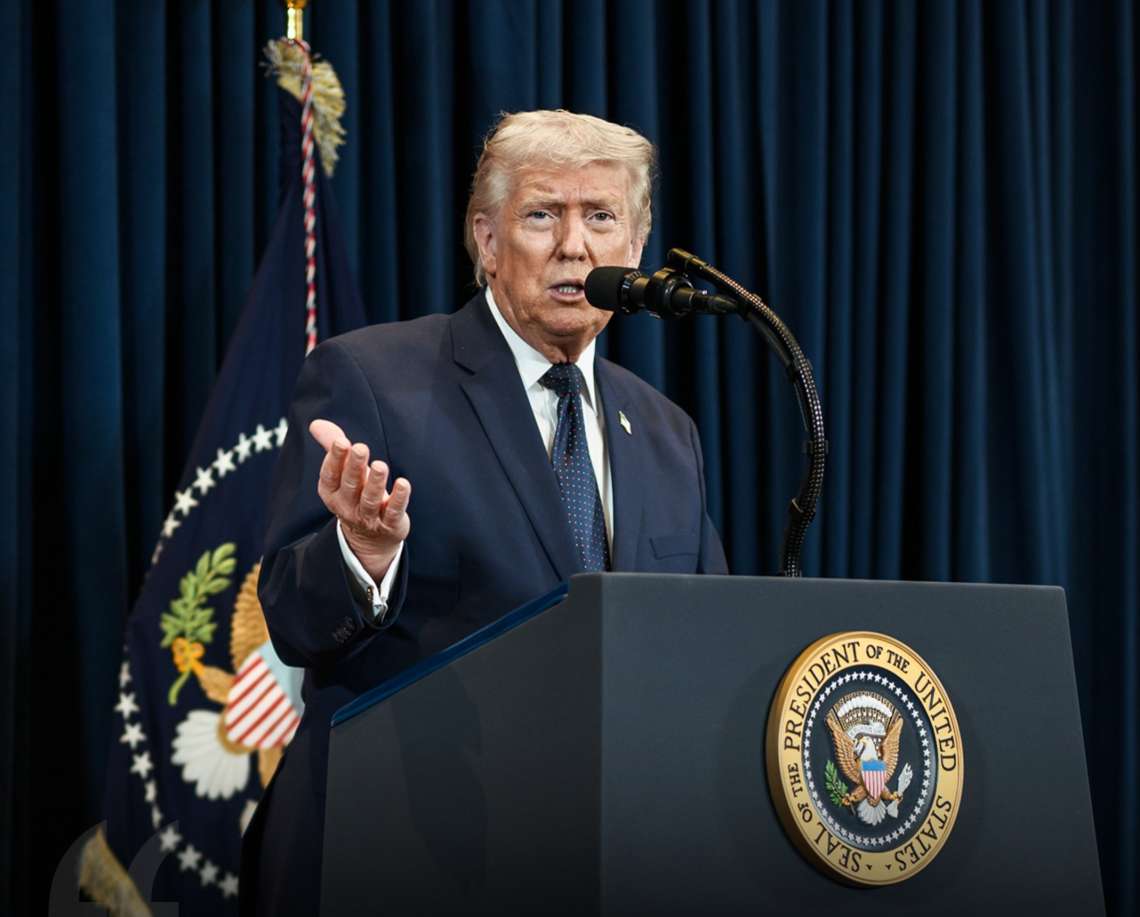
The speech came amid heightened political tensions in Europe following renewed pressure from US President Donald Trump to pursue the purchase of Greenland, triggering diplomatic backlash from European leaders. French President Emmanuel Macron has threatened to use the EU’s anti-coercion instrument, often dubbed a trade “bazooka”, after fresh tariff threats from Washington over the weekend.
Transatlantic strains dominated discussions in Davos, with US Treasury Secretary Scott Bessent facing repeated questions on the Greenland stand-off and the potential economic impact of a trade war during his press conference. European officials warned that escalating disputes could further weaken already fragile growth prospects.
Immediately before He took the stage, European Commission President Ursula von der Leyen criticised the proposed US tariffs targeting Europe as a mistake. She called for “permanent” change to make Europe more independent in critical areas such as the economy, defence and energy, reflecting a broader push within the EU to reduce reliance on external powers.
Against this backdrop, China’s message in Davos sought to position Beijing as a champion of stability, dialogue and open markets. Whether that message resonates in Europe will depend not only on rhetoric but also on how trade tensions and geopolitical rivalries evolve in the months ahead.