Johannesburg’s skyline is showing tentative signs of life after years of economic stagnation, with cranes and construction returning to parts of the city…reports Asian Lite News
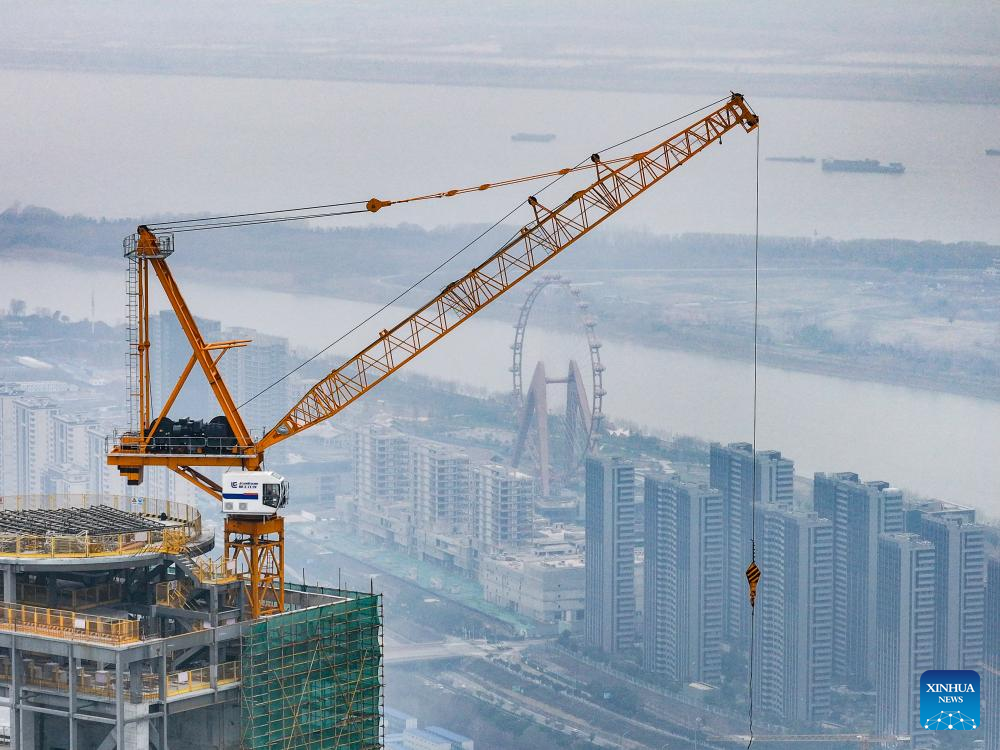
Johannesburg’s long-dormant construction sites are beginning to stir again, offering a visible symbol of a fragile economic revival in South Africa’s biggest city after what many developers describe as a lost decade. From inner-city commercial blocks to residential towers in the northern suburbs, cranes and hoardings are reappearing on streets that had been quiet for years, suggesting that investors and builders are cautiously returning to projects shelved during prolonged periods of weak growth, power shortages and political uncertainty.
The renewed activity comes against a backdrop of an economy that has struggled to regain momentum since the middle of the last decade. National output has grown only modestly over much of that period, with the effects of the global pandemic compounding structural problems that were already constraining expansion. A chart accompanying the report shows annual growth oscillating around a low average, with a sharp contraction during the pandemic years followed by a partial rebound that has yet to translate into a sustained upswing.
Construction firms say Johannesburg is once again being viewed as a viable market, particularly for mixed-use developments that combine office space, retail and residential units. Several projects that were paused when financing dried up or demand collapsed are being restarted, reflecting improved sentiment among lenders and developers. Industry figures point to stabilising interest rates, a gradual easing of power disruptions and a more predictable policy environment as factors that have helped to unlock investment.
The change is most noticeable in parts of the central business district and along key transport corridors, where redevelopment plans had been on hold for much of the past ten years. Developers say there is growing appetite for refurbishing older buildings rather than starting entirely new schemes, allowing them to bring properties back to the market more quickly and at lower cost. This approach also reflects a shift in demand towards smaller, more flexible office spaces as companies adapt to hybrid working patterns.
Economists caution that the visible revival in bricks and mortar does not yet signal a broad-based economic recovery. While construction can act as a bellwether for confidence, it remains a relatively small part of overall output, and activity is still well below the levels seen before the downturn. The economy continues to be weighed down by weak household spending, fragile public finances and persistent infrastructure constraints.
One of the most pressing challenges is unemployment, particularly among young people. A second chart in the report shows that joblessness among those aged 15 to 24 remains significantly higher than for older workers, despite some improvement in the employment rate for the 15-to-64 age group. High youth unemployment has been a long-standing problem in South Africa, limiting consumer demand and fuelling social tensions even when parts of the economy show signs of recovery.
Government policy has sought to address these issues through reforms aimed at stabilising state-owned enterprises, improving electricity supply and creating a more investor-friendly environment. Progress has been uneven, but officials argue that recent steps have helped to restore a measure of credibility after years of policy drift. Business groups say that greater certainty over regulation and public-private partnerships has been critical in persuading financiers to back new projects in Johannesburg and other major cities.
Property analysts note that the city’s fortunes are closely tied to the broader health of the national economy. When growth is weak, vacancy rates rise and rents fall, making it difficult for developers to justify new builds. The current upturn, modest as it is, suggests that demand is beginning to stabilise, particularly in well-located areas that benefit from transport links and established commercial hubs.
Residential development has also picked up, driven in part by a shortage of affordable housing close to workplaces. Builders report strong interest in mid-market apartments that cater to young professionals and small families who want to live near business districts rather than commute from the outskirts. This trend is reshaping parts of Johannesburg’s skyline, with taller, denser buildings replacing ageing low-rise stock.
Despite these positive signs, risks remain. Power supply, though more reliable than in previous years, is still vulnerable to disruption, raising costs for energy-intensive construction projects. Global economic uncertainty could also dampen foreign investment, which has historically played an important role in financing large developments in South Africa’s financial capital.
For now, the cranes rising above Johannesburg are being read as a symbol of cautious optimism rather than a definitive turning point. They reflect a belief among some investors that the worst of the downturn has passed and that there is money to be made again in a city that remains the country’s commercial heart. Whether this confidence will spread more widely across the economy will depend on sustained reform, stronger growth and progress in tackling the high levels of unemployment that continue to shadow South Africa’s recovery.