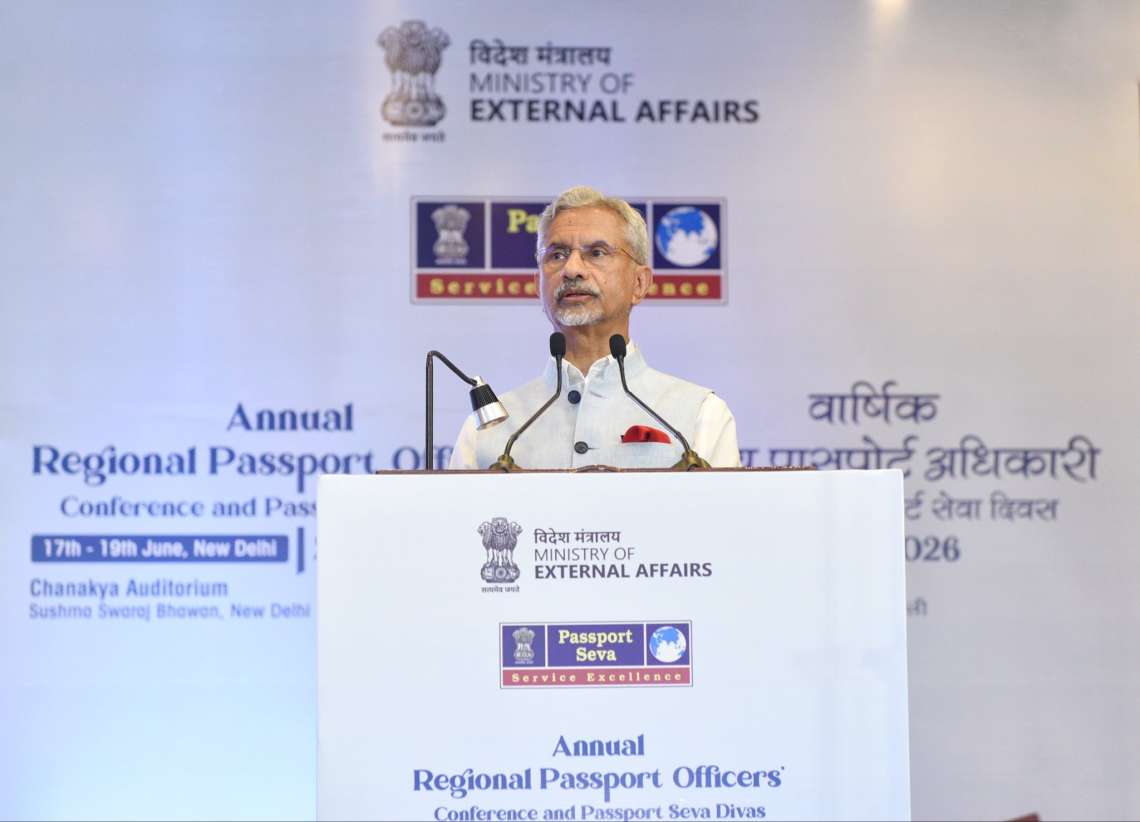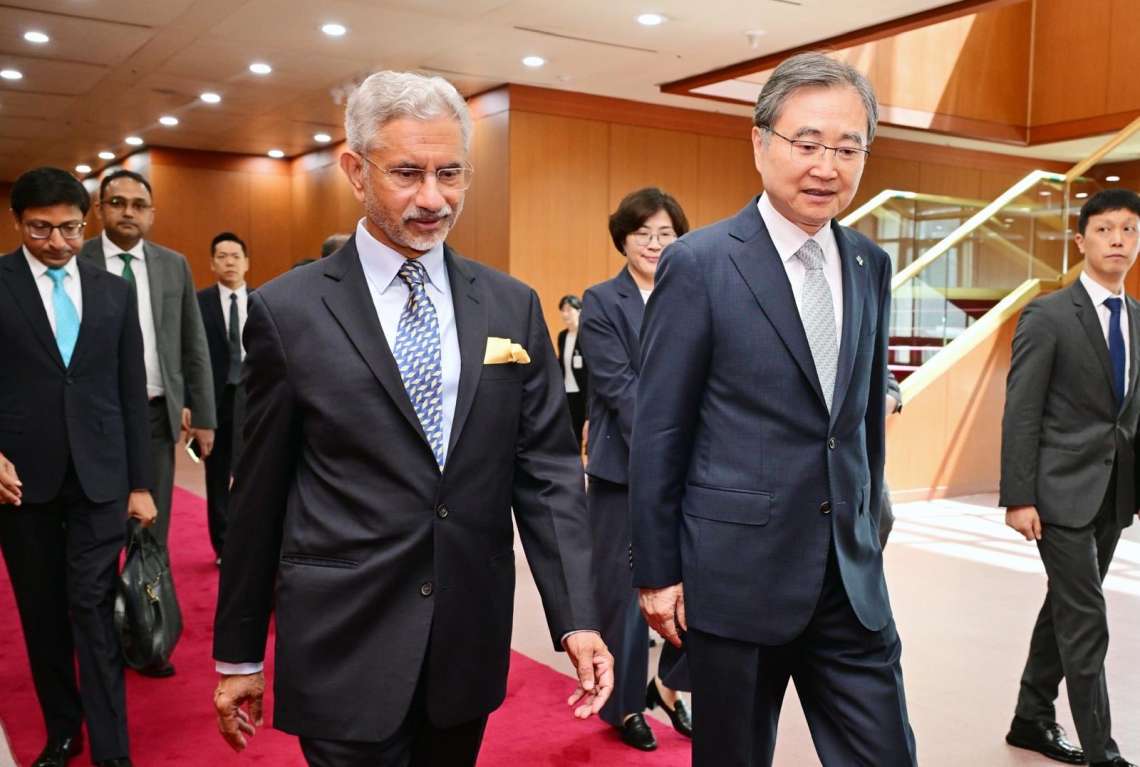
External Affairs Minister S. Jaishankar urges India and South Korea to deepen cooperation across technology, defence and supply chains amid growing global fragmentation and Indo-Pacific challenges, reports India Daily News Desk
External Affairs Minister S. Jaishankar has called for a significant expansion of India-South Korea cooperation, saying the two countries possess strong complementarities “from ships to chips” that can help build resilient supply chains, strengthen strategic partnerships and contribute to a more balanced global order.
Speaking at the Jeju Forum for Peace and Prosperity 2026 during his two-day visit to the Republic of Korea, Jaishankar said the international community must accept that geopolitical fragmentation is becoming a defining feature of the modern world while finding new ways to cooperate across economic, technological and security domains.
Delivering the keynote address, the minister said the forum’s theme of addressing fragmentation through renewed cooperation accurately reflected the challenges confronting the global community.

“This forum is discussing a fragmented world as a problem and reinventing cooperation as a solution. I agree with both the diagnosis and the treatment,” he said.
However, Jaishankar argued that fragmentation should not be viewed entirely negatively, saying it also creates opportunities for greater diversity in global decision-making.
“Fragmentation is here to stay,” he said. “Perhaps it is not altogether bad. In some ways, it means less dominance, more space and greater democratisation.”
Highlighting the changing nature of the global economy, Jaishankar said international trade and technology have made countries increasingly interdependent despite rising geopolitical tensions.
He noted that modern economies are built around efficient and resilient supply chains extending across multiple countries, while emerging technologies such as artificial intelligence are making international cooperation even more essential.
“The world is increasingly about supply chains, their efficiency and their resilience. This is not just about goods, it is equally about resources,” he said, adding that AI would further accelerate cross-border integration through the movement of data and technological models.
At the same time, he warned that global challenges including pandemics, terrorism and climate-related disasters cannot be addressed by individual nations acting alone.
“International cooperation is therefore a must,” Jaishankar said, invoking India’s traditional philosophy of Vasudhaiva Kutumbakam—the belief that the world is one family.
The External Affairs Minister also cautioned against the growing use of economic tools for strategic competition, saying commerce and connectivity were increasingly being shaped by geopolitical calculations rather than purely economic considerations.
He criticised practices that restrict industrial development in emerging economies, arguing that many developing countries continue to face barriers to industrialisation through market access restrictions and manipulation of competitiveness.

“The right to industrialise, indeed the capacity and the opportunity to do so, is being denied to many developing states,” he said, describing it as another form of maintaining global dominance.
Jaishankar further observed that the world was witnessing what he termed the “weaponisation of everything”, pointing to increasing geopolitical risks and political polarisation in the social media era.
“As the interests of a few are openly prioritised, the costs to the many are less considered,” he said, adding that broader international cooperation involving a wider group of countries would be necessary to address these challenges.
To navigate an increasingly fragmented world, Jaishankar outlined a five-point framework centred on diversifying global supply chains, strengthening cooperation among influential nations, safeguarding international law—including the United Nations Convention on the Law of the Sea (UNCLOS)—creating greater opportunities for the Global South and advancing reforms to multilateral institutions.
Linking those priorities directly to bilateral ties, Jaishankar said India and South Korea were well placed to deepen cooperation across multiple sectors.
“These five factors make a powerful case why India and the Republic of Korea must cooperate more closely,” he said.
“We have complementarities in many fields, from ships to chips, and also health, infrastructure and defence, which are just waiting to be exploited.”
The minister said his discussions in Seoul had focused on strengthening economic and technology partnerships, expanding strategic cooperation and enhancing people-to-people exchanges as both countries seek to elevate their Special Strategic Partnership.
During his visit, Jaishankar also held talks with South Korea’s Director of National Security, Wi Sung-lac, on regional and global security developments, including the evolving strategic landscape in the Indo-Pacific.
In a post on X after the meeting, Jaishankar said the two sides had exchanged assessments on global developments and discussed the importance of close coordination on Indo-Pacific issues.
His security dialogue followed bilateral talks with South Korean Foreign Minister Cho Hyun, during which both countries discussed implementing commitments made during President Lee Jae-myung’s state visit to India earlier this year.