DR Congo and Rwanda have agreed to take “concrete steps” to ease tensions following US-hosted talks, as fighting in the east continues to threaten wider regional instability…reports Asian Lite News
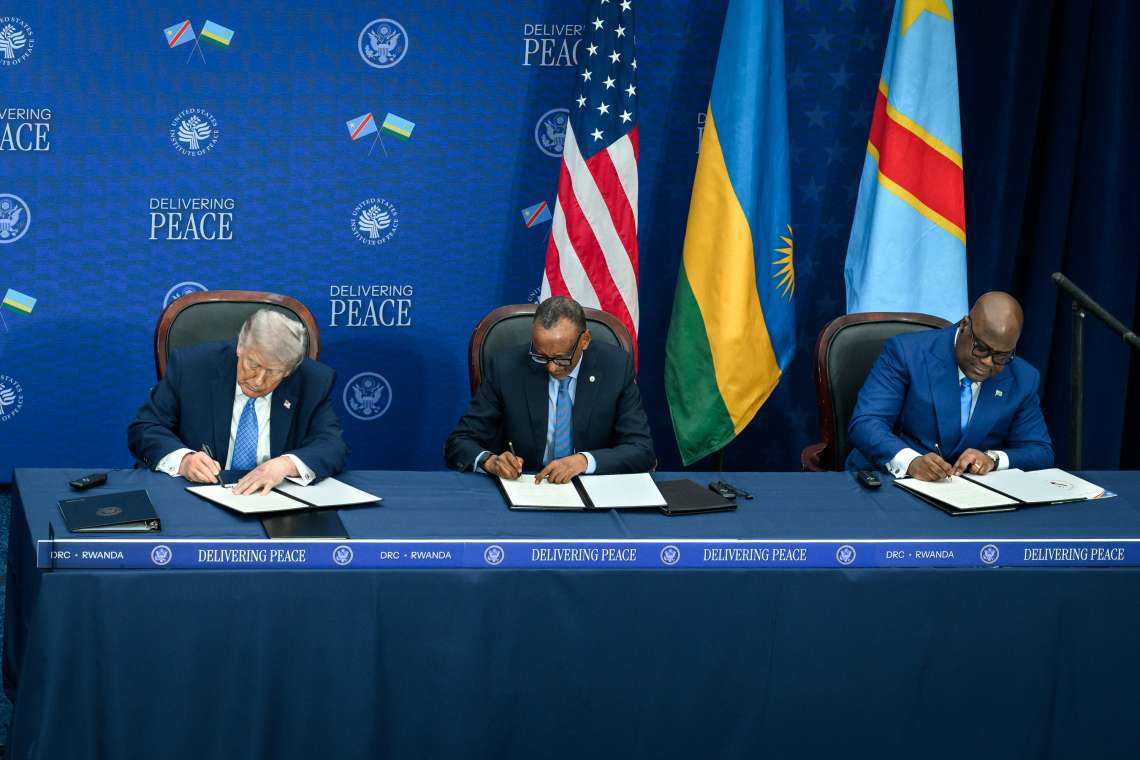
The Democratic Republic of Congo and Rwanda have agreed to take “concrete steps” to ease tensions after talks hosted by the United States in Washington, in an effort to revive a stalled peace process and contain a conflict that continues to destabilise eastern DR Congo.
A joint statement issued by DR Congo, Rwanda and the US said the parties had “agreed to a series of coordinated steps to de-escalate tensions and advance progress on the ground”. The agreement includes commitments to respect each other’s sovereignty and territorial integrity, along with specific measures to reduce military activity.
Under the terms outlined, Rwanda would disengage its forces and lift “defensive measures… in defined areas in DR Congo’s territory”. In parallel, DR Congo pledged to intensify “time-bound” efforts to neutralise the Democratic Forces for the Liberation of Rwanda (FDLR), an armed group active in eastern DR Congo that includes some Rwandan ethnic Hutus linked to the 1994 Rwandan genocide.
Kigali has long described the FDLR as a “genocidal militia” and maintains that its continued presence poses a direct threat to Rwanda’s security. Rwanda has repeatedly denied supporting the M23 rebel group, despite mounting evidence cited by international observers, arguing that its military posture is defensive and aimed at countering armed groups operating across the border.
The renewed diplomatic push follows a series of tensions earlier this month, when the United States imposed sanctions on the Rwandan Defence Forces and four senior officials. Washington accused Rwanda of directly supporting the M23 and blamed it for escalating the conflict. The sanctions marked a significant escalation in US involvement and signalled growing concern that the violence could widen into a broader regional confrontation.
Despite a US-brokered peace deal signed last year, fighting has persisted in eastern DR Congo. Days after the agreement, M23 fighters entered the city of Uvira near the Burundi border in one of the most serious escalations in months. Although the group later withdrew under US pressure, it continues to control large parts of eastern DR Congo, including the major cities of Goma and Bukavu.
US officials have warned that the continued presence of M23 forces near the Burundian border, combined with alleged Rwandan support, carries “the risk of escalating the conflict into a broader regional war”. Rwanda has rejected these accusations, stating that the sanctions unfairly target one side and “misrepresent the reality and distort the facts of the conflict”.
Kigali has also accused DR Congo of breaching the earlier peace agreement through “indiscriminate drone attacks and ground offensives”. Recent drone strikes have further heightened tensions. Last week, a French national working for the United Nations and two other individuals were killed in such incidents.
The Congolese army, positioned several hundred kilometres from key conflict zones, has relied on long-range drone strikes targeting M23 positions. Security sources say M23 fighters have also deployed explosive drones along front lines, underscoring the evolving and increasingly complex nature of the conflict.
While the latest agreement signals a willingness to re-engage diplomatically, the situation on the ground remains volatile, with both sides maintaining sharply conflicting narratives and military activity continuing despite repeated commitments to de-escalation.