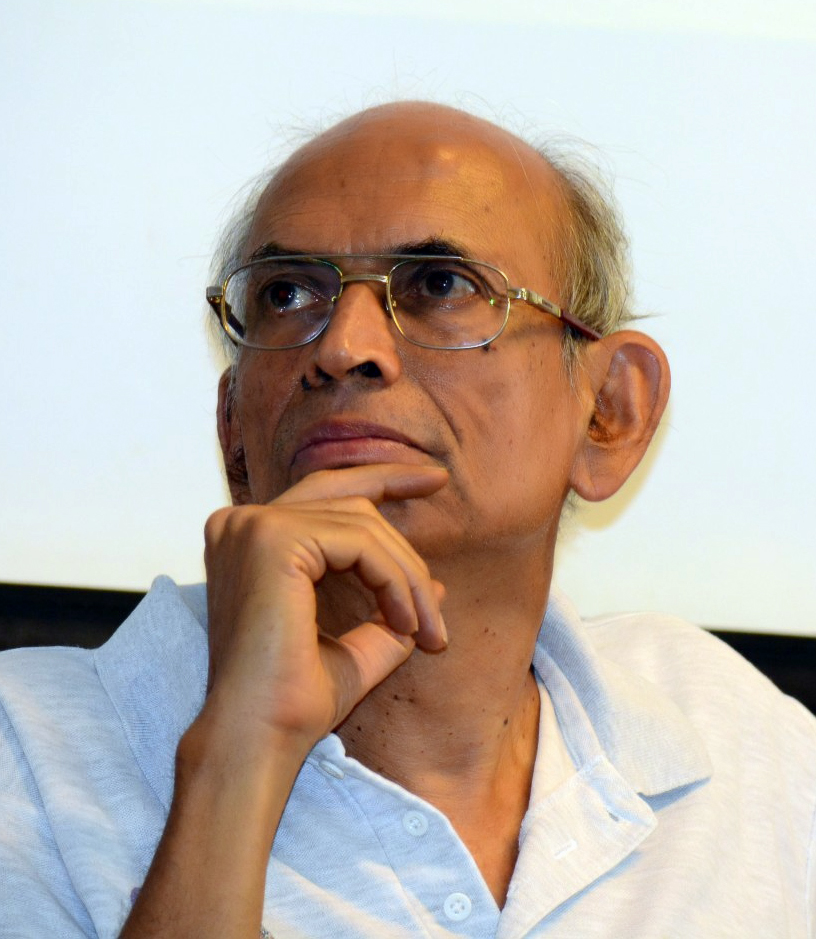
Gadgil was the founder of the Centre for Ecological Sciences at the Indian Institute of Science, Bengaluru, and chairman of the Western Ghats Ecology Expert Panel, popularly known as the Gadgil Commission…reports Asian Lite News
Noted ecologist Madhav Gadgil, known for his work on the conservation of Western Ghats, has passed away in Pune after a brief illness, family sources said on Thursday. He was 83.
Gadgil breathed his last late Wednesday night at a hospital in Pune, the sources said. He played a pioneering role in shaping India’s ecological research and conservation policy.
Gadgil was the founder of the Centre for Ecological Sciences at the Indian Institute of Science (IISc), Bengaluru, and chairman of the Western Ghats Ecology Expert Panel (WGEEP), popularly known as the Gadgil Commission.
In 2024, the United Nations presented Gadgil with the annual Champions of the Earth award, the UN’s highest environmental honour, for his seminal work on the Western Ghats, a global biodiversity hotspot.
He had chaired the government-constituted Western Ghats Ecology Expert Panel to study the impact of population pressure, climate change, and development activities on the ecologically fragile region in India.
In 2010, Gadgil was appointed chairman of the panel, which submitted a landmark report recommending that a significant portion of the Western Ghats be designated as ecologically sensitive. While the report triggered intense debate, it is widely regarded as a milestone in India’s environmental discourse.
Born in Pune on May 24, 1942, Gadgil hailed from an illustrious academic family. His father, Dhananjay Ramchandra Gadgil, was a noted economist and former director of the Gokhale Institute.
Madhav Gadgil graduated in biology from Fergusson College in 1963 and completed his master’s degree in zoology from the University of Mumbai in 1965. He went on to pursue a PhD from Harvard University in 1969, where he worked on mathematical ecology and animal behaviour.
After returning to India in 1971, Gadgil joined the Indian Institute of Science in 1973. During his tenure at IISc, he established key institutions, including the Centre for Ecological Sciences and the Centre for Theoretical Studies, laying the foundation for modern ecological research in the country.
He retired from IISc in 2004 and later continued his academic engagement with the Agharkar Research Institute in Pune and the University of Goa. Gadgil served on several high-level national and international bodies, including the Scientific Advisory Council to the Prime Minister, the National Advisory Council, and the National Tiger Conservation Authority.
A prolific researcher and writer, Gadgil authored or co-authored several influential books, including ‘This Fissured Land’ and ‘Ecology and Equity’, and published over 250 scientific papers. He was also a regular columnist, writing extensively in English and Marathi to popularise ecological awareness.
Gadgil’s contributions earned him numerous national and international honours, including the Padma Shri (1981), Padma Bhushan (2006), Shanti Swarup Bhatnagar Prize, Volvo Environment Prize, and Tyler Prize for Environmental Achievement.