Missile fire widens regional conflict as Houthis target Israel. Fresh threat to Red Sea shipping and US naval deployments as Yemen group signals deeper involvement, reports Asian Lite News
Yemen’s Houthi rebels have launched a barrage of ballistic missiles at Israel, marking their first such strikes since the United States-Israeli war on Iran began and signalling a potential widening of the regional conflict.
Brigadier-General Yahya Saree, a military spokesperson for the Houthis, announced the attack on Saturday on the rebels’ Al Masirah satellite television. Strikes “will continue until the declared objectives are achieved, as stated in the previous statement by the armed forces, and until the aggression against all fronts of the resistance ceases”, Saree said.
The Israeli military said it intercepted one missile. Air raid sirens sounded around Beersheba and the area near Israel’s main nuclear research centre for the third time overnight from Friday into Saturday, as Iran and Hezbollah continued their own attacks on Israeli territory. No casualties or damage were reported following the alerts.
The missile fire came hours after Saree issued a vague statement on Friday indicating that the Houthis would enter the war, which has unsettled the Middle East and sent shockwaves through the global economy. On Saturday, Saree said the group had fired a barrage of ballistic missiles at what he described as “sensitive Israeli military sites” in southern Israel.
The Houthis, who have controlled Yemen’s capital Sanaa since 2014, had until now remained outside the US-Israeli war on Iran. Their latest move raises the prospect of a broader multi-front confrontation involving non-state actors aligned with Iran.
The group has previously demonstrated its capacity to disrupt international trade. During the Israel-Hamas war, Houthi attacks on shipping in the Red Sea significantly affected commercial transit through a corridor that carries roughly $1 trillion worth of goods each year. From November 2023 until January 2025, the rebels attacked more than 100 merchant vessels using missiles and drones, sinking two ships and killing four sailors.
In response to those earlier attacks, the Trump administration launched strikes against Houthi targets in 2024, a campaign that lasted several weeks before concluding. Despite that intervention, the group has continued to signal its ability to threaten key maritime routes.
Mohammed Mansour, the Houthis’ deputy information minister, said on Saturday that further escalation remained possible. “We are conducting this battle in stages, and closing the Bab al-Mandeb strait is among our options,” he told local media. The narrow waterway is a strategic chokepoint linking the Red Sea to the Gulf of Aden and is vital for global shipping.
Any attempt to restrict passage through the Bab al-Mandeb would likely have immediate economic consequences and could draw in additional international military responses. It would also complicate existing US naval operations in the region.
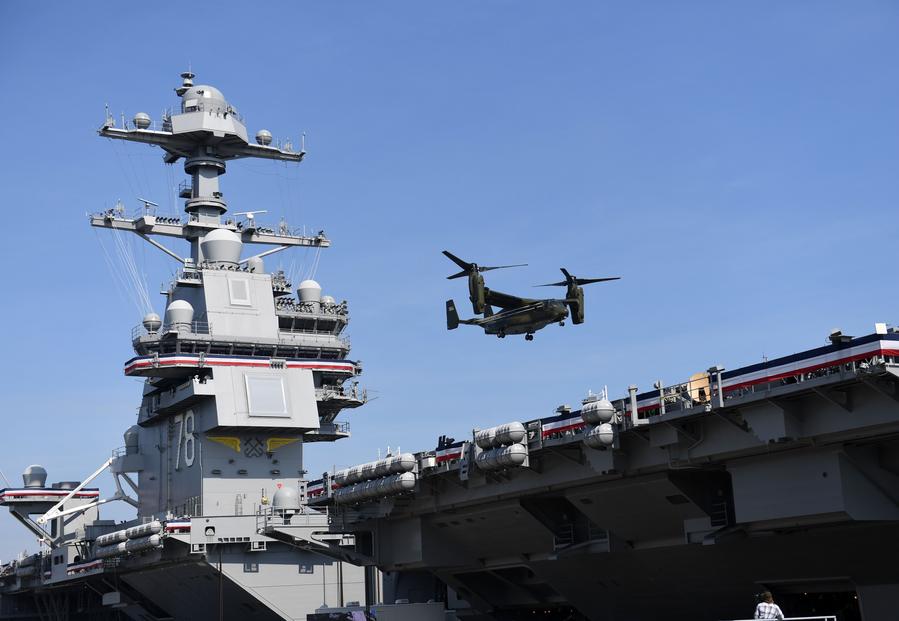
The potential involvement of the Houthis in the US-Israeli war on Iran could affect the deployment of the USS Gerald R Ford, the aircraft carrier currently in port in Crete for repairs. A return to the Red Sea would expose the vessel to the type of sustained attacks previously faced by US naval forces.
In 2024, the USS Dwight D Eisenhower operated under repeated missile and drone threats during operations against the Houthis, while the USS Harry S Truman encountered similarly intense conditions during the 2025 American campaign targeting the group.
The latest developments underline the risk that the conflict could expand beyond its current theatres, drawing in additional actors and further destabilising critical trade routes. While no casualties were reported from the latest strikes, the Houthis’ entry into the conflict adds a new layer of uncertainty to an already volatile regional landscape.