Human Rights Watch has raised concerns over fair trial standards at Bangladesh’s International Crimes Tribunal, warning that procedural shortcomings could undermine justice and the rule of law. …reports Asian Lite News Desk
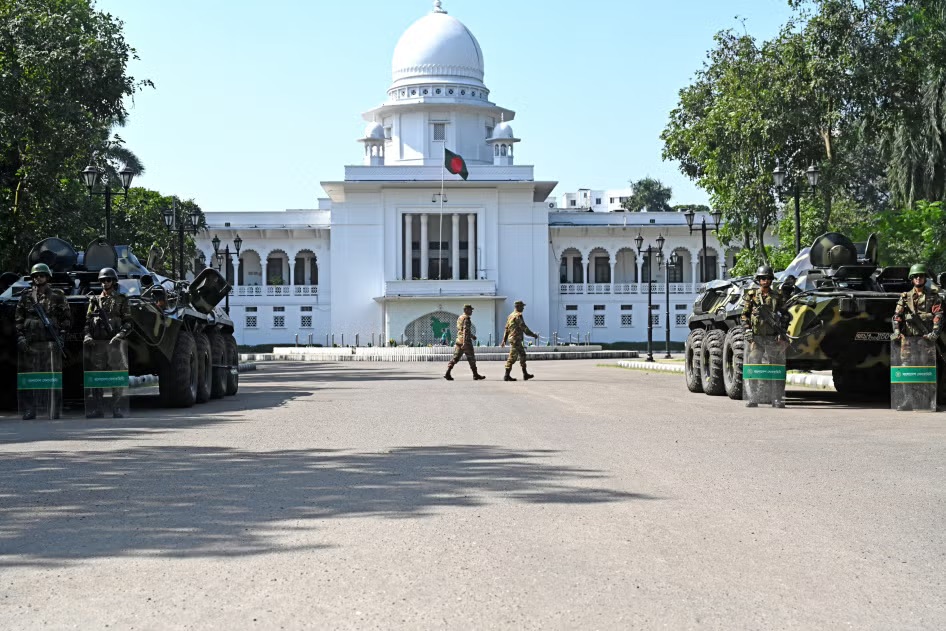
Human Rights Watch (HRW) has criticised Bangladesh’s International Crimes Tribunal (ICT), alleging that its procedures fall short of international fair trial standards and warning that the shortcomings could undermine justice, weaken the rule of law and lead to politically motivated prosecutions.
The rights group’s remarks came after prosecutors on Monday filed formal charges against former Prime Minister Sheikh Hasina and 40 others in a crimes against humanity case linked to the 2013 crackdown on a Hefazat-e-Islam rally at Shapla Chattar in Dhaka.
“Those responsible for the many abuses committed under the Sheikh Hasina government should be appropriately held to account, but many prosecutions are falling short of international fair trial standards. Bangladesh needs to urgently reform its criminal justice system, and the new government should ensure that there is no room for political vendettas through shoddy investigations and arbitrary allegations,” said Meenakshi Ganguly, Deputy Asia Director at HRW.
The International Crimes Tribunal was established in March 2010 under the Awami League government led by Sheikh Hasina to prosecute individuals accused of crimes under international law, including crimes against humanity, committed during Bangladesh’s 1971 War of Independence.
Following the ousting of the Awami League government in 2024, the interim administration led by Muhammad Yunus amended the law governing the tribunal, including changes to the definition of offences. However, HRW said the amendments did not adequately strengthen due process protections or bring procedural safeguards in line with international standards applied by similar tribunals.
According to the rights group, the Bangladesh Nationalist Party (BNP)-led government under Prime Minister Tarique Rahman, which assumed office in February 2026, has not introduced further reforms to address those concerns.
HRW said the tribunal’s legal framework allows prosecutors to seek arrests without meeting an evidential threshold and permits suspects to be detained for extended periods without written justification. It also criticised the absence of an interlocutory appeal process before a separate court.
The organisation further argued that defendants have limited time to prepare their defence, noting that trials can begin just three weeks after prosecutors disclose their evidence.
“Trials can begin three weeks after the prosecution discloses its evidence, leaving little time for adequate defence preparation. Trials in absentia are held without appropriate safeguards, including defendants’ right to choose lawyers to represent them. And the tribunal restricts defence lawyers’ ability to cross-examine witnesses,” HRW said.
The rights group also expressed concern over charges submitted on July 27 against 41 individuals, including two journalists, accusing them of crimes against humanity and genocide. HRW noted that under international law, genocide refers to specific acts committed with the intent to destroy, in whole or in part, a national, ethnic, racial or religious group.
HRW further alleged that tribunal prosecutors and judges had relied on witness statements recorded by investigating officers that contained duplicated passages across multiple testimonies, raising questions about their authenticity.
The organisation urged Bangladesh to reform the tribunal’s procedures to ensure that accountability efforts comply with international legal standards while safeguarding the rights of defendants and maintaining public confidence in the judicial process.