IMF chief Kristalina Georgieva has warned that persistent inflation, rising debt costs and AI investment pose risks to the global economy….reports Asian Lite News Desk
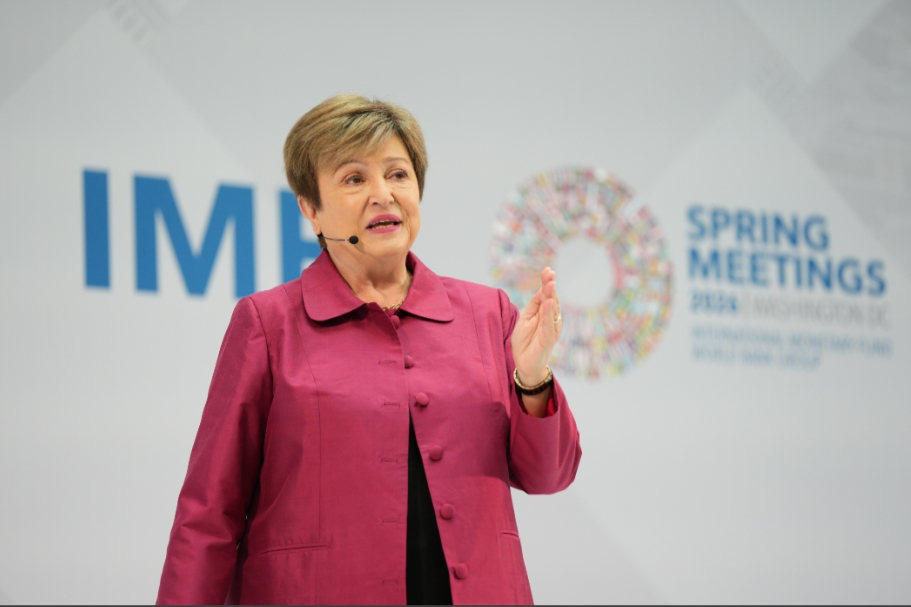
IMF chief Kristalina Georgieva has warned that the global economy continues to face significant risks from persistent inflation, rising debt-servicing costs and growing investment in artificial intelligence, even as the world economy has shown greater resilience than expected.
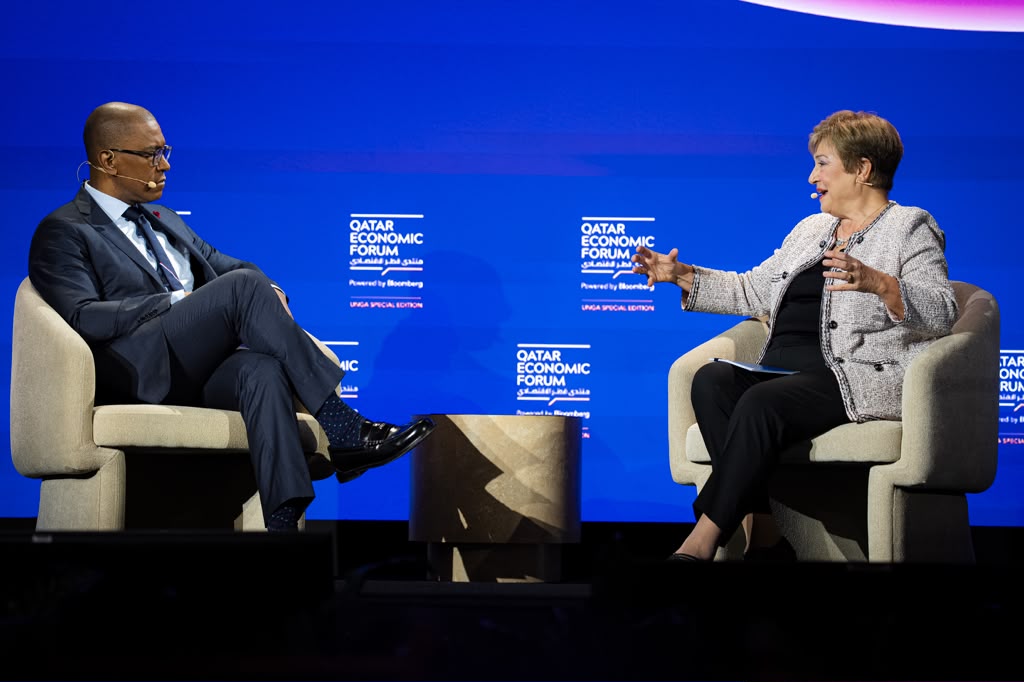
Speaking at a dialogue during a special edition of the Qatar Economic Forum in New York City on Sunday, Georgieva said inflation remained a major concern and that central banks faced continued pressure to maintain price stability.
“Inflation is stubborn. We are not anticipating a quick resolution. And that means that many central banks have to tighten,” Georgieva said.
She said efforts to bring inflation under control had also increased the cost and difficulty of servicing debt. While there was broad recognition of the need for fiscal consolidation, Georgieva said governments had not taken sufficient action.
The IMF chief also pointed to emerging risks linked to the rapid expansion of artificial intelligence investment. She highlighted leverage and circular financing within the sector as areas that warranted close attention.
“If AI disappoints, because we have these high expectations, if they don’t materialize, disappointment may lead to potentially a shock to the system,” Georgieva warned.
According to Georgieva, financial risks linked to AI investment are primarily concentrated in the United States, although companies and economies across Asia and Europe are deeply involved in the wider AI supply chain.
The IMF’s next World Economic Outlook, due to be released in October, will reflect the continuing high level of risks facing the global economy, she said.
Despite the concerns, Georgieva said the resilience of the world economy should not be overlooked. She described growth of around 3 per cent as a significant achievement given the series of shocks the global economy has experienced in recent years.
“Having growth that would be hovering around 3 per cent is a massive achievement, given all the shocks we have been experiencing,” she said.
Georgieva also pointed to the global response to energy supply disruptions as an example of how swift policy action could help contain economic shocks. She said the speed of the response offered grounds for some optimism about the ability of countries to manage future disruptions.
Addressing concerns about growing fragmentation in the global economy, Georgieva said countries remained closely connected despite geopolitical and economic divisions.
“While there is a lot of talk about a fragmented world. And indeed, it is less unified. It is still a world in which we are interdependent and we cooperate,” she said.
Georgieva nevertheless urged policymakers to remain cautious, stressing that uncertainty had become a persistent feature of the global economic environment.
“We have to be careful and cautious. The risks are high and uncertainty is the new normal,” she added.
The IMF’s October outlook is expected to provide updated projections for global growth and assess the economic risks confronting countries amid persistent inflation, elevated borrowing costs and rapid technological investment.