As American security guarantees wobble and Chinese electric vehicles threaten European industry, India has been swiftly rebranded from “problematic” to “indispensable”…reports Asian Lite News
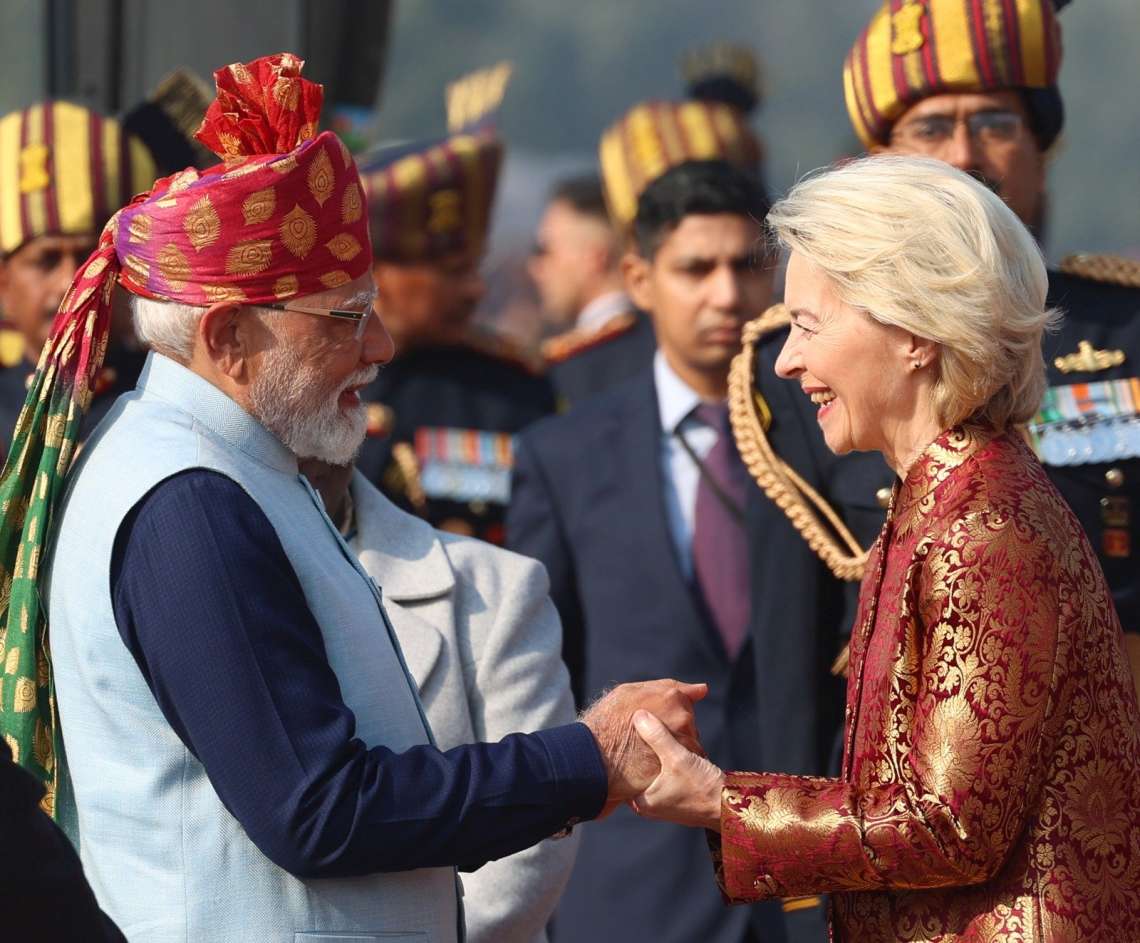
The scenes from New Delhi this week were a lesson in geopolitical theatre. Ursula von der Leyen and António Costa, seated as chief guests at India’s Republic Day celebrations, watched a display of military strength that would likely unsettle many in Brussels. For three days, EU leaders have pursued an intense charm offensive, eager to conclude what they have dubbed the “Mother of all Deals”. Yet beneath the pageantry and diplomatic smiles, this was hardly a meeting of equals.
India is surging ahead. Now the world’s fourth-largest economy, it is growing at an impressive 7.4 per cent. Europe, by contrast, is struggling — economically sluggish and geopolitically hesitant, increasingly aware of its dwindling influence. The Delhi visit, as Brussels Signal columnist Konstantinos Bogdanos notes, looked less like a partnership of peers and more like a rescue mission for a continent short on reliable allies.

Progress, however, is undeniable. Negotiations on the long-awaited Free Trade Agreement have concluded, with Brussels hailing a “strategic recasting” linking two billion people. In reality, the deal reflects hard-nosed realpolitik: a hedge against Donald Trump’s tariff walls on one side and China’s growing dominance on the other. India is the last remaining giant capable of offering the EU real strategic leverage.
The irony is striking. For years, European elites lectured New Delhi on Ukraine, Russian energy imports and democratic backsliding. Now, as American security guarantees wobble and Chinese electric vehicles threaten European industry, India has been swiftly rebranded from “problematic” to “indispensable”.
India, meanwhile, is playing its hand expertly. Free from the EU’s need to project moral superiority, New Delhi is focused on technology transfer, market access and supply-chain diversification. The agreement marks India as only the third Asian country to enter such a defence relationship with the EU — but it is Europe adapting to Indian interests, not the other way around.
Brussels’ willingness to cut car tariffs and open sensitive services, while India shields agriculture and dairy, would once have been unthinkable. Critics see a surrender dressed up as balance. Even so, the deal underlines a harsh truth: the EU can no longer survive on values alone. Whether this “Mother of all Deals” becomes a genuine strategic reset or merely a temporary lifeline remains to be seen.

India has surged ahead of the United States on trade deal-making this year, sharpening anxiety in Washington as the Trump administration’s tariff-driven strategy struggles to deliver results, according to comments by Henrietta Treyz, co-founder of Veda Partners.
“Down in (Washington) DC, the agita is over the fact that India now has inked 100 per cent more deals than Donald Trump this year,” Treyz told CNBC in an interview, pointing to growing frustration among US lawmakers over the administration’s inability to translate aggressive trade rhetoric into concrete agreements.
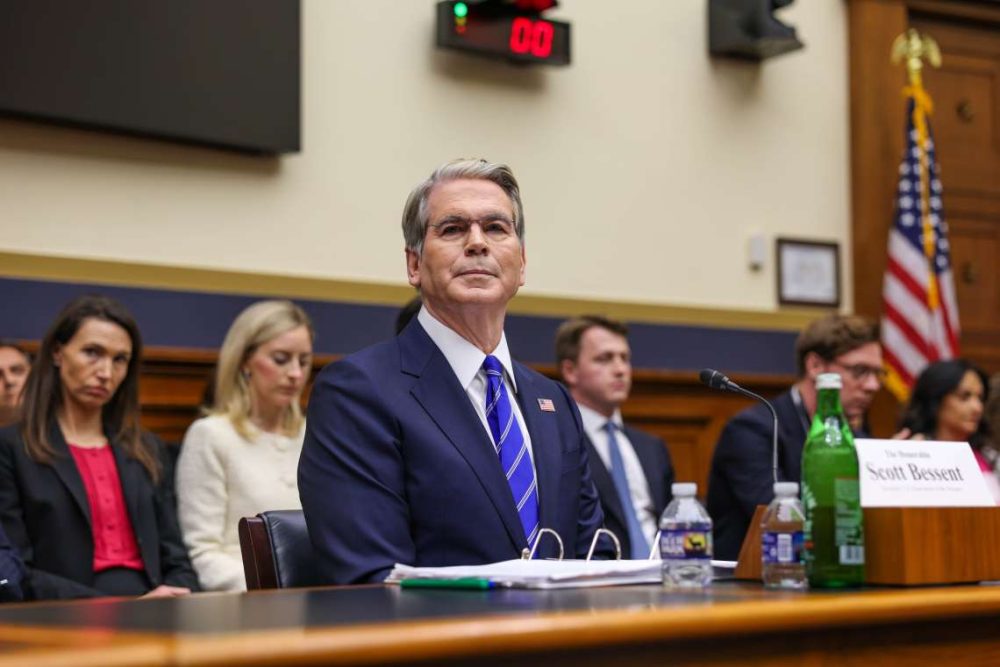
Treyz recalled the administration’s pledge earlier this summer to deliver rapid progress on trade. “In the 90 deals in 90 days period of time this summer, if you’ll recall that when (Treasury) Secretary (Scott) Bessent and USTR (Jamieson) Greer were out there, they promised those 90 deals in 90 days,” she said.
The reality, she added, has fallen well short of those expectations. “We have two deals in 10 months, and those are with Cambodia and Malaysia,” Treyz claimed, noting that “the South Korea deal has not moved forward.”
She described the situation as particularly troubling for US lawmakers because of where trade relations were before the current administration took office. “The irony and the trouble for lawmakers in India outpaces US on trade as tariff push falters. is that going into this administration, 96 per cent of trade with South Korea was covered by a free trade agreement,” Treyz said. “We had zero per cent tariffs.”
Against that backdrop, Treyz said the administration’s use of tariffs as leverage has failed to produce breakthroughs with key partners. “Now the cudgel that Trump has been blasting the EU, Japan, and South Korea with all year is not bearing fruit,” she said.