Nepal’s Foreign Minister calls India an economic powerhouse, signalling a shift towards development-focused ties centred on trade, connectivity, digital integration and shared economic transformation, reports India Daily News Desk
Nepal has signalled a shift in its diplomatic approach towards India, with Foreign Minister Shisir Khanal describing India as an “economic powerhouse” and calling for a reset in bilateral ties anchored in development, connectivity and shared prosperity rather than legacy geopolitical tensions.
Speaking during his official visit to New Delhi, Khanal emphasised that Nepal views India’s rapid economic and technological rise as an opportunity rather than a challenge, positioning the relationship within a forward-looking framework focused on growth and execution.
“When we look across the border, we see India as an economic powerhouse,” Khanal said, adding that Nepal wants to engage with a country that has “redefined itself on the global stage as a dynamic, fast-growing tech and economic force”.
The minister’s remarks reflect a broader recalibration within Kathmandu’s political establishment, particularly under newer leadership formations seeking to move beyond what Khanal described as the “distorted, hypersensitive lens of 20th-century geopolitics”. Instead, he advocated a pragmatic, development-first agenda centred on economic transformation.
“We refuse to look at India through outdated geopolitical rivalries,” he said, stressing that Nepal’s priority is to translate diplomatic commitments into tangible benefits for its citizens. “Our focus is to close the gap between promises made on paper and results delivered on the ground.”
Khanal, who represents the Rastriya Swatantra Party, framed his position as part of a “new political reality” in Nepal, driven by governance reforms, meritocracy and accountability. He said the current leadership carries a strong mandate to pursue policies that deliver measurable economic outcomes rather than symbolic political gestures.
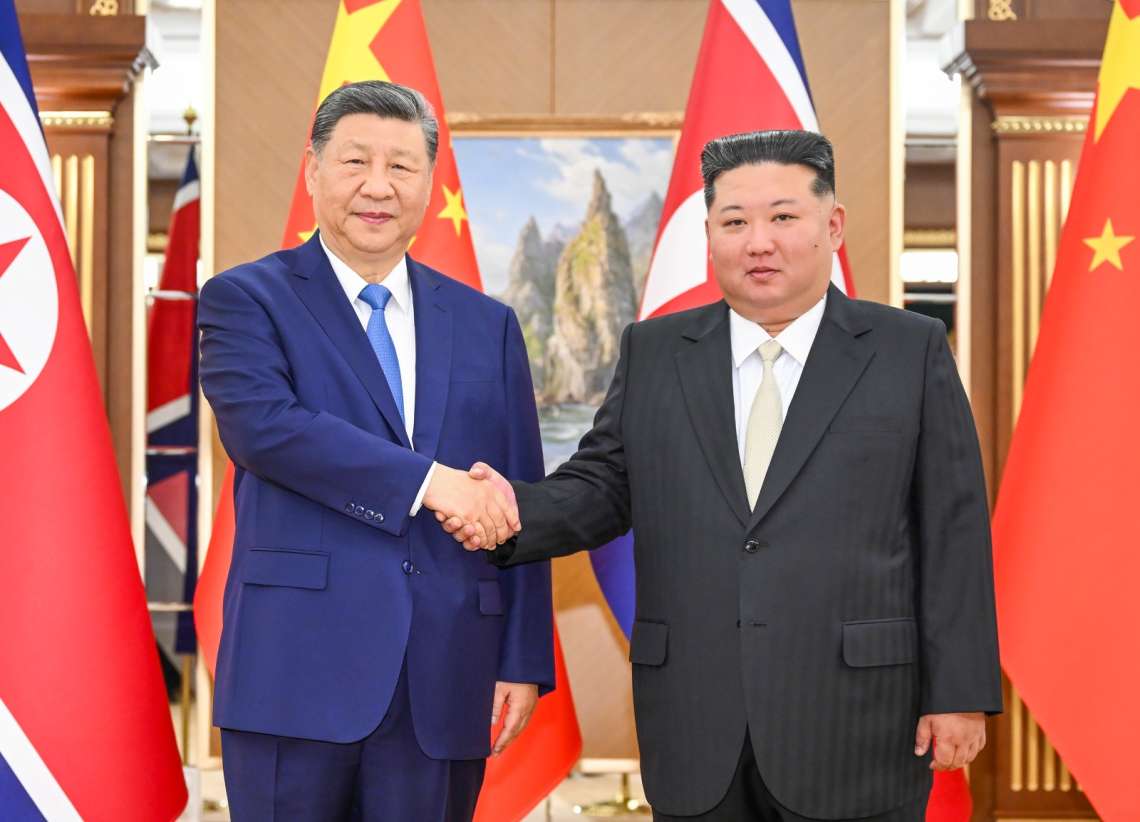
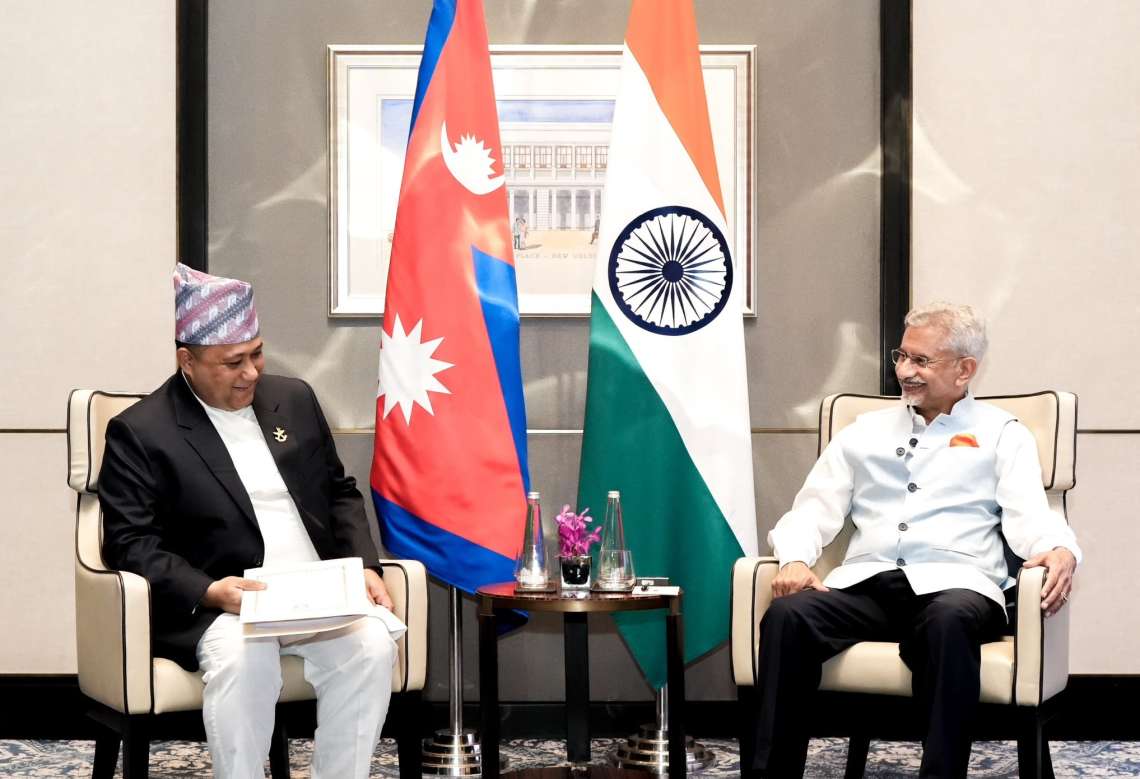
His visit, which took place from June 5 to 7, included high-level talks with India’s External Affairs Minister S. Jaishankar. According to Khanal, discussions covered a wide spectrum of cooperation areas, including trade, cross-border connectivity, energy partnerships, water resource management and people-to-people ties.
“Our discussions encompassed the full spectrum of our bilateral relationship,” he said, highlighting the intent on both sides to deepen engagement across critical sectors.
A key theme emerging from the talks was the role of the open India-Nepal border as an enabler of economic activity. Khanal argued that the shared frontier should function as a “highly efficient bridge” facilitating mobility, trade and integration, rather than becoming a source of friction.
“True independence means our shared borders act as bridges, not barriers,” he said, underlining the importance of evidence-based and cooperative approaches to resolving bilateral challenges.
The minister also pointed to growing financial and digital integration between the two countries, citing progress on cross-border payment systems. He confirmed the operationalisation of payment linkages under a memorandum of understanding between Nepal Clearing House Limited and the National Payments Corporation of India, which is expected to enable seamless digital transactions.
The initiative is designed to facilitate UPI-style cross-border payments, benefiting entrepreneurs, tourists and ordinary citizens by simplifying transactions and boosting economic interaction at multiple levels.
Khanal further acknowledged India’s role as a development partner, announcing the handover of several reconstruction projects in Nepal completed with Indian assistance. These include 72 health sector facilities and 12 cultural heritage projects, reflecting ongoing collaboration in post-earthquake rebuilding efforts and infrastructure development.
In addition, the two countries are expanding cooperation in emerging areas such as digital public infrastructure and artificial intelligence. An agreement between Kathmandu University’s Centre for DPI and AI and India’s Digital India Mission signals a push towards technological collaboration, aligning with broader regional digital transformation trends.
Despite the emphasis on economic cooperation, Khanal also highlighted the enduring cultural and civilisational ties that underpin the relationship. “We are not merely neighbours defined by political boundaries,” he said. “We are connected by shared history, geography and traditions.”
He expressed appreciation for the hospitality extended by Indian authorities during his visit and underscored the role of the media in shaping public understanding of diplomatic engagements.
The visit marks the highest-level engagement from the government of Prime Minister Balendra Shah since it assumed office earlier this year, and is being seen as an attempt to inject fresh momentum into bilateral relations.