India is set to remain one of Asia’s fastest-growing major economies in 2026, underpinned by strong domestic demand, investment and digital expansion, even as global trade tensions intensify. A new outlook from Asia House positions India as a regional outperformer despite elevated US tariffs and geopolitical risks….reports Asian Lite News
India is expected to consolidate its position as one of Asia’s standout economies in 2026, with growth holding at around 6.5 per cent, according to Asia House’s Annual Outlook. The assessment places India alongside Vietnam at the top of the regional growth table, even as Asia as a whole faces slowing global demand, volatile trade policy and lingering geopolitical tensions.
The outlook argues that India’s resilience will be driven primarily by domestic factors rather than exports, a distinction that has become increasingly important as protectionism rises. Household consumption is forecast to remain robust, supported by easing inflation, rural demand and continued public spending. Fixed asset investment is also expected to play a central role, particularly in infrastructure and manufacturing, helping to insulate the economy from external shocks.
Asia House notes that while Asia’s overall growth is expected to moderate in 2026, India will continue to outperform most peers. The report highlights the country’s expanding middle class, demographic profile and policy support as key advantages at a time when global trade is under strain. The emphasis on domestic demand places India in a stronger position than more export-dependent economies as the effects of tariff frontloading fade.
Trade remains a key risk for the region, and India is not immune. The report underlines that Indian exports to the United States face a total tariff rate of 50 per cent, including a punitive levy linked to India’s imports of Russian energy. This is higher than the rates faced by most other Asian economies and has already weighed on trade flows. Asia House says this elevated tariff environment could continue to distort India’s export competitiveness in 2026, particularly in price-sensitive sectors.
Even so, India’s external trade is seen as becoming more diversified. Asia House points to a gradual reorientation towards Asia and the Middle East, which is helping to mitigate exposure to the US market. Negotiations on new trade agreements, including a proposed free trade agreement with Qatar, are framed as part of a broader strategy to balance trade deficits and open new export channels, particularly in non-energy sectors.
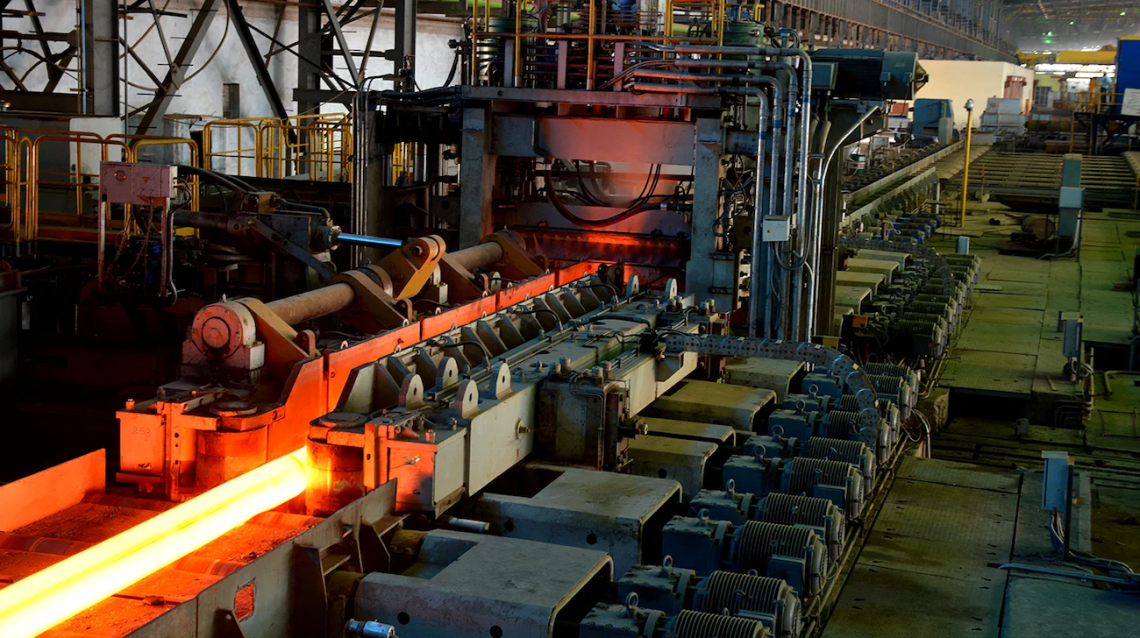
Manufacturing policy is another pillar of the outlook. Production-linked incentive schemes are expected to continue supporting capacity expansion and investment, lifting manufacturing’s contribution to growth. Asia House argues that infrastructure investment, combined with incentives for domestic and foreign producers, will be critical to sustaining momentum in a more fragmented global economy.
Services, however, remain central to India’s growth story. The report highlights resilience in digital and financial services, noting that productivity gains across sectors will underpin expansion. India’s digital economy is identified as a major driver in 2026, supported by the rollout of 5G networks, digital public infrastructure and growing adoption of online platforms by businesses and consumers.
Initiatives such as Aadhaar and the Open Network for Digital Commerce are cited as enabling greater financial inclusion, formalisation of small businesses and lower entry barriers for startups. Asia House suggests that this ecosystem is likely to attract further investment into fintech, e-commerce, health technology and logistics, reinforcing India’s position as a technology-led growth market.
Green finance and energy transition also feature in the outlook, with India expected to see rising investment in renewable energy and related technologies. While the report flags volatility in global energy prices as a potential risk, it also notes that falling oil prices could benefit major energy importers, including India, easing inflationary pressures and supporting household incomes.
Risks remain significant. Asia House warns that volatility in food and energy prices could disrupt real income gains, while climate shocks continue to pose threats to rural livelihoods and small businesses. Currency movements are another concern, with emerging market currencies vulnerable to shifts in US monetary policy and dollar strength.
Geopolitics add a further layer of uncertainty. The report points to renewed tensions between India and Pakistan following a deadly escalation in 2025, noting that while a ceasefire is in place, unresolved territorial disputes continue to weigh on regional confidence. Prolonged instability could affect investor sentiment, even if the direct economic impact remains contained.
Despite these headwinds, the overall assessment is cautiously optimistic. Asia House argues that effective execution of infrastructure projects, stronger-than-expected manufacturing gains and resilient domestic demand could lift India’s growth above expectations in 2026. Continued credit expansion and equity market strength are also seen as reinforcing the investment environment.
In a year marked by global fragmentation and policy uncertainty, the report concludes that India’s reliance on domestic drivers, combined with digital and structural reforms, positions it as one of Asia’s most durable growth stories heading into 2026.