Lok Sabha rejects Opposition move to remove Speaker Om Birla after heated debate, with government accusing rivals of undermining parliamentary traditions and institutional authority, By India Daily News Network
India’s lower house of Parliament rejected an Opposition resolution seeking the removal of Lok Sabha Speaker Om Birla on Wednesday, bringing to a close a heated two-day debate that exposed deep divisions between the government and Opposition benches.
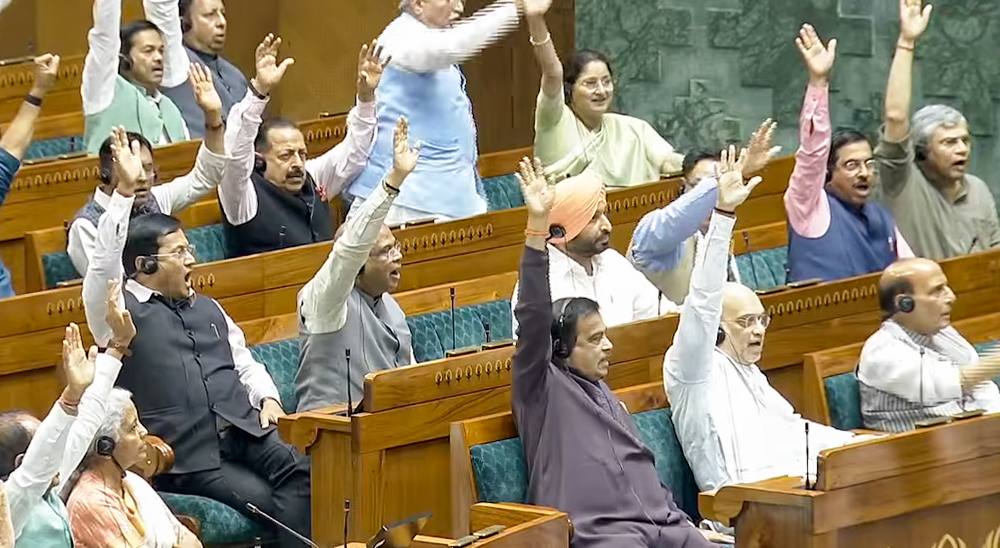
The motion, introduced by Congress MP Mohammad Jawed, was defeated through a voice vote amid noisy scenes in the House, with Opposition members staging protests during the proceedings. The debate coincided with sharp exchanges between members over remarks made earlier by Union Home Minister Amit Shah concerning Leader of the Opposition Rahul Gandhi.
The development marked a rare parliamentary episode, as attempts to remove a Speaker through a resolution have historically been uncommon and none has ever succeeded in independent India.
Heated debate ends in voice vote defeat
The resolution was taken up in the Lok Sabha after Opposition parties accused Birla of partisan conduct during parliamentary proceedings. Critics claimed the Speaker had allowed the suspension of several Opposition MPs and limited speaking opportunities for some members, including Rahul Gandhi.
During Wednesday’s session, BJP MP Jagdambika Pal presided over the proceedings while Birla stepped aside from the Chair during consideration of the motion.
As the debate concluded, Pal called on Jawed to respond to the Home Minister’s remarks. However, the House remained disrupted by loud sloganeering from Opposition benches, making it difficult for members to continue the proceedings.
Pal then proceeded to conduct a voice vote, declaring that the motion had been defeated after members of the treasury benches opposed it.
Amit Shah criticises Opposition move
Replying to the debate, Amit Shah strongly criticised the Opposition for bringing a no-confidence motion against the Speaker, arguing that the move undermined the dignity and traditions of parliamentary institutions.
Shah said the House functioned on mutual trust and respect for established rules and conventions.
He stated that bringing such a motion against the Speaker after nearly four decades was unfortunate for parliamentary politics and reflected poorly on the functioning of the House.
Shah also stressed that the Speaker served as a neutral authority representing both the ruling party and the Opposition. Casting doubts on that role, he said, risked weakening the institutional foundations of India’s democratic system.
He remarked that the Constitution entrusted the Speaker with the responsibility of mediating between different political sides in Parliament. Questioning that neutrality, he argued, could erode the reputation of the parliamentary system that had been built over decades.
Historical precedents cited in debate
The Home Minister also used the debate to highlight historical precedents concerning no-confidence motions against Lok Sabha Speakers.
Shah said that in India’s parliamentary history only three attempts had been made to remove a Speaker, none of which succeeded.
He argued that neither the Bharatiya Janata Party nor the National Democratic Alliance had ever introduced such a motion during the periods when they served in Opposition.
Instead, he said, earlier motions had been moved by other parties, including socialist and left parties, during periods when the Indian National Congress was in power.
Shah also referred to debates surrounding the position of Deputy Speaker, a post that has remained vacant in the current Lok Sabha.
Responding to Opposition criticism that the government had not appointed a Deputy Speaker, he said historical records showed that previous governments had often filled the position with members from their own party rather than offering it to the Opposition.
He cited earlier examples, including Congress leaders who had held the Deputy Speaker’s office during past governments.
Speaker stepped aside during proceedings
During the debate, Shah also praised Birla’s decision to step aside from presiding over the House once the notice for the motion had been submitted.
According to Shah, previous Speakers had continued to occupy the Chair for several days even after motions against them had been moved.
By contrast, he said, Birla had stepped aside immediately on moral grounds and had not presided over proceedings while the House considered the resolution.
The motion itself had reportedly received support from more than 100 Opposition MPs when it was submitted earlier this year under Article 94 of the Constitution, which governs the resignation or removal of the Speaker and Deputy Speaker.
However, removal requires a majority vote in the House — a threshold the Opposition was unable to meet.
Rare parliamentary challenge fails again
The debate saw participation from more than 40 members across party lines, with both government and Opposition MPs trading accusations over parliamentary conduct.
While Opposition parties insisted the motion was necessary to protect democratic norms and fairness in parliamentary proceedings, the ruling side described it as politically motivated.
Historically, three attempts have been made to challenge the authority of a Lok Sabha Speaker through such resolutions.
In 1954, a motion was moved against the first Speaker, G. V. Mavalankar, but it was rejected after debate.
Another attempt occurred in 1966 against Sardar Hukam Singh, although the notice did not progress due to insufficient support.
In 1987, a resolution against Balram Jakhar was discussed but ultimately defeated in the House.