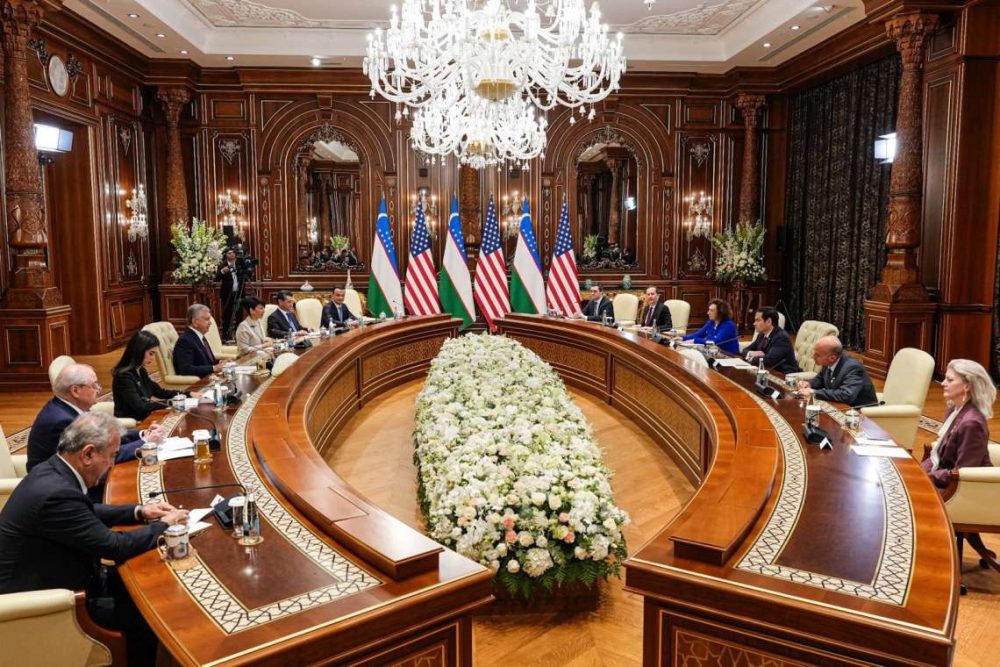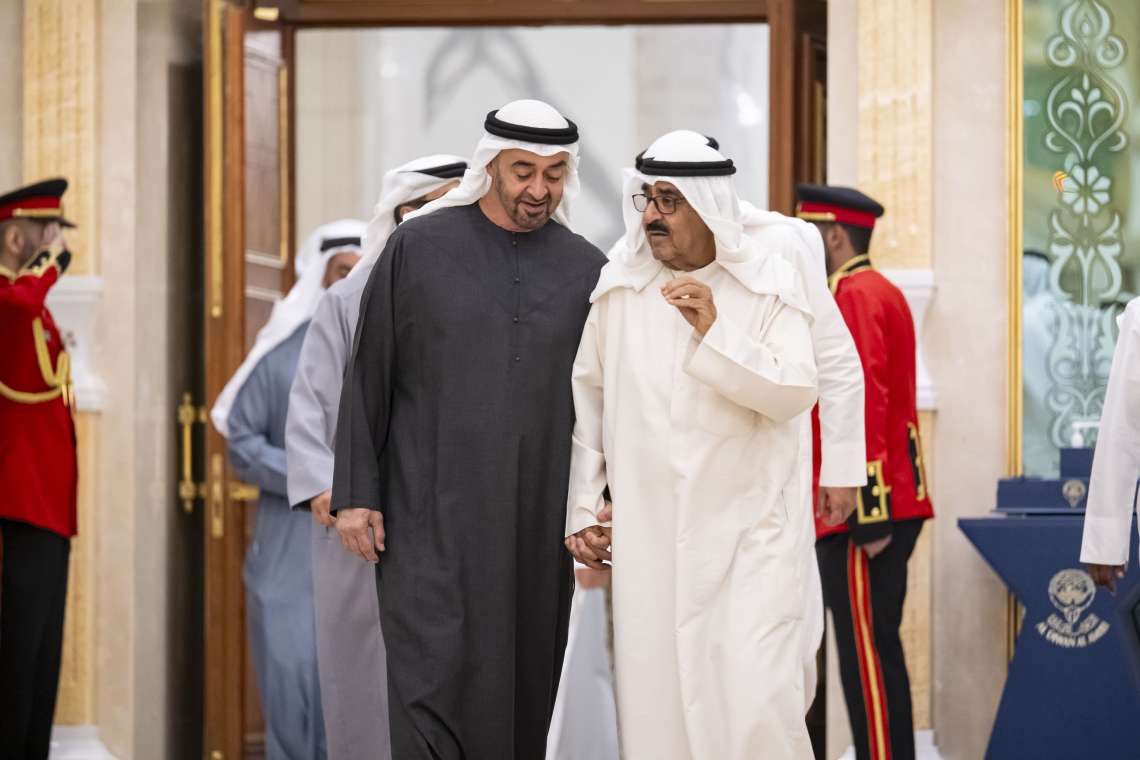
President H.H. Sheikh Mohamed visited Kuwait hours after Iranian missile attacks, urging peace and regional stability as Gulf leaders confront one of the region’s gravest security crises, reports Asian Lite News Desk
President His Highness Sheikh Mohamed bin Zayed Al Nahyan has called for renewed efforts to secure lasting peace and stability across the Middle East during a visit to Kuwait, held just hours after the Gulf nation came under missile and drone attacks blamed on Iran.
The high-level meeting between Sheikh Mohamed and His Highness Sheikh Mishal Al-Ahmad Al-Jaber Al-Sabah, Emir of Kuwait, took place against the backdrop of rapidly escalating regional tensions following renewed military exchanges between Iran and the United States.
With Gulf security once again under strain, the two leaders emphasised the importance of strengthening regional cooperation and pursuing peace as the only path towards long-term prosperity.
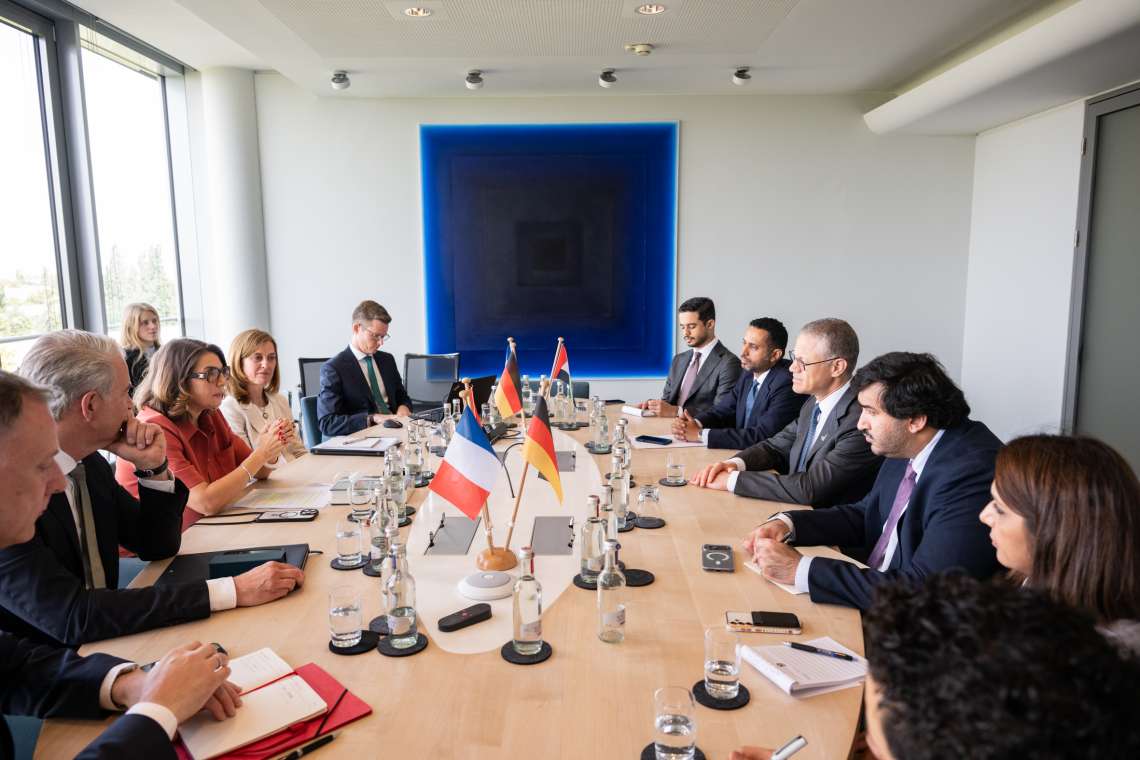
Sheikh Mohamed arrived in Kuwait on Thursday for talks at Bayan Palace, where the two leaders reaffirmed the deep fraternal ties between the UAE and Kuwait and discussed ways to expand cooperation across economic, development and strategic sectors.
While bilateral relations featured prominently in the discussions, the worsening security situation across the Gulf dominated the meeting.
According to the UAE’s Ministry of Foreign Affairs, Sheikh Mohamed and Sheikh Mishal exchanged views on regional and international developments, particularly the latest escalation in the Middle East.
Both leaders stressed the need to reinforce the foundations of stability and lasting peace, saying sustainable development and economic prosperity across the region depend on maintaining security and avoiding further conflict.
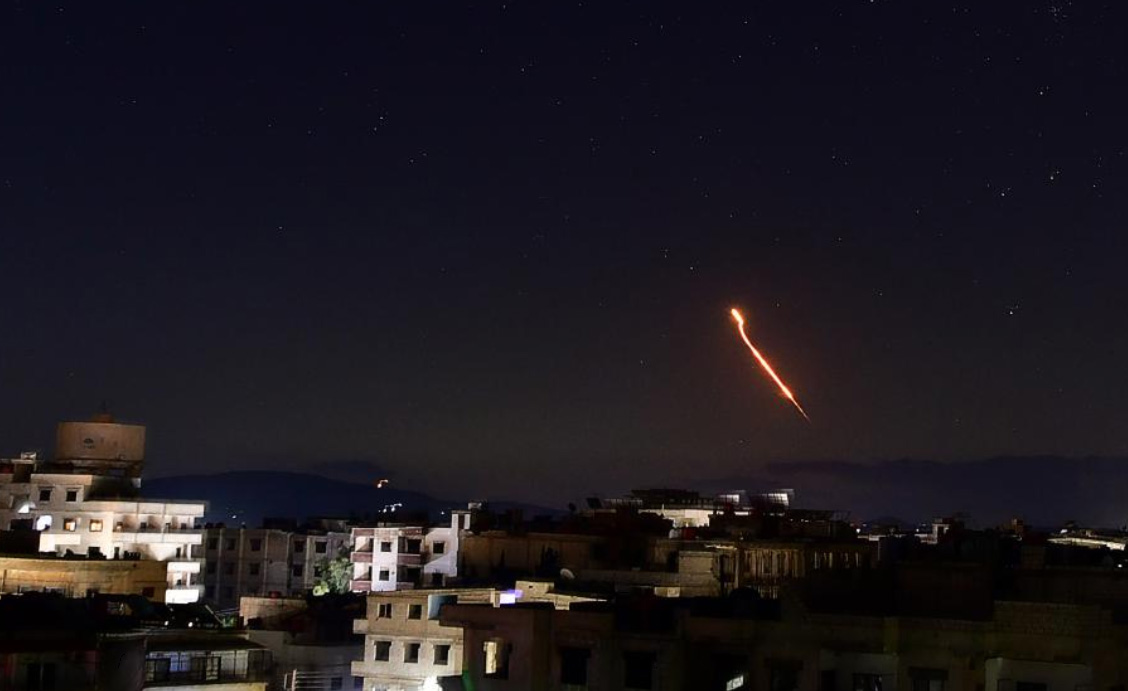
The visit came only hours after Kuwait’s armed forces intercepted a wave of Iranian missiles and drones in one of the most serious attacks on the country in recent years.
Kuwaiti military spokesman Major General Saud Abdulaziz Al Otaibi said the country’s air defence systems successfully destroyed three ballistic missiles, one cruise missile and ten drones before they reached their intended targets.
Although the interceptions prevented major destruction, falling debris caused material damage in several locations and left one person injured. Officials said the victim was receiving medical treatment and remained in stable condition.
Kuwait swiftly condemned the attack, describing it as a blatant violation of its sovereignty and a dangerous escalation that threatens regional peace and security.
The country’s Foreign Ministry said the missile and drone strikes represented a recurring pattern of hostile behaviour and violated international law, the United Nations Charter and relevant UN Security Council resolutions.
The ministry warned that the attacks risk undermining diplomatic efforts aimed at resolving regional disputes through dialogue and negotiation.
Kuwaiti authorities declared that the country’s sovereignty and national security remain a “red line” and reaffirmed their right to take all necessary measures to defend the nation in accordance with international law.
The attacks on Kuwait formed part of a broader wave of Iranian military action across the Gulf.
Bahrain and Qatar also reported coming under attack as Iran responded to a second consecutive night of American strikes targeting military sites inside Iranian territory.
US operations reportedly focused on missile batteries, radar installations and military infrastructure in southern Iran, including areas linked to operations affecting shipping through the Strait of Hormuz.
The renewed violence has heightened fears that the confrontation between Washington and Tehran could expand into a wider regional conflict involving multiple Gulf states.
In response to the attacks, the UAE strongly condemned Iran’s actions against both Kuwait and Bahrain.
In separate statements, the UAE Ministry of Foreign Affairs denounced the missile and drone strikes in the strongest terms, describing them as flagrant violations of the sovereignty of the two Gulf nations and direct threats to regional security and stability.
The ministry reiterated the UAE’s full solidarity with Kuwait and Bahrain and affirmed its support for all measures aimed at safeguarding their security, territorial integrity and the safety of their citizens.
Despite the deteriorating security situation, Sheikh Mohamed’s visit underscored the close partnership between the UAE and Kuwait during a period of heightened uncertainty.
At Bayan Palace, Sheikh Mishal welcomed the UAE President and hosted a luncheon in honour of Sheikh Mohamed and the accompanying delegation, reflecting the longstanding friendship between the two countries.