Former Australian PM Scott Morrison praises India’s pragmatic diplomacy, Modi’s leadership and Jaishankar’s role in advancing national interests…reports Asian Lite News Desk
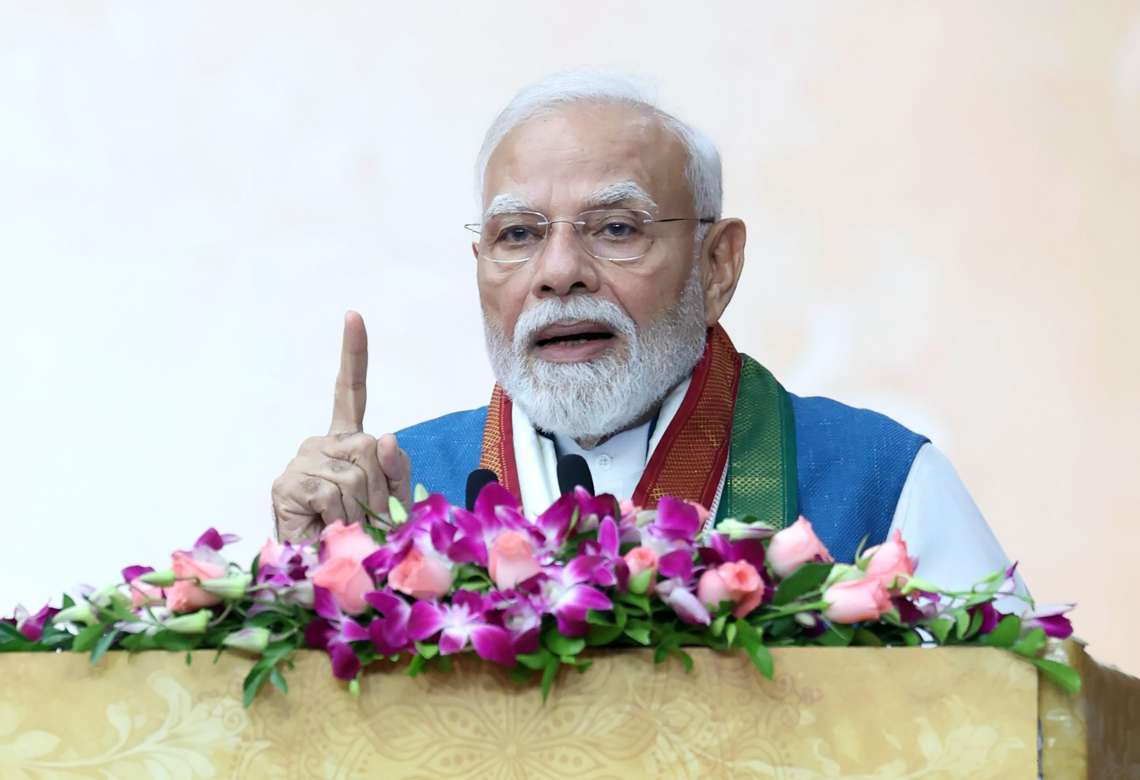
Former Australian Prime Minister Scott Morrison has praised Prime Minister Narendra Modi for bringing a strong national-interest orientation and pragmatic approach to India’s foreign policy, while highlighting External Affairs Minister S. Jaishankar’s role in advancing that vision.
Morrison made the remarks in an interview with Italian-Indian entrepreneur and analyst Vas Shenoy as India prepares to mark its 80th Independence Day on Saturday.
He said India was increasingly focused on realising its potential while maintaining an independent foreign policy driven by national interests.
“India continues to honour its independence and its independent settings, but not slavishly, not for its own sake. Its interests drive it into closer engagement with the United States, Australia, Japan, Korea and many other countries. But that is not done to the exclusion of its other relationships. I’ve found Prime Minister Modi quite unapologetic about the fact that he’ll pick up the phone and talk to whoever he wants to. He’ll go to whichever country he needs to in order to advance India’s national interest. That’s what every leader of every country does: advance the national interest,” said Morrison.
He added that Modi had brought a practical approach to foreign policy and praised Jaishankar for implementing that leadership.
“Prime Minister Modi has brought a very strong national-interest focus and a very practical focus to India’s foreign policy. Dr Jaishankar has been an able lieutenant in that process and incredibly industrious in following through on that leadership. Whether it is the economy, technology or space, there are enormous opportunities ahead. I think India will be a space powerhouse over the next 20 or 30 years as its space economy matures,” he said.
Morrison, who served as Australian Prime Minister from 2018 to 2022, also stressed the importance of India’s participation in the Quad, saying New Delhi’s engagement was central to the grouping’s significance and effectiveness.
He called for greater emphasis on maritime security across the wider Indo-Pacific and argued that the Quad should place more focus on the “Indo” component of the Indo-Pacific.
“Secretary of State Rubio and his Deputy Secretary are very aware of the significant role of the Quad. They’ve taken a strong view about it when it comes to maritime security, and not just in the Pacific but the Indo-Pacific. I’m a keen advocate for more Indo in the Indo-Pacific when it comes to the agenda of the Quad. The security element of the Quad was reinforced by Secretary Rubio literally the day after the administration was sworn in. The foreign ministers have been making good progress,” Morrison said during the ‘Indo-Mediterranean Dialogues’.
He noted that a Quad leaders’ meeting had yet to take place, while welcoming recent visits by the Indian and Japanese prime ministers to Australia.
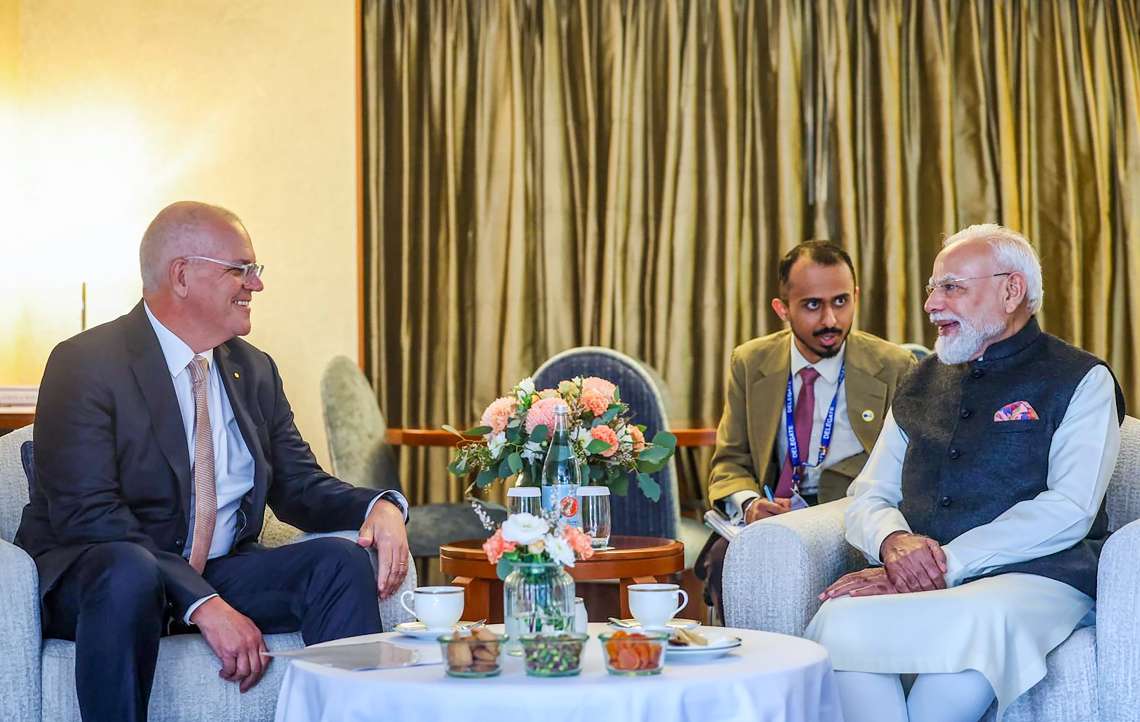
Recalling his meeting with Modi, Morrison said the two had discussed developments in the Indo-Pacific.
“I had the opportunity to see Prime Minister Modi when he was here as well, and we had quite a long conversation about things in the Indo-Pacific. He remains very alive to those issues. India’s engagement in the Quad is what makes it so unique. I can’t underscore that enough. India’s continued engagement with the Quad is critical to its success,” he said.
Morrison also described the Indo-Pacific as the geopolitical centre of the world, saying European companies needed a stronger understanding of the region’s security, economic challenges and opportunities.
“Australia and India are great platforms for Europe to gain that understanding of this part of the world. India and Australia are very different countries, but together with Japan, Korea and other countries in the region, they provide important points of engagement,” he added.