Global watchdog acknowledges reform efforts but says Nepal must address key anti money laundering weaknesses…reports Asian Lite News Desk
Nepal will remain on the Financial Action Task Force (FATF) grey list despite progress in strengthening its anti money laundering and counter terrorist financing framework, with the global watchdog urging the country to accelerate reforms and address remaining strategic deficiencies.
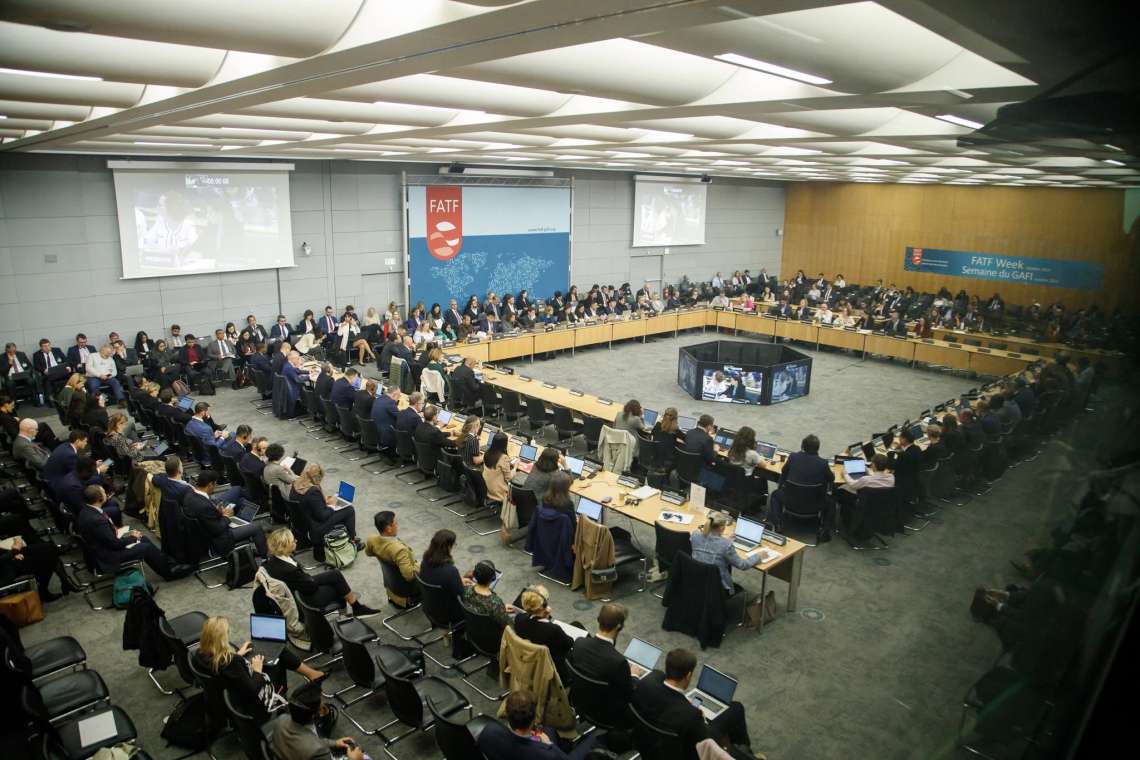
The Paris based FATF, which monitors global efforts to combat money laundering, terrorist financing and proliferation financing, reviewed Nepal’s progress during its latest assessment and concluded that the country should remain under increased monitoring while continuing to implement its agreed action plan.
Nepal was added to the grey list in February 2025 after the FATF identified weaknesses in its anti money laundering and counter terrorist financing regime. Since then, authorities have introduced a series of reforms aimed at improving compliance with international standards and strengthening oversight of the financial system.
In its latest review, the FATF acknowledged that Nepal had taken steps to address outstanding technical compliance gaps, particularly in relation to targeted financial sanctions linked to terrorist financing and proliferation financing. The watchdog noted that Kathmandu had demonstrated a high level political commitment to working with both the FATF and the Asia Pacific Group on Money Laundering (APG) to improve the effectiveness of its anti money laundering framework.
However, the organisation said significant work remains before Nepal can be removed from the grey list.

According to the FATF, Nepal must improve its understanding of key money laundering and terrorist financing risks while enhancing risk based supervision across sectors considered vulnerable to illicit financial activity. These include commercial banks, higher risk cooperatives, casinos, dealers in precious metals and stones, and the real estate sector.
The watchdog also called on Nepal to demonstrate stronger action against illegal money transfer networks, commonly known as hundi operators, while ensuring that financial inclusion efforts are not undermined.
Another major area of concern highlighted by the FATF is the need to strengthen coordination among law enforcement agencies and regulators involved in investigating financial crimes. The organisation said Nepal must show measurable increases in money laundering investigations, prosecutions and convictions.
In addition, authorities have been asked to improve their ability to identify, trace, freeze, seize and confiscate assets linked to criminal activity in line with the country’s risk profile.
The grey list designation does not trigger economic sanctions, but it can increase scrutiny of cross border financial transactions and raise compliance costs for banks and businesses operating in or with Nepal.
The FATF stressed that jurisdictions placed under increased monitoring are not subject to enhanced due diligence measures or financial sanctions. Instead, governments and financial institutions are encouraged to adopt a risk based approach when assessing transactions and business relationships.
The organisation also warned against excessive de risking measures that could disrupt legitimate financial flows, including remittances and humanitarian assistance.
Efforts to address the shortcomings have received support from international institutions. The International Monetary Fund (IMF) said Nepal’s anti money laundering framework continues to face challenges stemming from limited institutional capacity and fragmented coordination among agencies.
The IMF noted that amendments to Nepal’s Asset (Money) Laundering Prevention Act have strengthened the legal foundation for ongoing reforms. It has also been assisting Nepali authorities with legal drafting and implementation measures related to United Nations Security Council resolutions as part of efforts to help the country meet FATF requirements.
Following Nepal’s grey listing, APG officials visited Kathmandu and met senior government leaders, including Finance Minister Swarnim Wagle and Nepal Rastra Bank Governor Bishwo Nath Poudel. The delegation said Nepal’s leadership had reaffirmed its commitment to fast tracking reforms and implementing the FATF action plan.
The APG said the country’s renewed focus on anti money laundering and counter terrorist financing measures supports broader governance reforms aimed at strengthening economic growth and financial integrity.