Norway has announced it will join a French-led nuclear deterrence initiative under President Emmanuel Macron, citing heightened security concerns in Europe. The move comes alongside assurances from Oslo that its long-standing nuclear weapons policy will remain unchanged…reports Asian Lite News Desk
Norwegian Prime Minister Jonas Gahr Store has said Norway will join French President Emmanuel Macron’s nuclear deterrence initiative, marking a step towards deeper European security cooperation amid rising regional tensions.
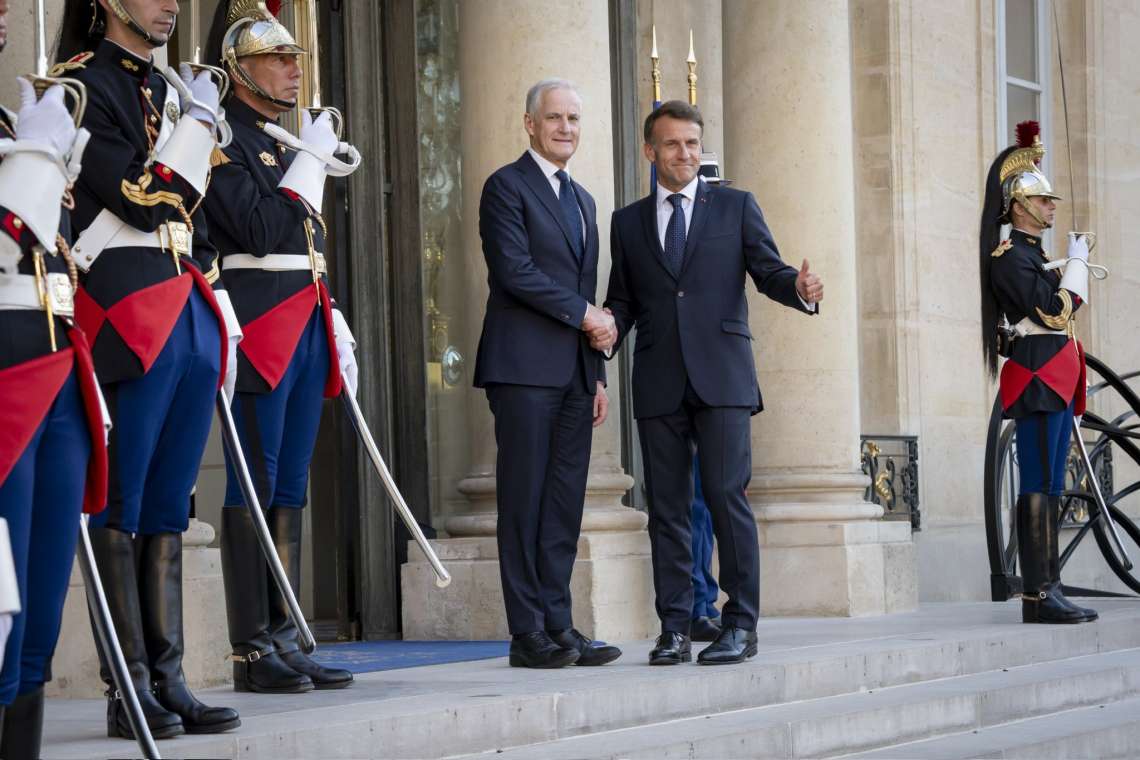
Store made the announcement after travelling to Paris on Wednesday local time for talks with Macron, saying the decision reflected the current security environment in Europe and the need for European countries to take greater responsibility for their own defence.
He emphasised, however, that Norway’s core nuclear policy remains unchanged, including its refusal to allow nuclear weapons to be stationed on its territory during peacetime. He also said Norway would not contribute financially to France’s nuclear weapons programme.
The French initiative, outlined by Macron earlier this year, seeks to give France’s nuclear deterrence a broader European dimension, offering closer coordination with willing partners. Macron has previously indicated that several European countries, including Britain, have shown interest in the proposal.
In March, Macron announced plans to strengthen France’s nuclear arsenal by increasing the number of warheads and expanding the strategic role of its deterrence posture within Europe. He has argued that greater European involvement is needed in light of evolving security challenges on the continent.
Norway and France also signed a new defence agreement in Paris on Wednesday, committing both countries to mutual military support if required. The agreement is intended to deepen bilateral defence cooperation alongside broader European security initiatives.
France has also been engaging other European partners on similar frameworks. In recent months, discussions have taken place with Poland on potential joint military exercises and enhanced defence coordination, including consultations on nuclear-related security cooperation.
Macron has said that options under consideration include information sharing, joint exercises and potential deployment arrangements in coordination with partner states. Polish Prime Minister Donald Tusk has acknowledged ongoing discussions, describing Poland as part of a group seeking greater European solidarity and strategic autonomy.
Countries including Sweden, Britain, Germany, Poland, the Netherlands, Belgium, Greece and Denmark have reportedly expressed varying levels of interest in France’s proposed nuclear deterrence cooperation framework.
The initiative reflects a broader shift in European defence policy as governments reassess security arrangements and seek to reduce reliance on external guarantees. However, participating countries continue to differ on the extent and nature of involvement, particularly regarding nuclear policy.
Norway’s decision signals a cautious but notable alignment with France’s expanding defence outreach, while maintaining clear limits on nuclear deployment and funding commitments.