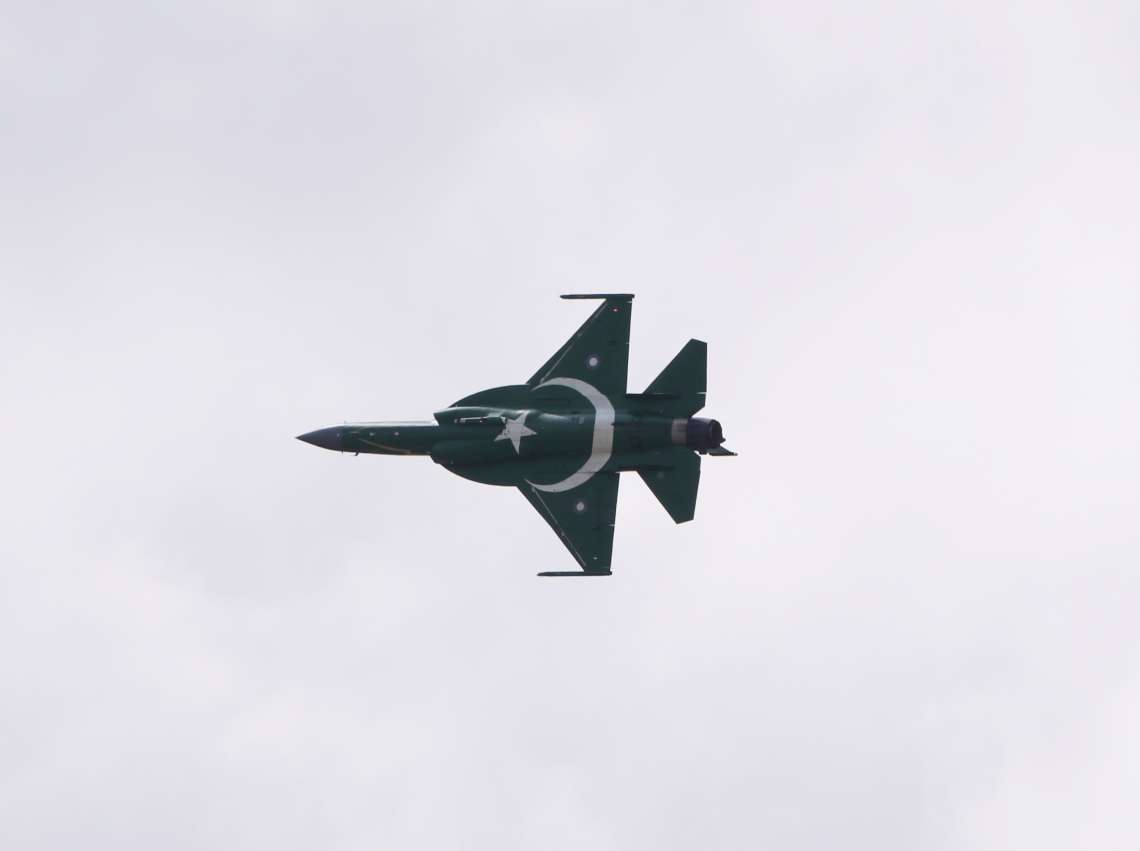
The air force chiefs of the two countries met in Islamabad for detailed discussions focused on military cooperation and aircraft procurement….reports Asian Lite News
Pakistan and Bangladesh have taken a significant step towards deepening defence cooperation, with official confirmation that talks have been held on a potential defence pact that could include the sale of JF-17 Thunder fighter jets to Dhaka. The discussions, reported by Bangladeshi media citing Pakistan’s military, underscore a broader effort by both South Asian nations to recalibrate and expand bilateral engagement after years of relatively limited strategic interaction.
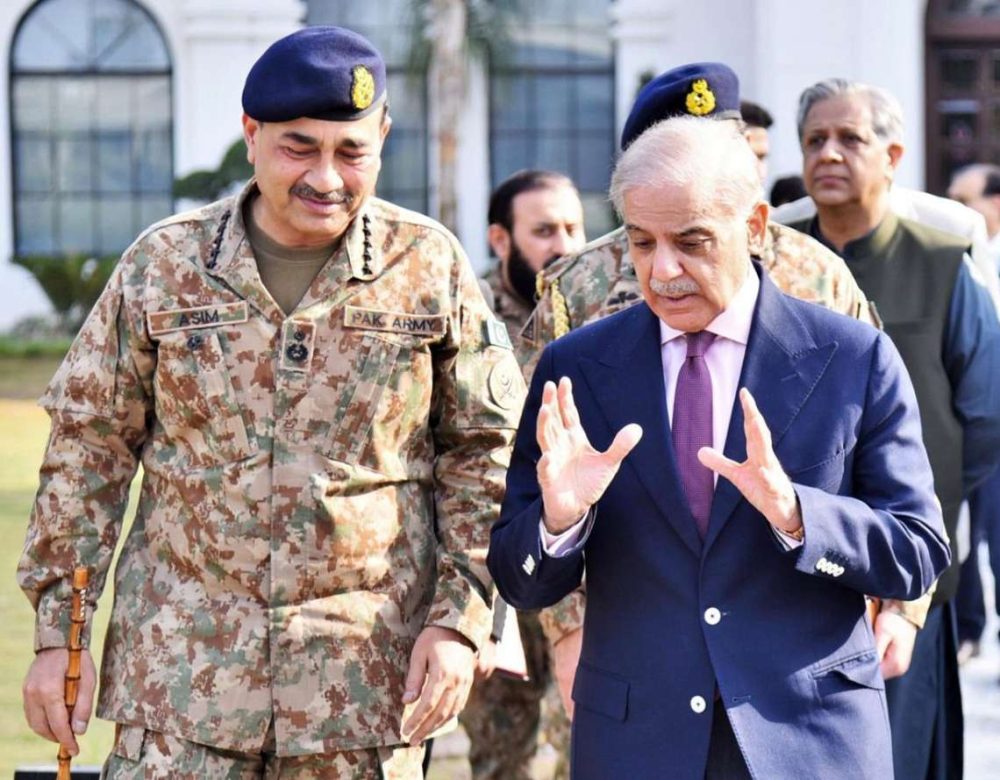
According to reports, the air force chiefs of the two countries met in Islamabad for detailed discussions focused on military cooperation and aircraft procurement. Pakistan Air Chief Marshal Zaheer Ahmed Baber Sidhu and Bangladesh Air Force Chief Air Marshal Hasan Mahmood Khan reviewed the possibility of Bangladesh acquiring the JF-17 Thunder, a multi-role combat aircraft jointly developed by Pakistan and China. The platform has been positioned by Islamabad as a cost-effective fighter suitable for air defence, strike missions and operational flexibility.
The Pakistani military’s press wing said the talks were wide-ranging and constructive, with assurances extended to Bangladesh regarding fast-track delivery mechanisms and long-term support. In addition to the JF-17, Pakistan offered to expedite the supply of Super Mushshak trainer aircraft, along with a comprehensive training framework and sustained technical assistance. This offer was framed as part of a broader ecosystem approach, covering pilot training, maintenance and operational support rather than a standalone sale.
The defence discussions come against the backdrop of renewed diplomatic engagement between the two countries. Late last year, Pakistan’s High Commissioner to Bangladesh, Imran Haider, met Chief Adviser Professor Muhammad Yunus in Dhaka, where both sides discussed reviving direct air connectivity between the two countries. According to official statements, direct flights between Dhaka and Karachi are expected to begin soon, a move seen as crucial for boosting people-to-people contact, trade and business travel.
Defence engagement has also been complemented by high-level military diplomacy. In October, Chairman of Pakistan’s Joint Chiefs of Staff Committee General Sahir Shamshad Mirza paid a courtesy call on Professor Yunus, during which both sides spoke about expanding cooperation across defence, trade and investment. Emphasising shared historical and cultural links, Pakistani officials highlighted what they described as untapped potential in connectivity, commerce and strategic collaboration.
For Bangladesh, the talks signal a pragmatic approach to diversifying defence partnerships at a time when regional security dynamics are becoming increasingly complex. For Pakistan, strengthening ties with Dhaka offers both strategic and economic dividends, including defence exports and a broader diplomatic footprint in South Asia.
Economic stabilisation faces test of durability
While Pakistan pursues external engagement and defence diplomacy, concerns are mounting at home over whether recent signs of macroeconomic stabilisation can translate into durable growth. Business leaders and industrial representatives have warned that headline improvements mask deep structural weaknesses that continue to constrain the economy.
According to Pakistan’s industrial associations, the recent easing of inflation and improvement in foreign exchange reserves have largely been achieved under the discipline of the International Monetary Fund programme rather than through fundamental domestic reform. Inflation, which had crossed 35 per cent in mid-2023, has reportedly eased to around 5.6 per cent by late 2025, while foreign exchange reserves have climbed above USD 21 billion. However, critics argue that these gains have come at the cost of suppressed demand and industrial slowdown.
Syed Mehmood Ghaznavi, chairman of the Pakistan Industrial and Traders Association Front, has cautioned that the country’s fiscal space remains severely constrained by interest payments, which continue to absorb a substantial portion of government revenues. He warned that Pakistan risks repeating a familiar cycle in which short-term stabilisation is followed by stagnation and renewed crisis.
Economic growth projections remain modest, with GDP growth estimated at around 2.5 per cent for the upcoming fiscal year. Industrial leaders argue that this level of expansion is insufficient to absorb Pakistan’s growing labour force or generate meaningful employment. They point to persistent structural problems, including a narrow tax base, loss-making state-owned enterprises, high energy tariffs and the unresolved circular debt in the power sector, estimated at around PKR 1.8 trillion.
Industrialist Waseem Malik echoed these concerns, saying that austerity-led stabilisation cannot serve as a long-term economic strategy. Despite some easing in interest rates, he noted that industrial borrowing remains sluggish, while exporters continue to struggle with high energy and logistics costs that undermine competitiveness.
Business leaders have urged the government to move beyond crisis management and adopt a coordinated, medium-term growth strategy. Calls have been made for regular multi-stakeholder consultations to review policy implementation, sustain reform momentum and restore investor confidence. Without such measures, they warn, Pakistan’s current stability could prove fragile.