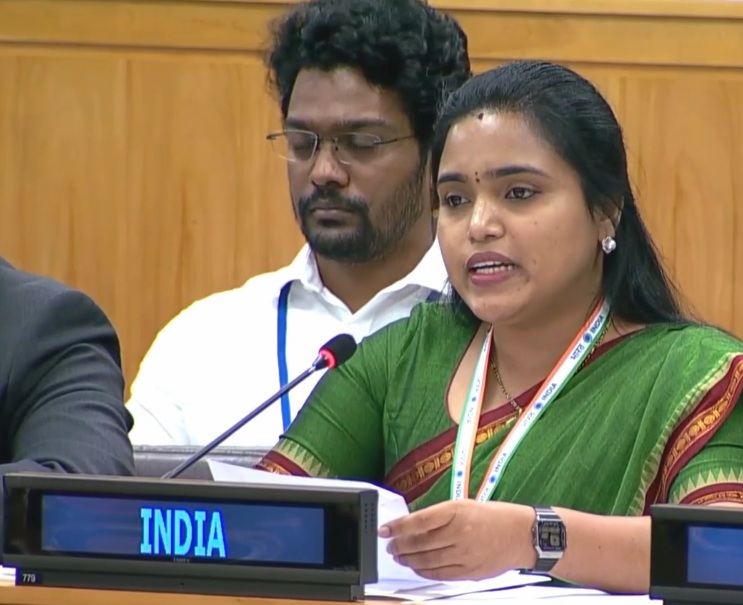
India has urged all UN member states to pay their assessed contributions in full and on time, highlighting its own record of prompt payments….reports Asian Lite News Desk
India has urged all UN member states to pay their assessed contributions in full and on time, while highlighting its own record of timely payments that has earned it a place on the UN’s Honour Roll.
Speaking on Monday at the UN General Assembly’s Fifth Committee, which oversees budgetary and administrative matters, BJP MP Banshilal Gurjar said member states should meet their financial obligations without preconditions. India has been repeatedly included on the UN’s Honour List for prompt payment of its assessed contributions to the organisation’s regular budget.
Gurjar stressed that all member states should pay their assessed contributions in full, on time and without conditions, in an apparent reference to countries that have delayed or withheld payments to the UN.
The UN has faced mounting financial pressures as delayed contributions from major contributors, including the United States and China, have affected its cash flow. The two countries are the largest contributors to the organisation, and delays in their payments have previously pushed the UN towards a financial crisis. Washington subsequently paid part of its outstanding share, while Beijing cleared its contribution for the current year ahead of last month’s high-level General Assembly session.
Gurjar delivered his remarks in Hindi, with simultaneous interpretation provided in the UN’s five official languages.
Gumma Thanuja Rani of the YSR Congress Party, who also addressed the Fifth Committee, stressed the importance of continuing the UN’s reform agenda during the current General Assembly session.
She also underlined the need to provide adequate funding for the UN’s development programmes, saying sufficient allocations were essential for advancing key development priorities.
Gurjar separately raised concerns over delays in the UN’s payments to countries that contribute troops and police personnel to peacekeeping missions.
He pointed out that many of these troop- and police-contributing countries are developing nations. Delays in reimbursement, he argued, effectively force them to shoulder part of the financial burden of UN peacekeeping operations while some member states fail to meet their own payment obligations on time.
He called for timely payments to countries supporting UN peacekeeping missions and reiterated India’s backing for the principle of “capacity to pay” when determining each member state’s share of UN expenses.
Gurjar said the principle was non-negotiable and argued that developing countries should not be required to shoulder a disproportionate share of the organisation’s financial burden.
India’s intervention comes as the UN continues to grapple with funding pressures and calls on member states to fulfil their financial commitments to ensure the organisation can maintain its regular operations, development programmes and peacekeeping activities.