A new report by Freedom Network says Pakistan’s amended Prevention of Electronic Crimes Act is increasingly being used to intimidate journalists, silence dissent and curb free expression….reports Asian Lite News
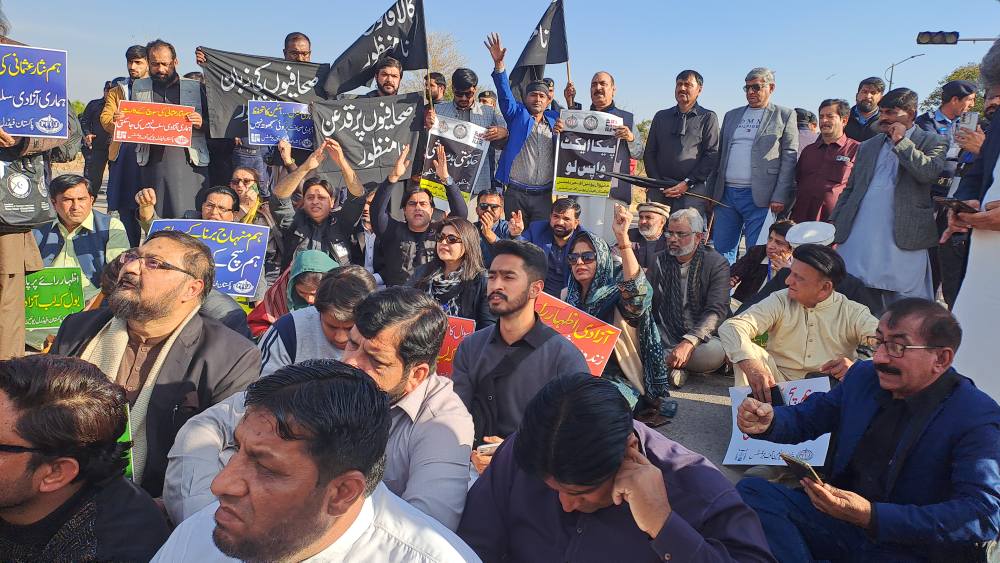
Press freedom in Pakistan has continued to deteriorate over the past year as authorities increasingly use legal, regulatory and economic pressure to curb free expression and intimidate journalists, according to a new report by Islamabad based media watchdog Freedom Network.
The report, titled Regulatory Repression of Freedom of Expression – Legal Controls and PECA Undermine Media and Journalism in Pakistan, identified the amended Prevention of Electronic Crimes Act as the most significant tool being used to suppress journalists, dissenting voices and advocates of free speech.
Released ahead of World Press Freedom Day on May 3, the report said provisions under the PECA law were increasingly invoked during 2025 and 2026 to criminalise lawful expression and target journalists, lawyers and political commentators critical of authorities.
“The weaponisation of PECA has created a climate of fear where journalists are compelled to self censor to avoid legal repercussions,” said Freedom Network Executive Director Iqbal Khattak, describing the law as one of the gravest threats to media freedom in the country.
The report cited convictions of human rights lawyers Imaan Mazari and Hadi Ali Chattha as examples of how custodial sentences were allegedly being used to silence dissent.
It also noted that dozens of journalists had been booked under PECA related charges, while defamation lawsuits, regulatory crackdowns and internet shutdowns further weakened independent journalism in the country.
According to the report, measures introduced by the state in the name of combating disinformation and hate speech were often accompanied by heightened surveillance and selective enforcement.
Freedom Network documented at least 129 verified violations against journalists between April 2025 and March 2026. These included two murders, five death threats, 58 legal cases mostly linked to PECA provisions, 16 assaults, 11 threats of violence and two cases involving kidnapping or enforced disappearance.
The report identified Punjab and Khyber Pakhtunkhwa as the most dangerous regions for journalists, while killings reported in Sindh and Balochistan highlighted continuing security risks.

It alleged that state authorities were responsible for more than 60 per cent of the reported violations, mainly through legal action and custodial measures. Non state actors, including militant outfits and criminal groups, were also linked to threats, assaults and killings targeting media workers.
The report also drew attention to the risks faced by women journalists. It referred to the arrest of three female reporters in Islamabad while they were attempting to cover the Aurat March in March, describing it as an example of the gender specific threats women in the profession continue to face.
Female journalists, the report said, remained marginalised within the media industry and continued to encounter workplace discrimination, online harassment and abuse. It also highlighted concerns over deepfake abuse and arbitrary detentions targeting women journalists.
In addition to security threats, the report said journalists in Pakistan were facing mounting economic pressures, including delayed salaries, job insecurity and dependence on government advertising, all of which were affecting editorial independence.
Afghanistan Ranked Among World’s Worst
Afghanistan has been ranked 175th out of 180 nations in the 2026 World Press Freedom Index, the local media reported on Thursday citing data from Reporters Without Borders (RSF).
Afghanistan’s overall score increased from 17.88 in 2025 to 19.51 in 2026, indicating better press freedom. Despite the slight improvement, Afghanistan has been ranked among the worst-performing nations, Amu TV reported.
RSF evaluates press freedom on the basis of five indicators – political, economic, legislative, social and security — each analysing a different dimension of the media landscape. The political indicator, which analyses government influence over the media and editorial independence, ranked Afghanistan 158th in 2026, in comparison to 163rd in 2025.
The economic indicator, which assesses the financial condition for journalism including funding, advertising and sustainability of media houses, remained unchanged at 165th in both years. The legislative indicator, which analyses laws and regulations impacting press freedom, ranked Afghanistan at 178th position in 2025 and 2026.
The social indicator, which evaluates societal pressures, discrimination and the ability of journalists to function freely within the cultural norms, ranked Afghanistan at 175th rank in 2025 and 2026. The security indicator, which evaluates risks like violence, detention and threats against journalists ranked Afghanistan at 177th spot in 2026 in comparison to 175th in 2025.
RSF noted that the figures showcase that media environment has reshaped after Taliban seized power in Afghanistan on August 15, 2021. It said, “The takeover sounded the death knell for press freedom,” adding that media organisations now need to broadcast government-controlled information in an environment “devoid of pluralism and dissenting voices.”
According to the agency, 43 per cent of media houses closed within three months of Taliban’s return to power. Over two-thirds of Afghanistan’s roughly 12,000 journalists have left the field, Amu TV reported.
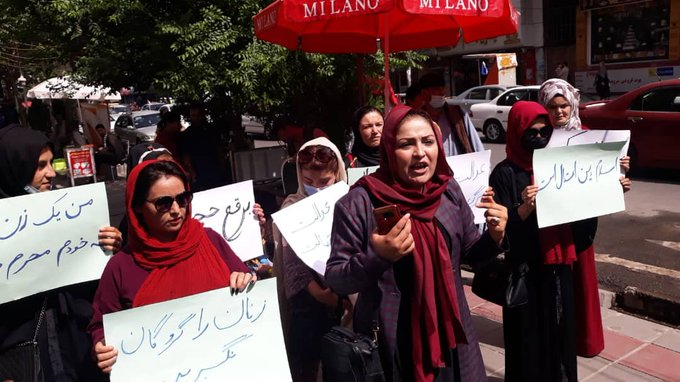
Women journalists have also been impacted, with eight out of 10 not working anymore. According to the RSF, the political and legal environment has increased control over the media in Afghanistan, with journalists receiving orders from several state bodies, including ministries, the intelligence service and institutions monitoring public conduct.
According to the agency, legal restrictions have increased in Afghanistan since 2021, including the implementation of rules governing media content and a 2024 law on the propagation of virtue and prevention of vice, which has resulted in closure of some television outlets and further limited content.
Afghanistan’s economy has contracted sharply, resulting in reduction of funding for independent media and compelling many media outlets to shut down or reduce operations, as per the report.
RSF noted that security risks remain high in Afghanistan, with journalists facing the constant threat of arrest by Taliban. According to the RSF, the worsening conditions in Afghanistan have forced many journalists into exile, leading to only a limited number of independent voices operating outside the country.
The agency said that access to independent information is restricted in Afghanistan, with many residents relying on foreign or exile-based media for information when internet is available. According to the RSF, four journalists remain in detention in Afghanistan in 2026.