UAE Food Bank launches eight million meal Ramadan campaign, combining charity, sustainability and food security in nationwide drive….reports Asian Lite News
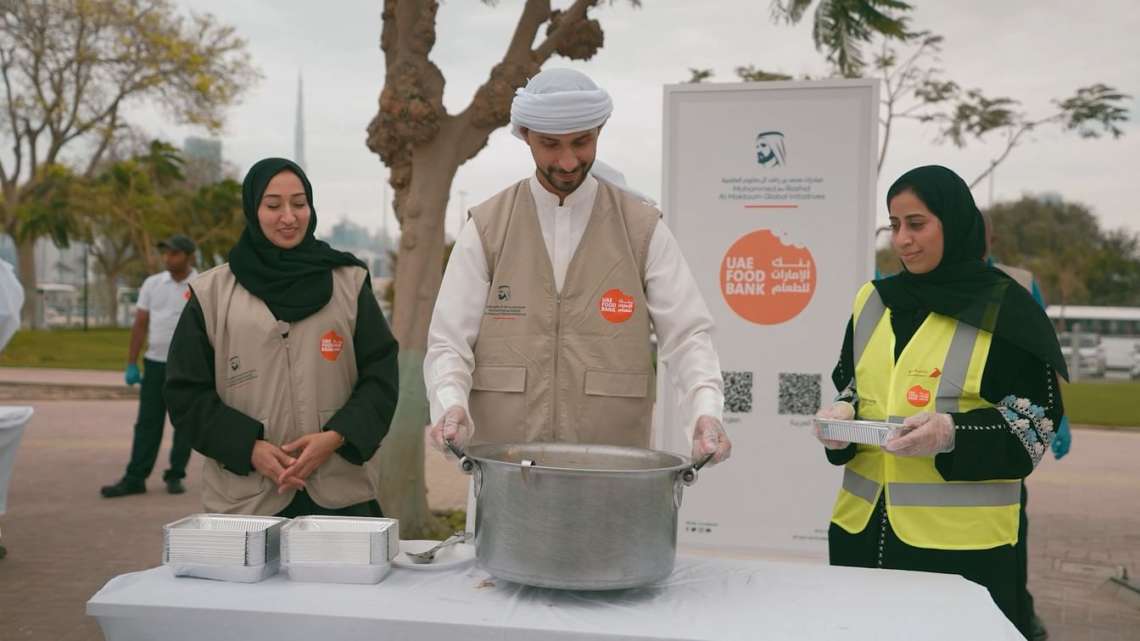
The UAE Food Bank has launched an ambitious Ramadan campaign to distribute eight million meals to beneficiaries inside the UAE and abroad, reinforcing the country’s reputation for large-scale humanitarian outreach during the Holy Month.
Launched under the directives of H.H. Sheikha Hind bint Maktoum bin Juma Al Maktoum, wife of His Highness Mohammed bin Rashid Al Maktoum, Vice President, Prime Minister and Ruler of Dubai, and Chairperson of the Board of Trustees and Supreme Chairperson of the UAE Food Bank, the initiative is titled ‘Bank of Goodness in the Month of Giving’.
The campaign forms part of the wider work of the Mohammed Bin Rashid Al Maktoum Global Initiatives and aims to collect surplus food, manage it efficiently and redistribute it to those in need. The eight million meals target reflects both the scale of food waste generated during Ramadan and the opportunity to channel excess into meaningful social impact.
This year’s programme will operate through five integrated initiatives: Charity Fridge, My Home Without Waste, Meer Al Khair, Zabeel Iftar and Recycle, Re-life. Together, they form what organisers describe as a sustainable institutional framework for surplus food management.
Manal bin Yaroof, Head of the Executive Team at the UAE Food Bank, said the campaign embodies the leadership’s vision of strengthening charitable and humanitarian work as a pillar of national development. She said it reaffirms that generosity and solidarity are deeply rooted in Emirati society and reflect the UAE’s message of building bridges of goodness with communities around the world.
The Charity Fridge initiative remains one of the campaign’s flagship projects. Refrigerators will be placed in residential neighbourhoods in coordination with Dubai’s Knowledge and Human Development Authority, allowing individuals and organisations to donate surplus iftar and suhoor meals in a safe and organised way. The project aims to reduce food waste while promoting a culture of sharing within communities.
My Home Without Waste focuses on awareness, encouraging families to adopt smarter food management habits. Through practical guidance delivered by leading chef influencers, the initiative promotes responsible consumption, better storage techniques and creative reuse of leftovers. Organisers say the goal is to make food preservation part of everyday household practice, particularly empowering homemakers and working women.
Meer Al Khair will distribute essential food parcels to families in need during Ramadan, helping to stabilise food access for vulnerable households. The parcels are prepared and distributed with the support of partners and volunteers, reinforcing community participation in humanitarian work.
Zabeel Iftar, meanwhile, will host a large collective iftar for workers at Zabeel Park, offering complete meals in an atmosphere that highlights compassion and social solidarity during the Holy Month. The initiative underscores the UAE Food Bank’s commitment to reaching segments of society that may otherwise struggle to access nutritious meals.
In partnership with the National Food Loss and Waste Initiative ‘Ne’ma’, Recycle, Re-life aims to further embed sustainability within the campaign. Surplus food from hotels will be collected and redistributed to beneficiaries where suitable, while non-edible waste will be converted into organic agricultural compost in collaboration with the ReLoop application by Ecyclex. This approach supports the circular economy and contributes to reducing carbon emissions linked to organic waste.
Beyond meal distribution, the campaign aligns with the UAE National Food Security Strategy 2051 and broader environmental goals. By promoting efficient surplus food management, it supports national priorities to enhance food security, reduce waste and minimise environmental impact.
Organisers emphasise that strategic partnerships with the public and private sectors are central to achieving the campaign’s targets. Community volunteers will also play a key role in food collection, sorting and distribution, ensuring that surplus is channelled swiftly and safely to beneficiaries.