Rights activists seek media access and timely cross-border warnings following Kyirong glacier collapse….reports Asian Lite News Desk
Tibetan rights groups and environmental researchers have raised concerns over what they describe as a lack of access to verified information following a glacial avalanche in Kyirong, Tibet, which triggered a devastating flash flood downstream in Nepal’s Rasuwa district.
The International Tibet Network (ITN) and Students for a Free Tibet-India (SFT-India) have called on Chinese authorities to allow international media unfettered access to affected areas and ensure Tibetans are not punished for sharing information or contacting relatives about the disaster.
According to the groups, Chinese state media reported 16 deaths and more than 558 people missing in Tibet following the August 26 disaster. In Nepal, the flooding has claimed at least 939 lives, while more than 3,925 people remain missing, including hundreds of foreign nationals from over 36 countries.
The groups also urged China to share timely and accurate transboundary hydrological data with downstream countries, including Nepal, India and Bangladesh, amid growing concerns over climate-related disasters in the Himalayan region.
Speaking at a press conference in Dharamshala, Tibet Policy Institute research fellow Dhondup Wangmo said the glacier collapse had triggered a cascading disaster and should not be viewed as an isolated incident.
She questioned why authorities had failed to detect the event earlier and issue timely warnings to communities downstream, arguing that the distance travelled by the floodwaters could have provided valuable time for evacuation.
Wangmo also accused Chinese authorities of failing to provide comprehensive details about the scale and magnitude of the disaster in Tibet, alleging that official coverage had focused primarily on rescue efforts rather than the full human and environmental impact.
Tashi Dhondup, campaign coordinator for SFT-India, alleged that an information blackout had been imposed in Kyirong and neighbouring areas, claiming that Tibetans faced restrictions on communication and media access during disasters.
He alleged that at least 10 people had been penalised for sharing information related to the disaster, saying restrictions made it difficult for affected families and the wider international community to assess the true extent of the destruction and loss of life.
The groups said greater transparency and cross-border cooperation were essential as climate-related risks intensified across the Himalayan region.
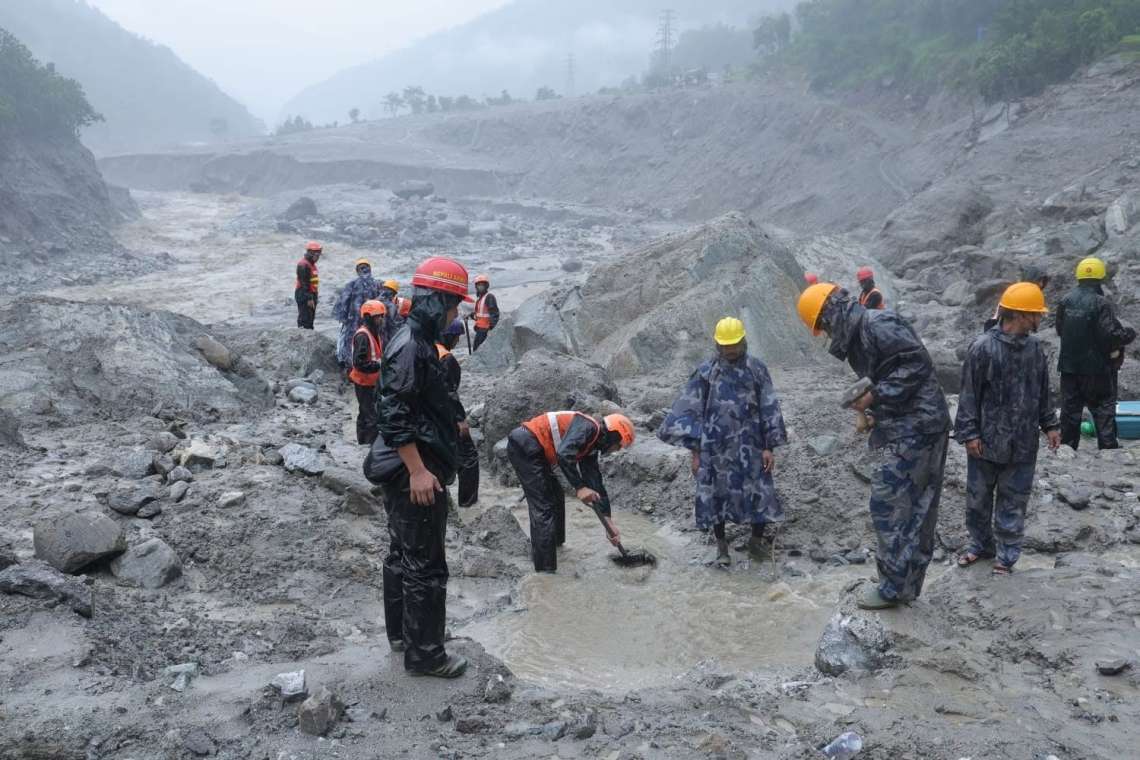
In Nepal, search and rescue operations are continuing following the devastating floods. According to the National Disaster Risk Reduction and Management Authority, 939 people have been confirmed dead and 3,925 remain missing, including 592 foreign nationals.