A week of global exhibitions, rights events, and political engagement saw Uyghur advocates expose China’s repression and growing international pressure while rallying worldwide solidarity for justice and accountability.
Uyghur advocacy entered a new phase of global visibility as the World Uyghur Congress (WUC) sharpened its international campaign, mobilising cultural, political, and human-rights platforms across Europe and Asia to expose China’s widening repression and expanding influence. The WUC’s weekly brief outlined a series of events that underscored both the scale of ongoing abuses in Xinjiang and the growing determination of Uyghur groups and their allies to resist Beijing’s authoritarian reach.
Across Germany, Turkey, Thailand, and the UK, activists spotlighted mass detentions, cultural erasure, digital surveillance, and forced labour — while new reports revealed rising pressure Beijing is exerting on foreign governments, institutions, and universities to mute criticism. The week’s developments painted a stark picture: as China deepens repression at home, its efforts to shape the global narrative are becoming increasingly aggressive.
Cultural resistance on display in Munich
In Munich, Kazakh-Uyghur painter Ahmet Akhat opened a three-day exhibition at the historic Blutenburg Castle, celebrating Silk Road traditions and Uyghur cultural identity. Supported by Nurnisa Ismail, the event brought together local Germans, Uyghur diaspora members, and cultural scholars, blending art, performance, and political expression. Organisers said the exhibition was both a tribute to Uyghur heritage and a reminder of the fragility of cultures under state-directed assimilation.
Calls for justice from Istanbul to Bangkok
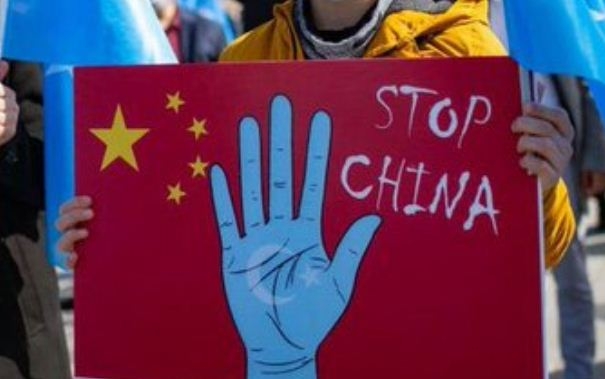
In Istanbul, the Turkey Unity Foundation hosted “The Unheard Cries of East Turkistan,” an event that condemned China’s policies of genocide, mass surveillance, and cultural suppression. WUC Vice President Abdureshit Abduhamit highlighted Turkey’s long-standing ties to the Uyghur cause and warned that thousands of Uyghur refugees remain in legal limbo as Beijing increases demands for deportation.
In Bangkok, WUC President Turgunjan Alawdun and former President Dolkun Isa joined nearly a thousand democracy advocates at the International Civil Society Week (ICSW) 2025. Under the theme “Reimagining Democracy, Rights, and Inclusion,” WUC representatives urged global civil society to confront China’s rights violations and oppose Beijing’s efforts to export its authoritarian governance model.
China’s surveillance state and forced labour
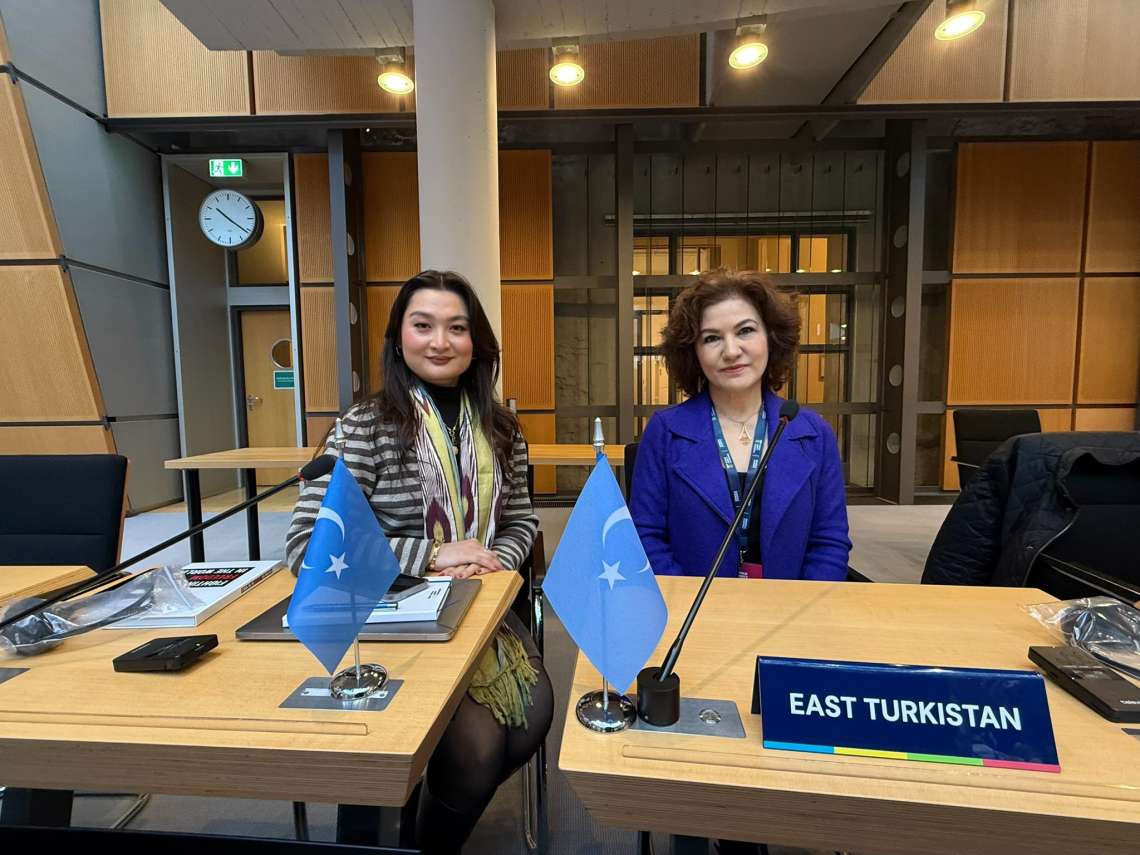
German newspaper Handelsblatt published a detailed investigation quoting WUC Vice President Zumretay Arkin, who warned that China’s “Ethnic Unity Law” undermines Uyghur language rights and institutionalises cultural assimilation. Arkin also used a Radio Canada interview to urge Ottawa to adopt forced-labour legislation mirroring the US Uyghur Forced Labour Prevention Act, arguing that global supply chains remain compromised by coerced labour in Xinjiang.
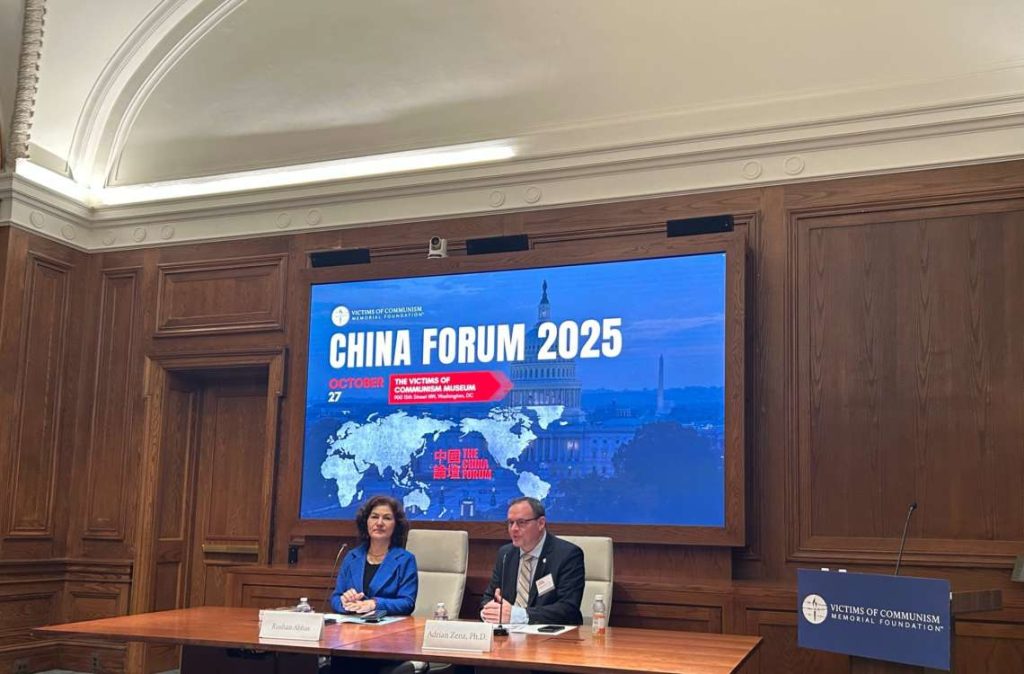
On 5 November, WUC Executive Committee Chair Rushan Abbas received the 2025 Democracy Award from the National Endowment for Democracy (NED), recognising her years of advocacy and personal sacrifice — including the disappearance of her sister, Dr Gulshan Abbas, inside Xinjiang’s detention system.
Later that day, WUC officials joined a remembrance ceremony at the Dachau Concentration Camp memorial, honouring Turkic victims of Nazi persecution and drawing sombre parallels with present-day state repression in China.
The week ended with a revelation from The Guardian that Sheffield Hallam University had suspended its acclaimed research into Uyghur forced labour after alleged pressure from Beijing. The development fuelled concerns over China’s increasing attempts to influence academic institutions abroad and stifle evidence of human-rights abuses.