The initiative, led by the State Department, marks one of the Trump administration’s strongest public moves against the ICC…reports Asian Lite News Desk
The United States has launched what it describes as a “whole-of-government” campaign against the International Criminal Court (ICC), signalling a significant escalation in its long-running opposition to the Hague-based tribunal through the possible use of sanctions, visa restrictions and diplomatic pressure.
The initiative, led by the State Department, marks one of the Trump administration’s strongest public moves against the ICC, which Washington argues poses a threat to US sovereignty and could seek to prosecute American officials and military personnel without the country’s consent.
“The United States is launching a sweeping, whole-of-government campaign led by the State Department to systematically dismantle the International Criminal Court’s threat to US sovereignty,” State Department spokesperson Tommy Pigott said.
A senior State Department official said the administration is considering “a wide range of options” in coordination with other federal agencies.
The measures under consideration include travel bans, visa revocations, expanded sanctions targeting the ICC and affiliated organisations, as well as diplomatic efforts aimed at reducing international political and financial support for the court.
According to the official, senior US leaders, including the Secretary of State, the Deputy Secretary, ambassadors and other senior officials, have begun contacting governments around the world as part of a coordinated campaign to isolate the ICC diplomatically.
The outreach is intended to persuade countries that are parties to the Rome Statute, the treaty that established the ICC, to withdraw from the court and stop providing financial support.
Governments that are not members of the Rome Statute are also being encouraged to use their diplomatic influence to back the US effort.
The State Department official said countries that cooperate closely with US law enforcement, host American military forces or rely on broader US security partnerships are being urged to reject what Washington describes as the ICC’s authority to prosecute US officials and service members.
“We will watch with interest which nations join ranks with us against this threat to Americans who are willing to risk their lives to protect others,” the official said.
The administration also suggested that countries continuing to support the ICC while benefiting from US assistance could face greater scrutiny.
“While the calls are intended to highlight the ICC’s abuses and the risks posed to Americans and other nations, nations that refuse to reject the ICC’s false authority while relying on US assistance are likely to come under increased scrutiny,” the official said.
Pigott accused the court of seeking powers beyond those of sovereign states.
“The ICC now seeks to become the unaccountable global arbiter – positioning itself above and beyond the nation state as a supranational enforcement arm of a globalist bureaucracy empowered to persecute American servicemen and officials at will,” he said.
He added: “The United States does not recognize the authority of international bureaucrats an ocean away who seek to upend America’s 250-year history of self-governance and impose an illegitimate legal order on our sovereign nation. America’s sovereignty is and always will be non-negotiable.”
Pigott also indicated that Washington was prepared to intensify its campaign.
“A wide range of options are available to ensure the ICC is completely and utterly incapable of threatening the U.S. and our people. No diplomatic option will be off-limits in the campaign to dismantle the threat posed by the ICC to Americans,” he said.
The United States has never been a party to the Rome Statute and has consistently maintained that the ICC should not exercise jurisdiction over US citizens without Washington’s consent.
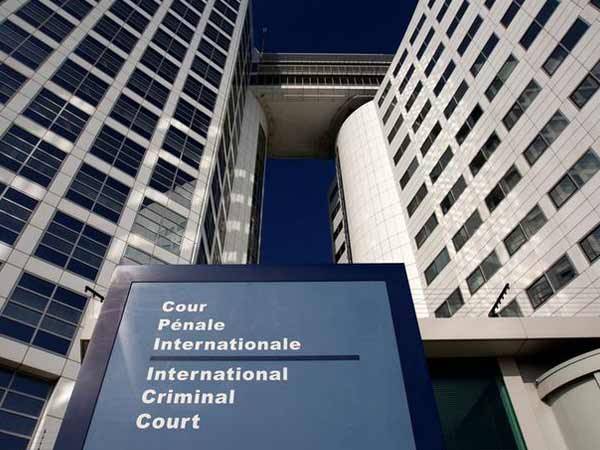
The ICC, established in 2002 and headquartered in The Hague, prosecutes individuals accused of genocide, crimes against humanity, war crimes and the crime of aggression when national courts are unwilling or unable to do so.
More than 120 countries are parties to the Rome Statute, although several major powers, including the United States, China, India and Russia, are not members of the court.
Tags: United States, ICC, International Criminal Court, Donald Trump, Trump administration, State Department, Tommy Pigott, Rome Statute, The Hague, sanctions, visa restrictions, diplomacy, US sovereignty, international law