The campaign highlights India’s commitment to representing the Global South, strengthening peacekeeping, combating terrorism and reforming multilateral institutions….reports Asian Lite News Desk
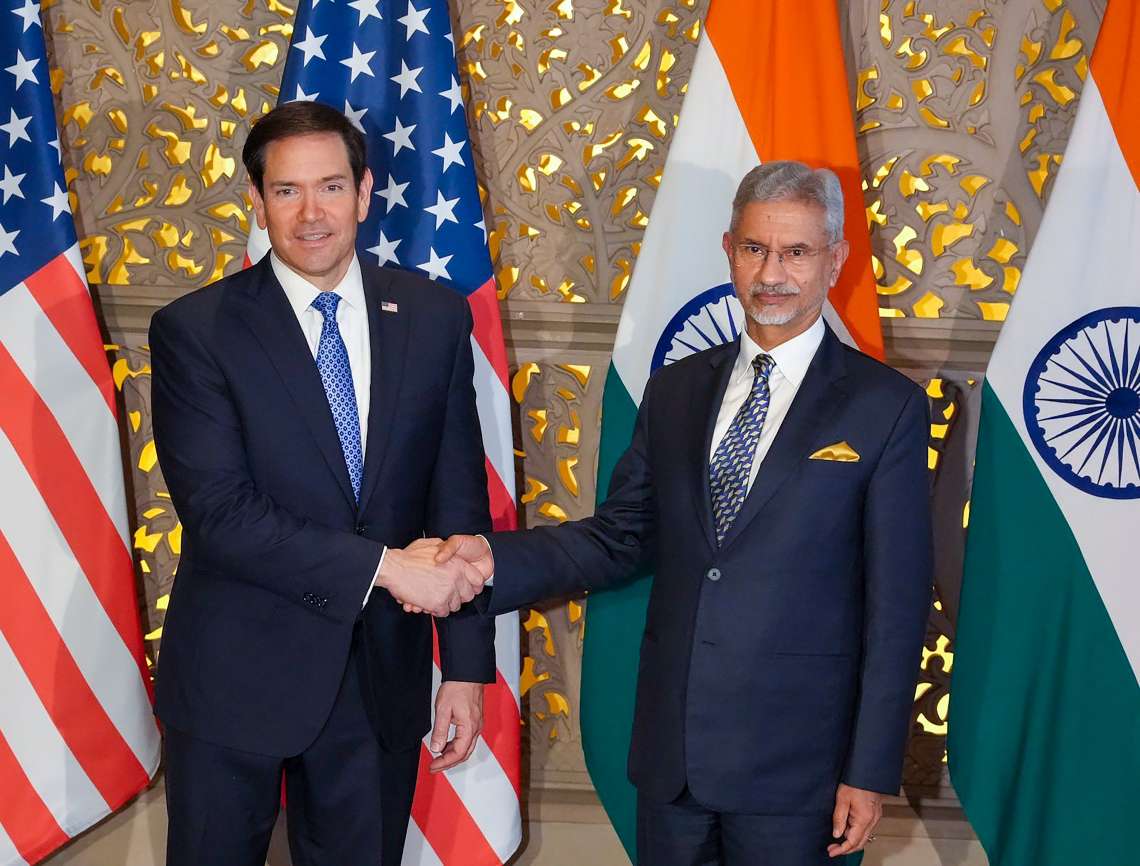
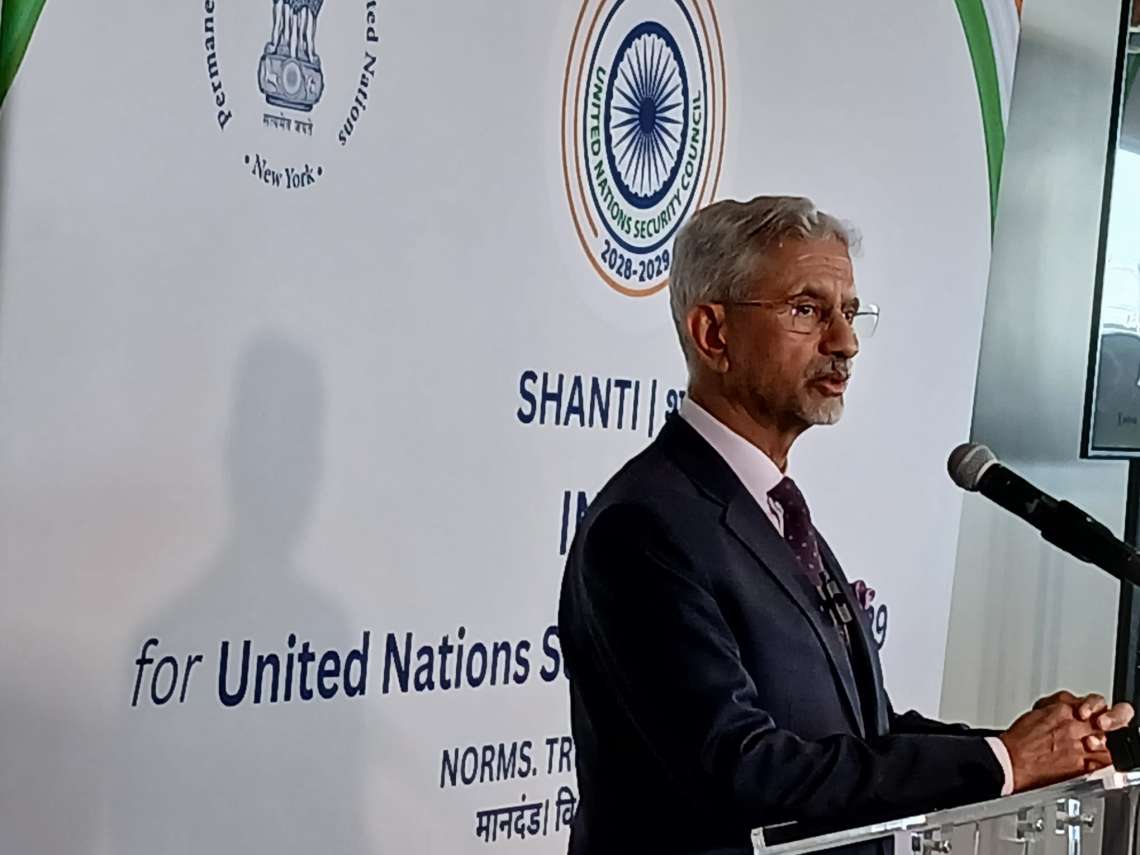
External Affairs Minister S. Jaishankar on Monday formally launched India’s campaign for election to the United Nations Security Council (UNSC), unveiling a six-point manifesto centred on the acronym ‘SHANTI’ – Securing Holistic Advancement through Norms, Trust and Integrity.
Addressing diplomats and delegates at the United Nations headquarters, Jaishankar said India’s candidature reflected its commitment to serving as the voice of the Global South while strengthening multilateralism, promoting peacekeeping and making the UN better equipped to address contemporary global challenges.
India will contest next year’s election to the UN General Assembly for the Asia-Pacific non-permanent seat on the Security Council for the 2028-29 term. If elected, it will mark India’s ninth tenure as an elected member of the Council.
Jaishankar said India’s campaign builds on its record of supporting developing countries, contributing to UN peacekeeping operations and championing reforms within the United Nations. He also reaffirmed that India would continue its strong focus on combating terrorism, a key priority during its most recent Security Council term in 2021-22.
Alongside its bid for a non-permanent seat, India continues to pursue permanent membership of the Security Council as part of its long-standing campaign for reform of the UN’s highest decision-making body.
India’s candidature, however, faces competition from Tajikistan, which has also announced its intention to contest for the Asia-Pacific seat that will be vacated by Bahrain at the end of next year.
Tajikistan has been lobbying for the position for several years and secured the endorsement of the Organisation of Islamic Cooperation (OIC) in 2023. The OIC, comprising 56 member states, backed Tajikistan on the basis of “the principle of Islamic solidarity as being inherent to the joint Islamic action”.
To secure election, India will require the support of two-thirds of the 193-member UN General Assembly.
During its previous successful campaign, India was unanimously endorsed by the Asia-Pacific Group and contested the election unopposed, securing 184 votes, with eight ballots cast as spoiler votes.
The 53-member Asia-Pacific Group includes countries stretching from Lebanon in the west to Kiribati in the east. Non-permanent Security Council seats are allocated by regional groups, which often seek consensus candidates, although contested elections are not uncommon.
India’s most recent Security Council tenure was marked by its rotating presidency in October 2021, when it convened a Council meeting in India. During a session in Mumbai, Council members paid tribute to the victims of the 2008 Mumbai terror attacks and reviewed the impact of terrorism. Discussions in Mumbai and New Delhi also focused on preventing terrorists from exploiting emerging technologies.
India is seeking a more regular presence on the Security Council after long intervals between previous terms. Its first elected tenure was in 1950-51, followed by terms beginning in 1967, 1972, 1977, 1984, 1991, 2011 and 2021.
Meanwhile, Kyrgyzstan was elected in June to the Asia-Pacific seat and will replace Pakistan when its term concludes at the end of this year. The OIC has also endorsed Libya for the 2027 Security Council election for the Africa seat. Several countries begin campaigning years in advance, with Malaysia already preparing its bid for the 2035 election after securing OIC backing in 2023.
Tags: India, S Jaishankar, United Nations, UNSC, UN Security Council, Global South, SHANTI, UN General Assembly, Asia-Pacific, Tajikistan, diplomacy, multilateralism, counter-terrorism, peacekeeping, foreign policy