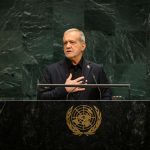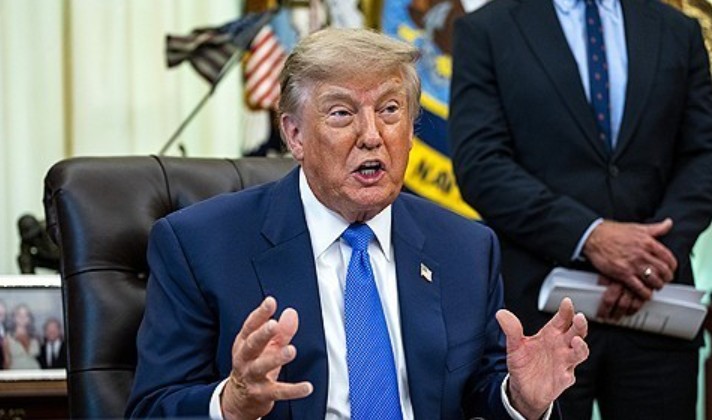
Donald Trump announces an “Economic D-Day” against Iran, threatening severe consequences for countries supporting Tehran as Iranian Foreign Minister Abbas Araghchi rejects the campaign, reports Asian Lite News Desk
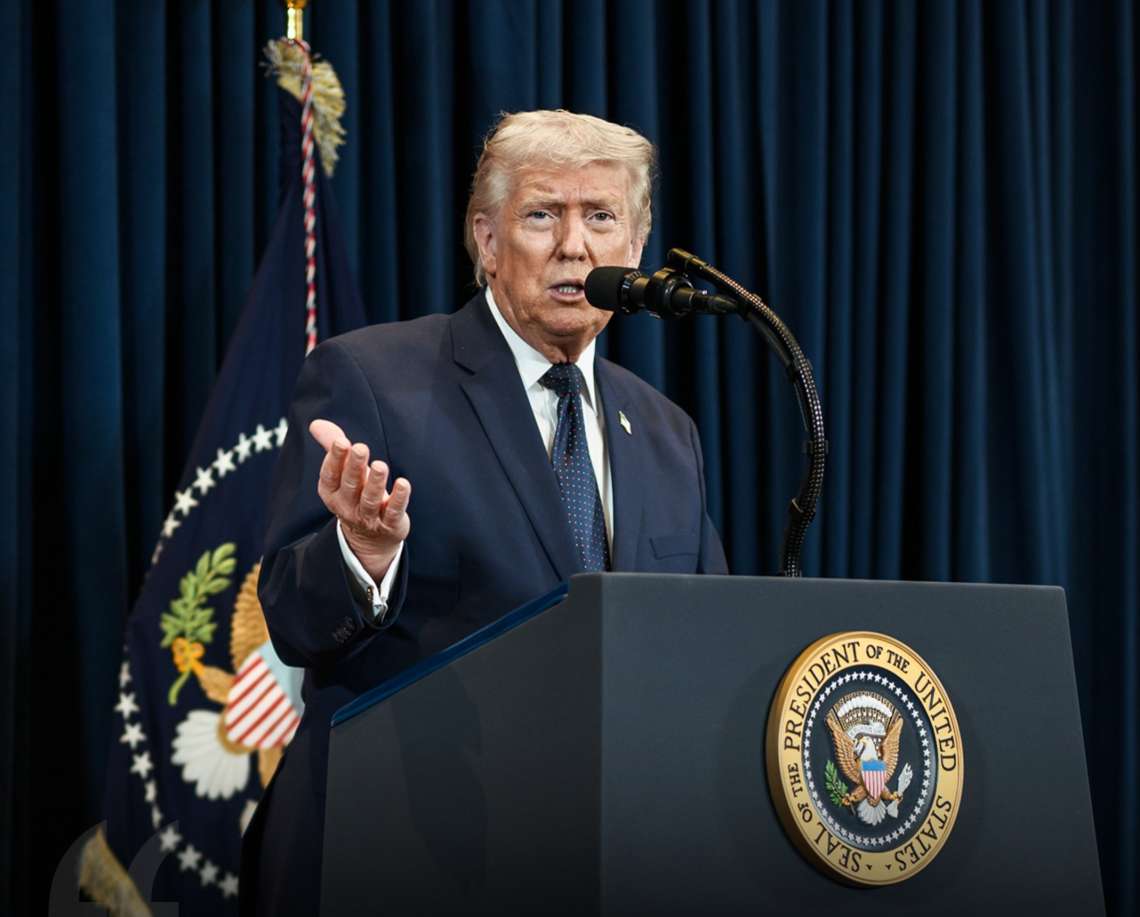
US President Donald Trump has announced what he described as the “most crushing economic operation ever taken” against Iran, warning countries and entities that provide financial, commercial or logistical support to Tehran that they could face “tremendous economic consequences”.
Trump made the announcement on Truth Social on Wednesday, escalating his economic pressure campaign against Iran amid continuing tensions between Washington and Tehran and uncertainty over diplomatic efforts.
He said Iran had failed to take what he described as a major opportunity to reach a deal with the United States.
“No one has given the Islamic Republic of Iran a greater opportunity to make a Deal than me. TRAGICALLY, for them, they have failed to take it,” Trump wrote.
“Therefore, today, I am announcing the MOST CRUSHING ECONOMIC OPERATION EVER TAKEN AGAINST ANY COUNTRY! This will be Economic Warfare and Isolation on an unprecedented scale,” he added.
Trump said the campaign would focus on what he described as Iran’s economic lifelines, including oil-smuggling networks, financial transfers, exchange houses, ship registries and front companies.
“Oil smuggling, swap lines, cash transfers, exchange houses, ship registries, front companies — It all needs to stop NOW,” he wrote.
He also warned that the measures would not be limited to Iran itself. According to Trump, any country allowing its financial institutions, businesses, airports or government entities to provide a “lifeline” to Tehran would face severe economic consequences.
Trump described the campaign as an “economic D-Day” and called on US allies to join Washington in isolating Iran.
“You know who you are. This will be an ECONOMIC D-DAY, and we need all of our Allies to stand with the United States of America to isolate, and defeat, the Iran threat,” he said.
Trump also repeated his position that Iran must not be allowed to acquire nuclear weapons, writing: “IRAN WILL NEVER HAVE A NUCLEAR WEAPON.”
The announcement came shortly after Trump said the United States had “very draconian sanctions” available against Iran and indicated that Washington could introduce further measures.
“We have things that we could sanction. We have very draconian sanctions, and we’ll see what happens,” Trump said when asked about possible sanctions.
Strait of Hormuz remains key issue
Trump’s latest announcement comes amid heightened tensions surrounding the Strait of Hormuz, a major global energy transit route.
Trump said the waterway remained open and claimed that a US naval blockade had been “100 per cent successful”.
“Right now the Strait is open. A lot of boats are coming through,” he said.
“The naval blockade has been extremely effective… the blockade has been 100 per cent successful.”
Trump also pointed to oil prices as evidence that the disruption had not produced the extreme price increases that had previously been forecast.
“They were talking about USD 350 a barrel, and it’s today 84, 85. And we are getting a lot of oil out,” he said.
He pointed to increased production from US states including Texas, Alaska and Louisiana, as well as alternative sources and new pipelines, arguing that these had reduced dependence on the Strait of Hormuz.
“I think the Hormuz Strait is not going to be quite as important as it was in the past,” Trump said.
However, Trump has also indicated that diplomacy with Tehran could potentially resume. Earlier, he said the situation with Iran was “so good” and suggested negotiations could restart “maybe at some point”.
Reports have indicated that the US negotiating team had been asked to pause talks with Iran until Tehran was considered ready to make a deal. Trump has also said there were no talks currently scheduled with Iran.
Iranian Parliament Speaker Mohammad Bagher Ghalibaf has said Tehran would not reopen the Strait of Hormuz until the United States fulfils commitments under a 14-point Memorandum of Understanding. Those demands include lifting the blockade, releasing frozen Iranian assets and easing oil sanctions.
Iran rejects Trump’s economic campaign
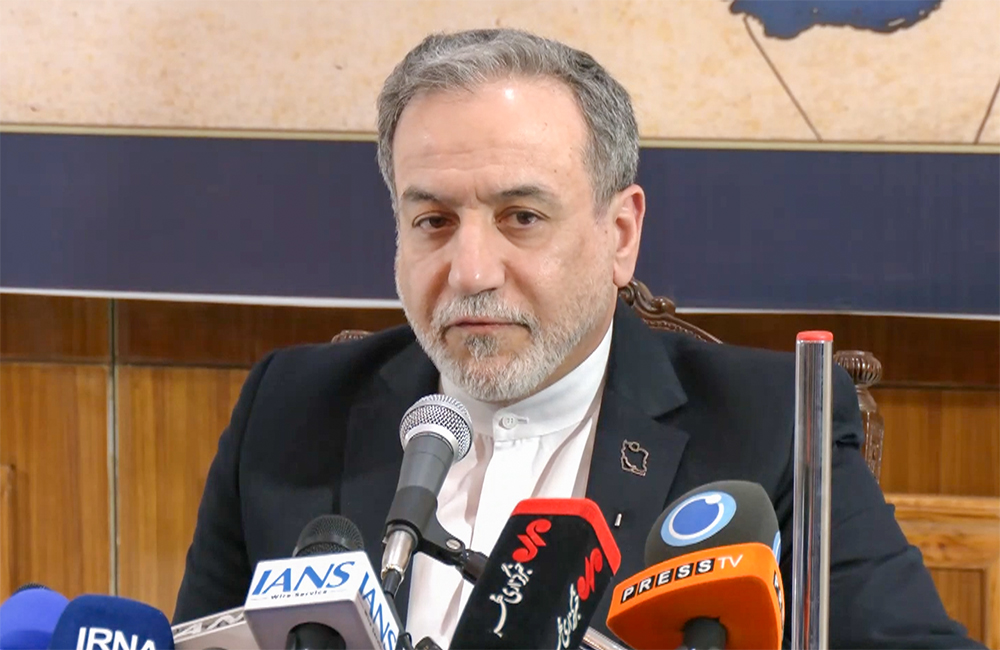
Iranian Foreign Minister Seyed Abbas Araghchi responded on Thursday, rejecting Trump’s description of the new campaign and accusing Washington of using the announcement to divert attention from its own economic problems.
“The so-called ‘Economic D-Day’ is a diversion from America’s own crisis: unprecedented debt & surging interest costs,” Araghchi wrote on X.
He added that doubling down on what he described as failed policies would bring “further defeat” and increase hostility towards the United States, while accusing Washington of threatening the global economy and national sovereignty.
Araghchi also shared reports concerning the US national debt, including coverage of the debt reaching $40 trillion.
The exchange marks another escalation in the increasingly confrontational rhetoric between Washington and Tehran, with Trump threatening wider economic isolation while Iranian officials reject the pressure campaign.
The latest US announcement does not, however, specify a detailed list of new sanctions or identify individual countries that would face penalties. Reuters reported that Trump had not specified how the threatened economic consequences would be enforced.
The announcement is also likely to put pressure on countries and businesses maintaining commercial links with Iran, particularly those involved in oil, finance and shipping. China remains a major buyer of Iranian oil, making the enforcement of any broader secondary sanctions potentially significant for international trade and US-China relations.
The developments leave the future of US-Iran diplomacy uncertain, as Washington combines threats of intensified economic pressure with continued statements that a deal remains possible, while Tehran continues to reject demands it views as unacceptable.