Central Bank governor says UAE banking sector remains strong and stable, with high capital buffers, strong liquidity and advanced systems ensuring uninterrupted financial services nationwide….reports Asian Lite News
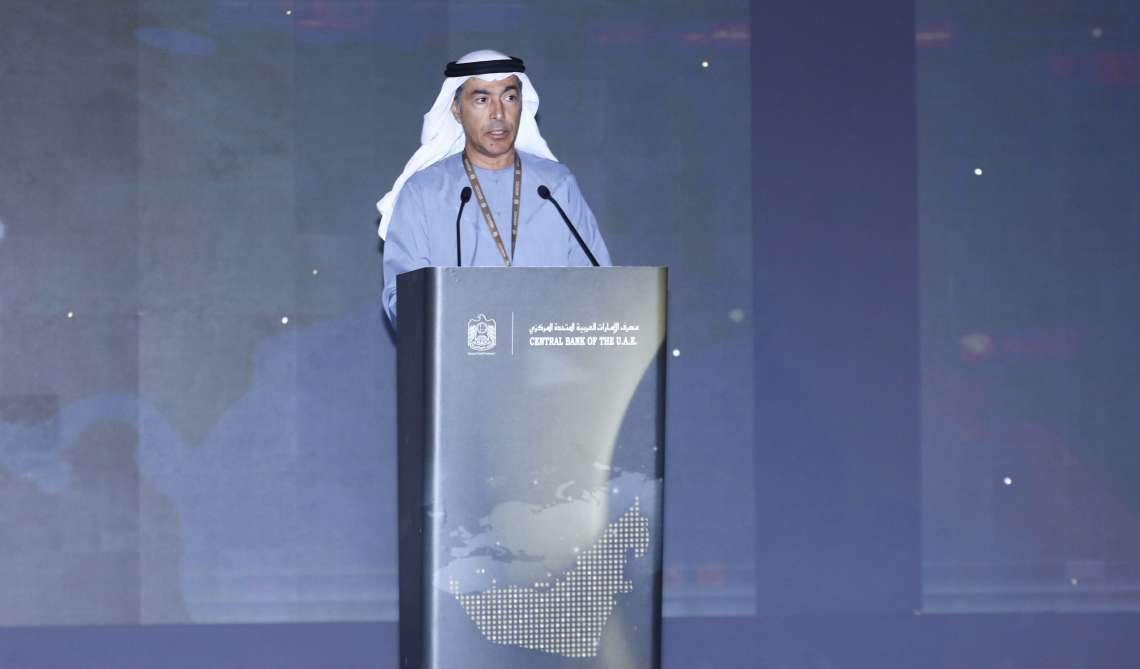
The United Arab Emirates’ banking and financial sector continues to demonstrate strong resilience and stability despite evolving geopolitical developments in the region, according to Khaled Mohamed Balama, Governor of the Central Bank of the United Arab Emirates.
Balama said banks, financial institutions and insurance companies across the country are operating normally and continue to deliver services to customers and businesses without disruption. The assurance comes at a time when markets across the Middle East are closely monitoring regional security developments and their potential economic implications.
Speaking about the sector’s performance, the governor emphasised that the UAE’s financial system remains robust, underpinned by strong regulatory oversight, prudent financial management and a long-standing commitment to stability.
For more than five decades, the central bank has played a key role in safeguarding the resilience of the country’s financial infrastructure. Established shortly after the formation of the United Arab Emirates in 1971, the institution has worked closely with national leadership and financial institutions to build a stable and diversified banking system capable of withstanding regional and global challenges.
Balama said the banking and financial sector has repeatedly demonstrated its ability to adapt and remain resilient during periods of geopolitical uncertainty. Over the past 53 years, the country has experienced numerous regional developments, yet its financial system has continued to grow and evolve while maintaining high levels of stability.
He noted that this legacy of resilience reflects the strength of the foundations on which the UAE’s financial sector has been built. These include sound governance, institutional discipline, strong regulatory frameworks, financial diversification and proactive risk management. Together, these factors have strengthened the country’s reputation as a trusted financial centre and a secure destination for global investors.
The governor also highlighted the sector’s strong financial indicators, which demonstrate its capacity to absorb shocks and continue supporting economic activity.
According to Balama, the capital adequacy ratio of the UAE banking sector currently stands at 17 per cent, comfortably above the minimum regulatory requirements recommended by international supervisory bodies. The Liquidity Coverage Ratio exceeds 146.6 per cent, reflecting strong liquidity buffers across the banking system.
These figures indicate that financial institutions operating in the UAE are well positioned to meet their financial obligations and maintain lending activity even during periods of economic stress.
The scale of the country’s banking system has also continued to expand. Total assets of the UAE’s banking and financial sector now exceed AED5.42 trillion, underlining the strength and depth of the financial institutions operating in the country.
Balama stressed that the UAE’s banking systems, payment infrastructure and financial technology frameworks remain fully operational and highly efficient. These systems are supported by advanced technological platforms designed to ensure the secure and uninterrupted functioning of financial services nationwide.
Banks and financial institutions operating in the country have also implemented sophisticated frameworks for identifying and managing risk. These include comprehensive business continuity planning and operational safeguards aligned with international best practices.
Such frameworks enable financial institutions to respond quickly to emerging challenges while maintaining uninterrupted services for customers and businesses.
The central bank continues to work closely with financial institutions and relevant government authorities to monitor economic and financial developments. Balama said the regulator maintains constant oversight of key indicators related to financial stability, liquidity and systemic risk.
Regular assessments and stress-testing exercises are conducted across the banking system to ensure institutions remain well prepared for potential economic shocks. These tests help regulators evaluate how banks would perform under various hypothetical scenarios and ensure they maintain adequate financial buffers.
The central bank also retains a wide range of prudential and monetary policy tools that allow it to respond quickly if required to safeguard financial stability.
Balama said these tools enable the regulator to take timely and appropriate measures whenever necessary to reinforce confidence in the financial sector and maintain the integrity of the banking system.
The governor concluded by reaffirming the central bank’s commitment to maintaining full operational readiness and continuing to monitor regional and global developments closely.
He said the institution remains dedicated to protecting the achievements made over more than five decades while supporting the UAE’s broader economic ambitions and sustainable development goals.