UAE’s leadership-led development model takes centre stage at World Governments Summit 2026 as Sheikh Saif outlines resilience, trust and global competitiveness shaping future governance….reports Asian Lite News
The UAE’s rise as a global benchmark for governance, competitiveness and resilience was placed firmly in the spotlight as the country was confirmed to be leading in 264 global competitiveness indicators, underscoring a development model built on trust, diversification and societal cohesion.
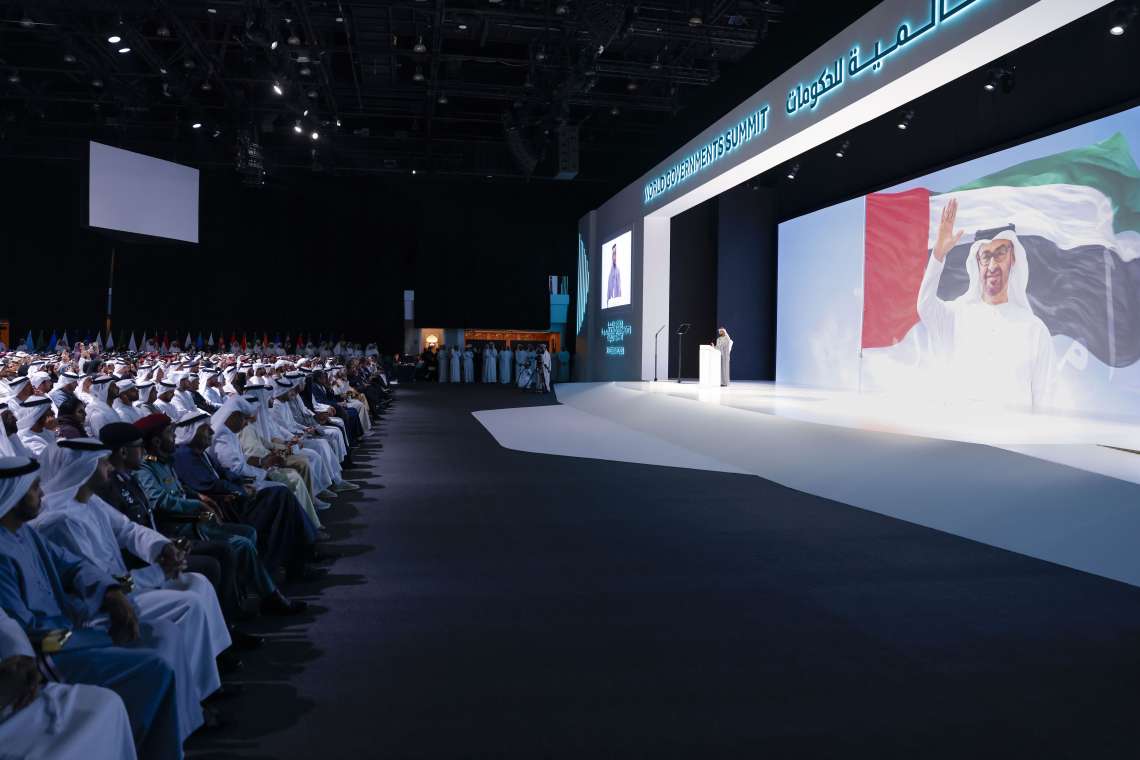
The milestone formed the backdrop to a keynote session titled Unbreakable Fortress on the final day of the World Governments Summit 2026 in Dubai, attended by His Highness Sheikh Mohammed bin Rashid Al Maktoum, Vice President, Prime Minister and Ruler of Dubai. The session was delivered by H.H. Lt General Sheikh Saif bin Zayed Al Nahyan, Deputy Prime Minister and Minister of Interior, and aligned with the summit’s theme, Shaping Future Governments.
Also present were H.H. Sheikh Hamdan bin Mohammed bin Rashid Al Maktoum, Crown Prince of Dubai, Deputy Prime Minister and Minister of Defence, and Chairman of The Executive Council of Dubai; Saqr Ghobash, Speaker of the Federal National Council; along with senior ministers, officials and members of the UAE leadership.
Leadership before infrastructure
Sheikh Saif used the platform to stress that the true strength of nations is not measured by physical assets alone but by the awareness of leadership and the unity of society. He described the UAE’s governance model as a rare reciprocal relationship in which people protect the nation and the nation safeguards its people.
He credited the UAE’s founding fathers with establishing a resilient national framework that has been continuously advanced by successive generations of leaders. Under the vision of President His Highness Sheikh Mohamed bin Zayed Al Nahyan and His Highness Sheikh Mohammed bin Rashid, the UAE has transformed from a resource-based economy into a system-driven state anchored in diversified energy sources, sovereign supply chains and a non-oil economy.
That transition, Sheikh Saif noted, saw the non-oil economy surpass the $1 trillion mark five years ahead of schedule, a milestone reflecting long-term planning rather than short-term cycles.
Strategic vision and global rankings
Expanding on the UAE’s global standing, Sheikh Saif said the country now ranks first worldwide in green hydrogen competitiveness, fourth in concentrated solar power and 13th in nuclear energy production. These rankings, he said, reflect a strategic commitment to energy security and sustainability rather than isolated sectoral achievements.
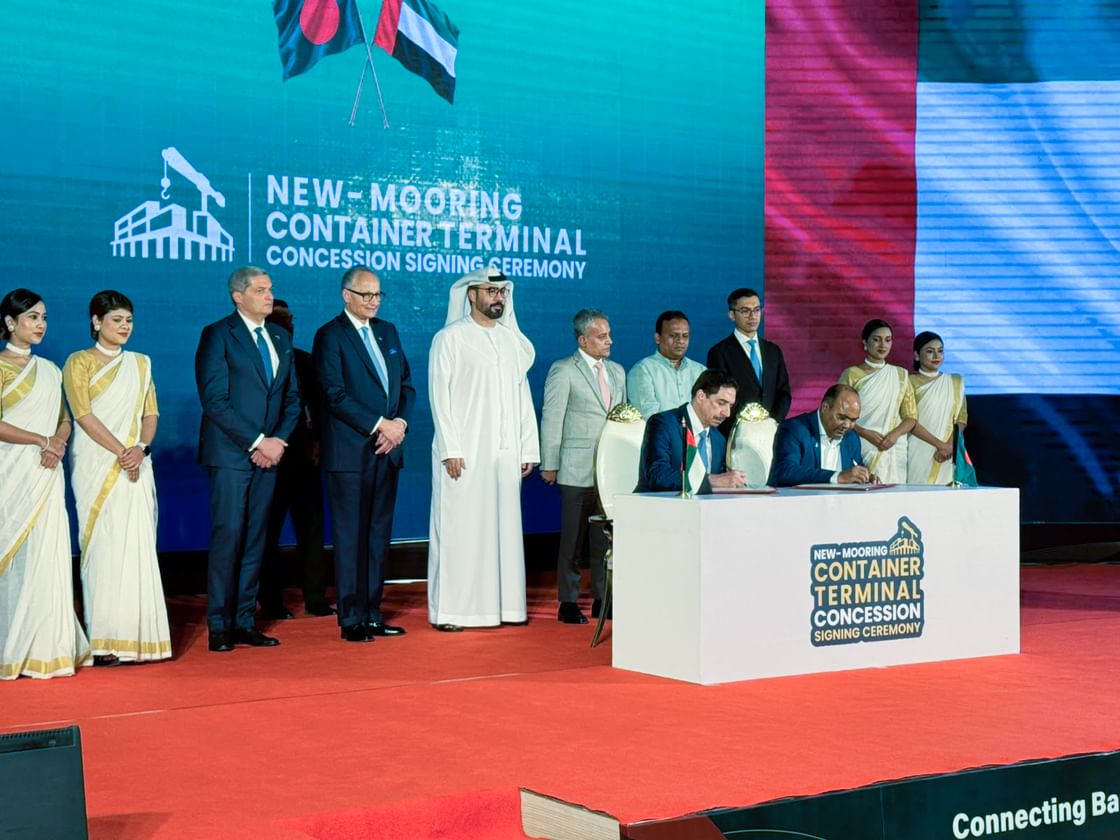
The UAE’s industrial and logistical footprint was also highlighted, with more than 460 ports and operational units managed across over 70 countries. These facilities are operated largely by local workforces under an empowerment-driven model that balances global reach with national capacity building.
Sheikh Saif pointed to the UAE’s role in global aviation and aluminium production, which accounts for about four per cent of worldwide output. In space technology, he cited the MBZ-SAR satellite, noting that 90 per cent of its mechanical structure and most of its technical components were manufactured locally.
The country’s non-oil foreign trade grew by 26 per cent in a single year to exceed $1 trillion, with exports reaching more than 180 countries, reinforcing the UAE’s position as a central node in global trade networks.
AI, industry and trust
Artificial intelligence, Sheikh Saif said, is no longer an auxiliary technology but a strategic industry. He outlined six elements required for successful AI ecosystems: energy, infrastructure, semiconductor chips, models, applications and trust.
The UAE, he noted, has moved beyond AI adoption to AI industrialisation, supported by clean energy, advanced chips, robust infrastructure and real-world applications. This integrated approach has placed the country at the forefront of global AI adoption rankings.
Trust, however, was described as the cornerstone of both AI development and national security. Sheikh Saif said the UAE ranks among the world’s top five countries in the Global Trust Index of the Edelman Trust Barometer and holds first place globally for public trust in government institutions.
That trust, he argued, directly supports economic confidence. In one year alone, 9,800 millionaires relocated to the UAE, an average of 26 per day, bringing the total number of millionaires in the country to over 240,000 with combined wealth exceeding $780 billion. The inflow was attributed to political stability, security and a predictable investment environment.
Humanitarian reach and social cohesion
The session also highlighted the UAE’s humanitarian and peace-building efforts in more than 30 countries. Sheikh Saif said UAE relief supplies to Gaza accounted for 46 per cent of total global aid, amounting to $3 billion, alongside medical treatment for more than 78,000 patients and the establishment of six desalination plants producing two million gallons of water daily.
He also acknowledged Kuwait’s historic role in supporting the development of the UAE’s education sector, expressing appreciation to the Kuwaiti leadership and people.
Family, Sheikh Saif stressed, remains the cornerstone of national identity. The designation of 2026 as the UAE’s Year of Family reflects a renewed focus on social cohesion, supported by more than 21 institutions working to strengthen family stability.
A technical presentation accompanying the session traced the UAE’s AI ecosystem from early renewable investments such as Masdar in 2006 to the Barakah Nuclear Energy Plant, now operating four reactors producing six gigawatts of clean energy. It also showcased the Stargate project, a five-gigawatt AI campus described as the largest of its kind outside the United States, with expansion expected to reach up to 500 megawatts per quarter.
These initiatives, Sheikh Saif concluded, will enable the UAE to produce up to 100 trillion AI computing units daily in the future, reinforcing the country’s position as a global hub for future-ready governance.