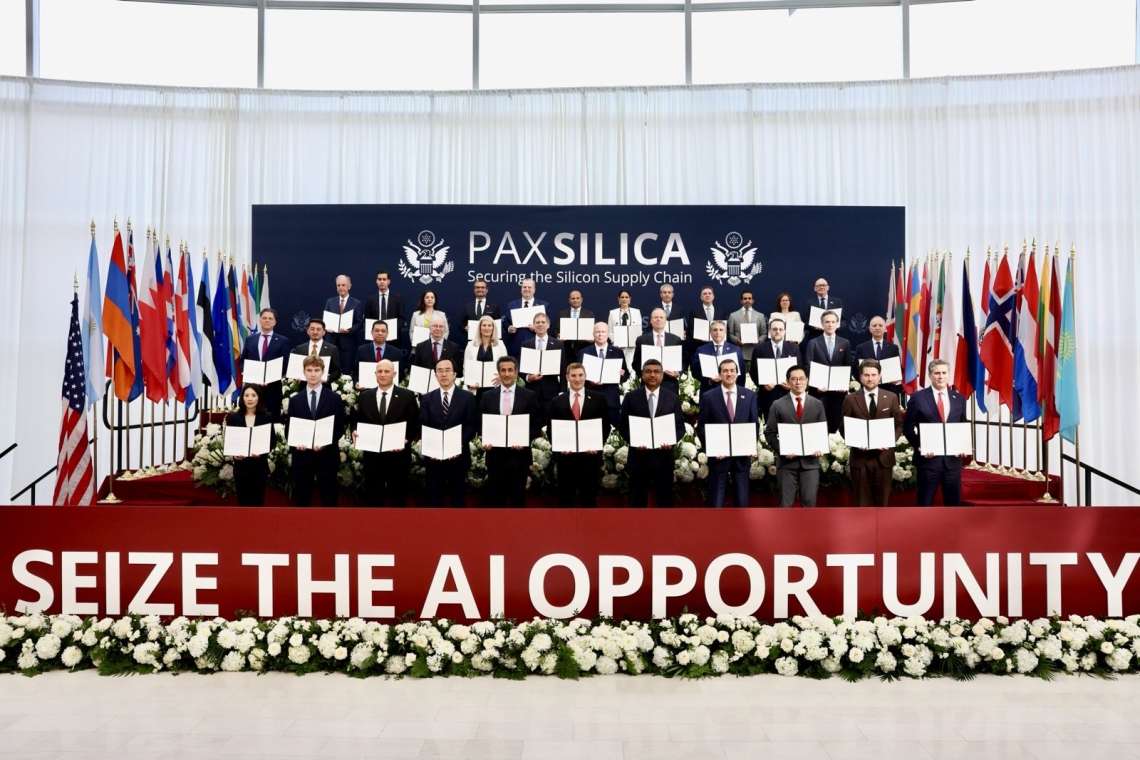
Trump administration sees New Delhi as a “comprehensive partner” for semiconductors, critical minerals and resilient supply chains….reports Asian Lite News desk
India has the potential to emerge as a “comprehensive partner” under the United States’ newly launched Pax Silicainitiative, a senior Trump administration official said on Friday, highlighting growing alignment between New Delhi and Washington on securing supply chains, expanding semiconductor cooperation and reducing dependence on vulnerable global manufacturing networks.
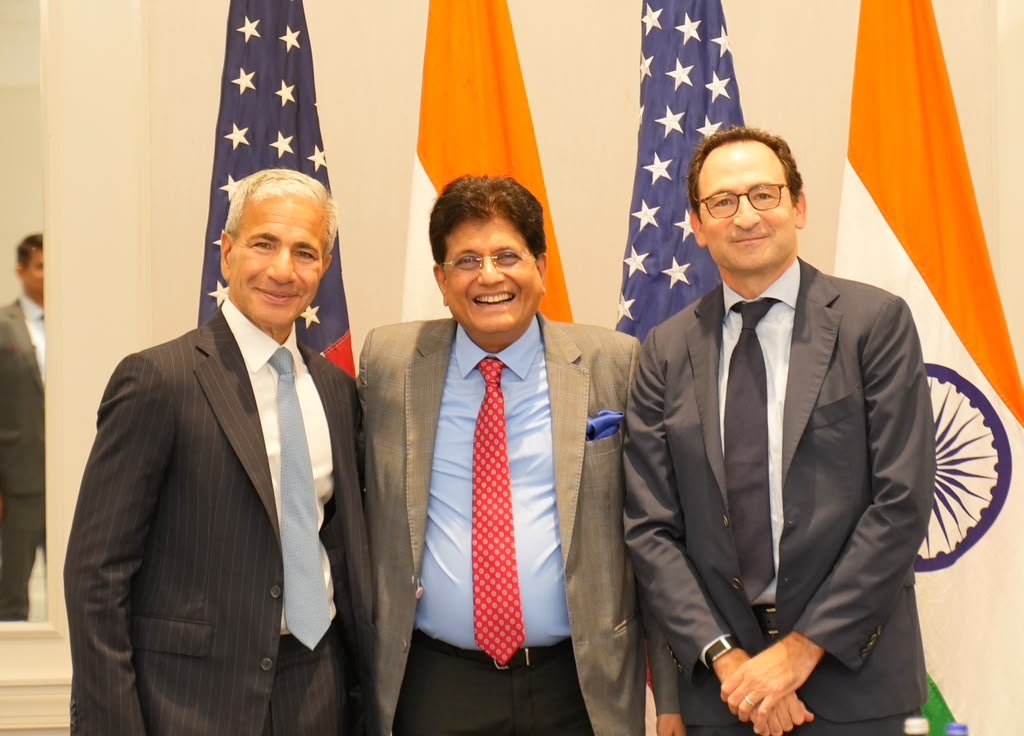
Speaking after the launch of the US-led initiative, Under Secretary of State for Economic Affairs Jacob Helberg said the two countries are well positioned to deepen collaboration across critical technologies.
“India has the potential to be a comprehensive partner,” Helberg told IANS.
“Our administrations have announced their collaboration on the trust initiative. We already work together on a whole array of different issues, and Pax Silica opens the door to deepen our collaboration on semiconductor manufacturing and critical minerals processing,” he said.
Helberg said India and the United States share common concerns over the resilience of global supply chains and the need to diversify manufacturing networks.
“Our countries fundamentally share the exact same concerns about the fragility of the status quo in our supply chains,” he noted.
Highlighting India’s demographic advantage, he said the country’s large youth population presents significant opportunities for innovation, entrepreneurship and technology-led growth.
“India is home to one of the largest youth populations in the world. We also see the same opportunities in terms of promoting a developer ecosystem to encourage entrepreneurship and create jobs for our people. So we’re very excited to work with India,” Helberg said.

Responding to a question from IANS on whether Washington and New Delhi could work together to address risks posed by China’s dominance in global supply chains, Helberg said the broader challenge was excessive concentration rather than any single country.
“We think about it as a problem of over-concentration in our supply chains, and there are over-concentration issues that are not unique to China,” he said.
He warned that the global economy remained vulnerable because supply chains continue to rely on “single points of failure”, whether logistical or industrial.
“Fundamentally, the issue is the supply chain right now is reliant on single points of failure, whether they be logistical or industrial,” he said.
According to Helberg, India and the United States are fully aligned on the need to reduce those vulnerabilities.
“We are totally on the same page about the fact that these single points of failure need to be de-risked for the health of the global economy,” he said.
The remarks came during a question-and-answer session following discussions on Pax Silica, a US-led initiative designed to strengthen partnerships with trusted countries in advanced technologies, economic security and resilient supply chains.
India and the United States have significantly expanded cooperation in recent years in strategic sectors such as semiconductors, artificial intelligence, critical and emerging technologies, and resilient supply chains. Both governments have increasingly prioritised trusted technology partnerships and efforts to reduce dependence on highly concentrated global manufacturing hubs.