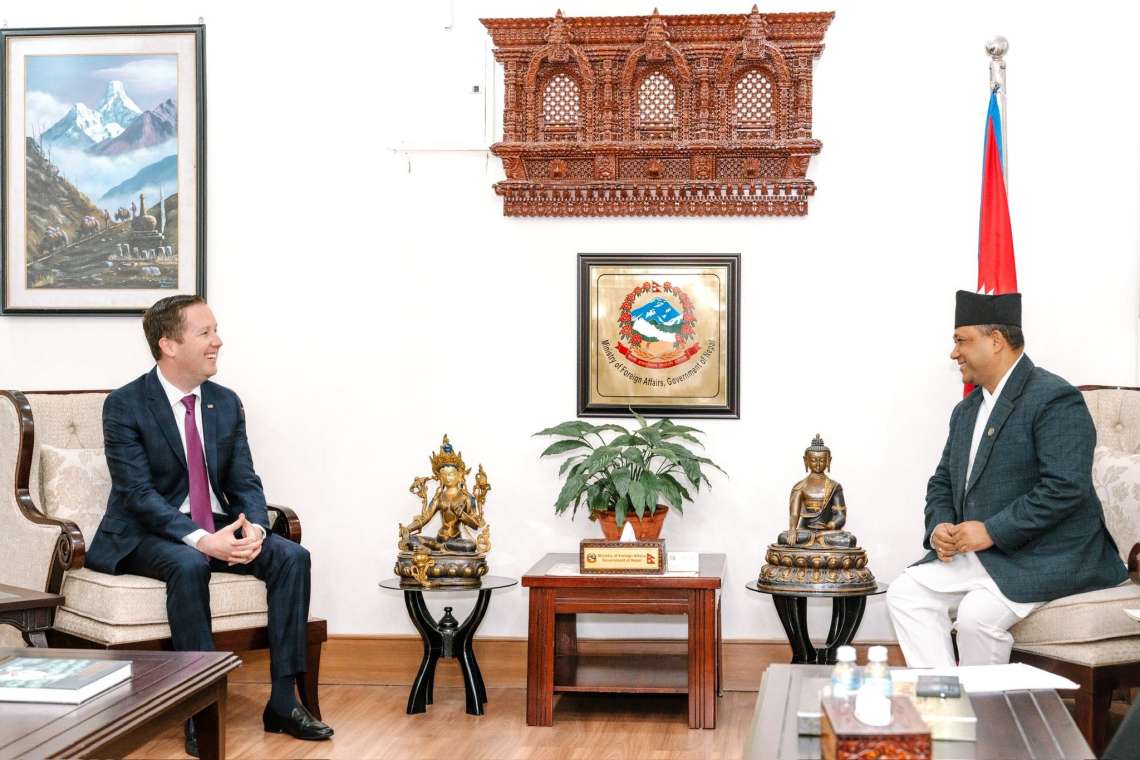
US envoy Sergio Gor visits Nepal to boost economic cooperation, focusing on trade, technology and investment, amid shifting aid dynamics and rising strategic competition in South Asia. reports Asian Lite Newsdesk
Nepal and the United States have stepped up engagement on economic cooperation, as Washington seeks to deepen its strategic and commercial footprint in Kathmandu amid growing regional competition.
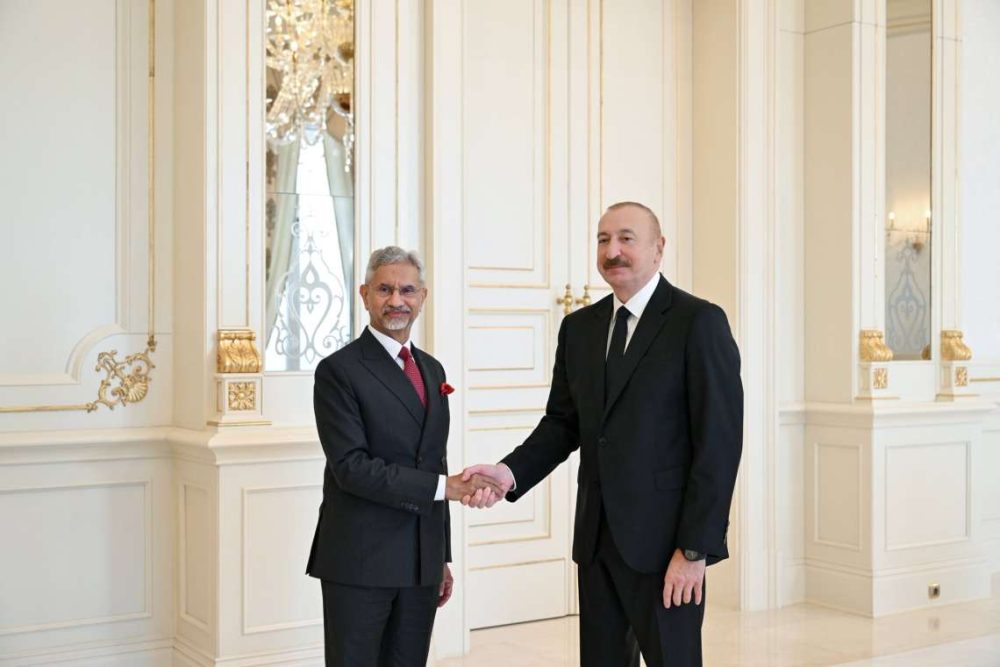
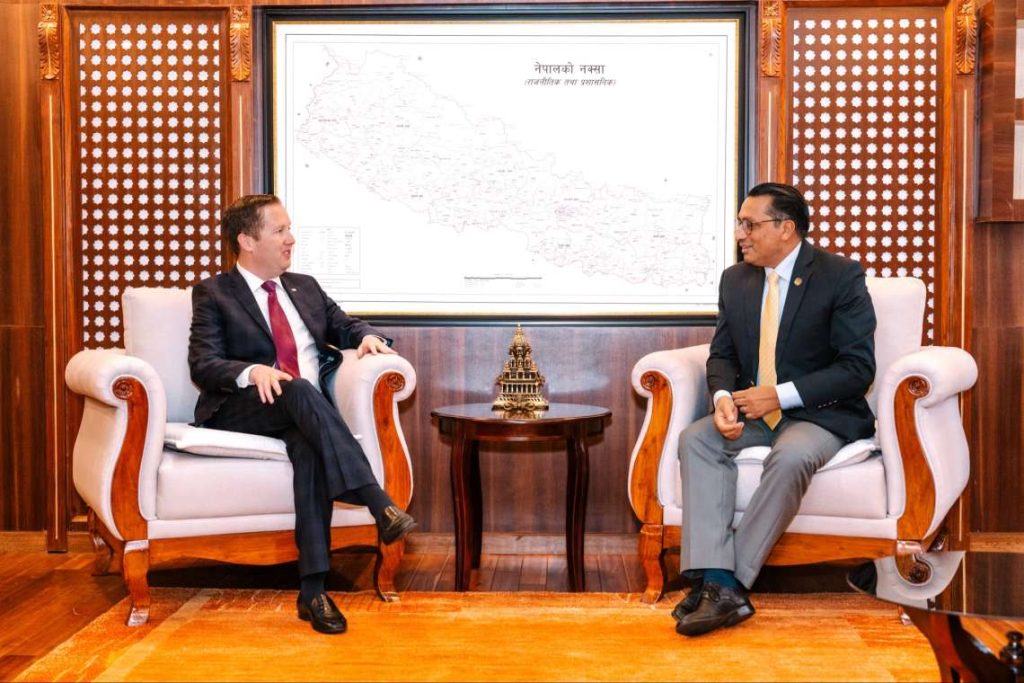
Sergio Gor, Special Envoy for South and Central Asia and US Ambassador to India, began his official engagements in Kathmandu with meetings involving Nepal’s Foreign Minister Sishir Khanal and Finance Minister Swarnim Wagle. His visit marks the highest-level US outreach since the formation of the new government led by Prime Minister Balendra Shah in March.
Talks centred on expanding bilateral economic cooperation, with both sides highlighting opportunities in trade, investment and technology-driven growth. Following his meeting with Wagle, Gor said discussions focused on improving the business environment, boosting employment through technology, and unlocking new economic opportunities for both countries.
The visit comes as US companies show increasing interest in Nepal’s emerging technology sector. Starlink, backed by Elon Musk, is in discussions with Nepali authorities over potential market entry, while Netflix is reportedly exploring expansion into the country.
Nepal, for its part, is keen to expand software and IT-enabled service exports to the US, building on a sector that has become one of its fastest-growing sources of foreign revenue.
Economic discussions also covered US assistance to Nepal, at a time when development funding dynamics are shifting. While the US had long been Nepal’s largest bilateral donor, India overtook it in the last fiscal year in terms of aid disbursement.
The recent restructuring and downsizing of USAID programmes could further reduce American aid flows. However, Washington continues to back major infrastructure initiatives under the Millennium Challenge Corporation (MCC), including a $550 million grant for power transmission and road development projects.
One key project under the MCC framework is the Nepal segment of the Butwal-Gorakhpur cross-border transmission line linking Nepal and India, aimed at strengthening regional energy connectivity.
Despite its economic benefits, the MCC has remained politically sensitive within Nepal, with critics raising concerns about sovereignty. The US has consistently rejected such claims, maintaining that the programme carries no strategic or military conditions.
The flurry of high-level visits to Kathmandu reflects intensifying geopolitical interest in Nepal, which sits at the crossroads of influence between India, China and the United States.
Gor’s visit follows a recent trip by US official Samir Paul Kapur, while senior Chinese diplomat Cao Jing also held talks in the capital. Indian Foreign Secretary Vikram Misri is expected to visit later this month.
Analysts see this diplomatic activity as part of a broader contest for economic and strategic influence, with Nepal seeking to balance ties among major powers while advancing its development priorities.
Beyond government meetings, Gor is also scheduled to engage with members of Nepal’s business community, signalling a push to translate diplomatic ties into commercial partnerships.
It remains unclear whether he will meet Prime Minister Balendra Shah, who has adopted a more restrained approach to diplomatic engagements compared to his predecessors, adhering strictly to protocol.