Greer confirmed that Indian trade negotiators were in Washington this week for discussions, indicating that talks are progressing under a broader bilateral framework agreement….reports Asian Lite News
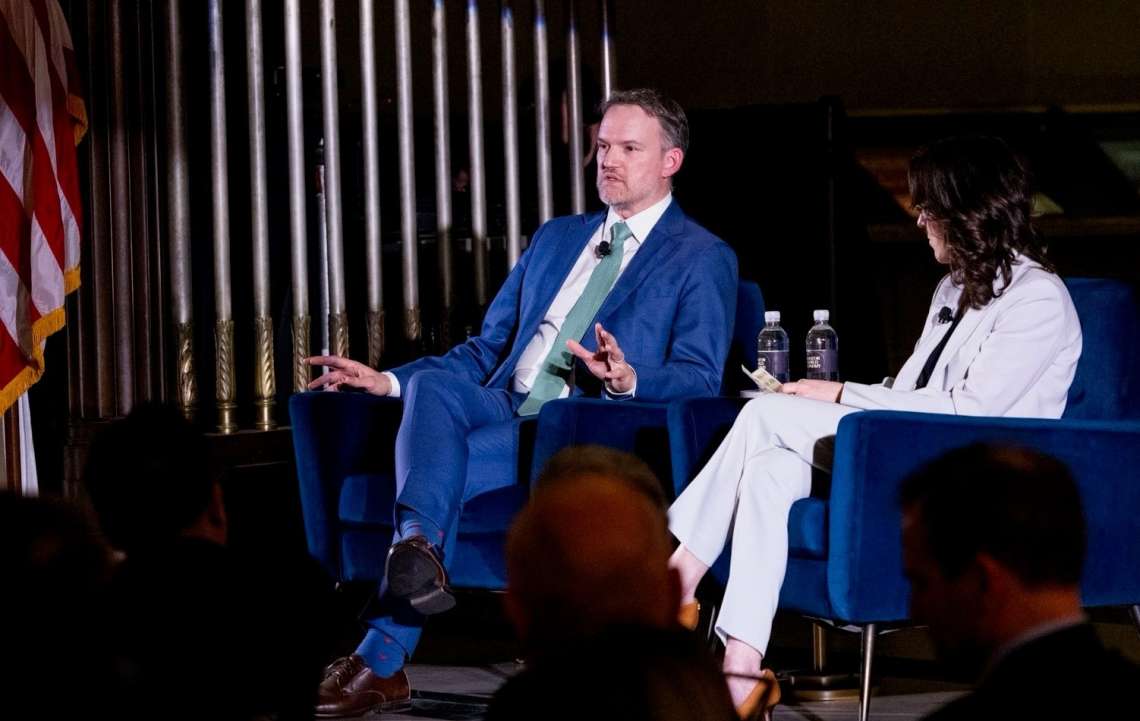
India continues to pose significant challenges for US trade negotiators, according to US Trade Representative Jamieson Greer. He highlighted ongoing barriers in agriculture and market access during a House Ways and Means Committee hearing, even as both nations strive to establish a trade framework.
“India is a tough nut to crack,” Greer stated, noting that New Delhi has long protected its agricultural markets.
His comments were made in response to inquiries about expanding US agricultural exports, including distillers dried grains (DDGs), soybean meal, and ethanol, which American producers view as key opportunities in India.
Greer confirmed that Indian trade negotiators were in Washington this week for discussions, indicating that talks are progressing under a broader bilateral framework agreement. “The Indian trade negotiators are in town this week, so we’ve been talking about these issues,” he remarked.
A team of senior Indian trade officials concluded their latest round of discussions with US Trade Representative officials and other members of the Trump Administration on Wednesday.
Despite the challenges, Greer suggested that progress is possible in areas with fewer domestic sensitivities in India. “There are things… where I think we can find mutual agreement,” he noted, specifically mentioning DDGs as a potential area for cooperation.
India has historically maintained high tariff and non-tariff barriers in agriculture, a sector closely linked to rural livelihoods. US lawmakers have consistently raised concerns over restricted access for American agricultural products, viewing it as a significant obstacle in bilateral trade relations.
The hearing also underscored broader US concerns regarding global market access. Greer emphasised that the administration’s trade policy aims for “reciprocity,” ensuring that countries benefiting from access to the US market reciprocate by opening their own markets.
During the hearing, lawmakers referenced India’s previous tariff reductions on certain products, such as bourbon, as incremental progress but urged for more substantial structural changes. Greer indicated that negotiations are focused on achieving such outcomes, while cautioning that progress will be gradual due to India’s entrenched policy framework.
The US seeks to expand access for agricultural exports and industrial goods, while India is likely to request concessions in services and market access for its own exports.
Trade between the two nations has steadily increased over the past decade, positioning India as a key strategic and economic partner for the United States in the Indo-Pacific region. However, disputes over tariffs, digital trade, and agricultural access have occasionally strained relations.