Cartel chief El Mencho killed in Mexican military raid, triggering arson attacks, road blockades and global travel advisories as authorities brace for retaliatory violence.
Mexico’s security forces have killed Nemesio “El Mencho” Oseguera Cervantes, the elusive leader of the powerful Jalisco New Generation Cartel, in a dramatic military operation that has triggered waves of violence across several states and prompted emergency travel advisories from the United States, Canada and India.
The operation, carried out by federal forces in the town of Tapalpa in Jalisco state, marks one of the most significant blows against organised crime in recent Mexican history. But within hours of confirmation that El Mencho had died of injuries sustained during the raid, cartel gunmen responded with coordinated blockades, arson attacks and armed clashes.
Vehicles were set ablaze, highways were blocked and businesses forced to shut as violence spread through parts of Jalisco, including Guadalajara and Puerto Vallarta, before spilling into neighbouring states.
Military operation and immediate fallout
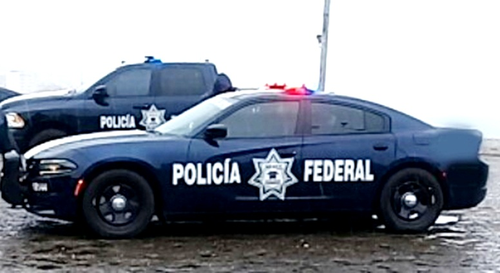
Mexico’s Secretariat of National Defence said security forces from several federal branches engaged in a firefight with suspected CJNG members. Four cartel gunmen were killed at the scene. Oseguera and two associates were seriously injured and later died while being transported by aircraft to Mexico City. Three Mexican military personnel were also injured and hospitalised.
The death of El Mencho, a former police officer who rose to head one of Mexico’s most ruthless criminal organisations, had long been a priority for both Mexico and the United States. Washington had offered a reward of up to $15 million for information leading to his capture. He had been indicted in the US on drug trafficking charges, including allegations linked to fentanyl and methamphetamine flows.

US Deputy Secretary of State Christopher Landau described Oseguera as “one of the bloodiest and most ruthless drug kingpins”, calling the news “a great development for Mexico, the US, Latin America, and the world”.
Yet even as US officials welcomed the development, scenes of unrest underlined the volatility of targeting cartel leadership. Analysts have repeatedly warned that removing a cartel boss can fracture command structures, ignite succession battles and unleash retaliatory violence.
Cities on edge as transport disrupted
The backlash was swift. Domestic and international flights were cancelled in Guadalajara and Puerto Vallarta as security concerns mounted. Taxis and ride-sharing services were suspended in parts of Puerto Vallarta, while some businesses temporarily closed their doors.
Suspected cartel members torched buses and blocked major roads, according to local authorities. Jalisco Governor Pablo Lemus Navarro confirmed multiple incidents of arson and confrontations with security forces.
The unrest comes at a sensitive time. Jalisco is scheduled to host four matches during the 2026 World Cup, raising concerns about the state’s ability to guarantee security at major international events.
International advisories issued
The United States issued a fresh shelter-in-place advisory for its citizens in affected regions, including Jalisco, Tamaulipas, Michoacán, Guerrero and Nuevo León. US government staff in several consulates were instructed to minimise movement. Emergency contact numbers were circulated, and Americans were urged to avoid areas near law enforcement operations, monitor local media and remain indoors.
The White House confirmed that US authorities had provided intelligence support to Mexican forces during the operation. Press Secretary Karoline Leavitt said El Mencho had been a top target for both governments and described him as a major trafficker of fentanyl into the United States. She added that three additional cartel members were killed, three wounded and two arrested during the raid.
India’s embassy in Mexico also issued an advisory urging Indian nationals in Jalisco, Tamaulipas and parts of Michoacán, Guerrero and Nuevo León to shelter in place. Citizens were advised to avoid crowds, remain aware of their surroundings and follow instructions from local authorities.
Canada followed with its own updated travel advisory. Foreign Minister Anita Anand said Ottawa was “deeply alarmed” by reports of armed clashes, roadblocks and vehicles set on fire, adding that the safety of Canadians abroad remained a top priority.
President calls for calm
Mexico’s President, Claudia Sheinbaum, urged citizens to remain calm and informed. In a social media post, she said the operation had resulted in “various blockades and other reactions” but stressed that there was coordination between federal and state authorities.
“In the vast majority of the national territory, activities are proceeding with complete normality,” she wrote, praising the Mexican Army, National Guard and Security Cabinet.
Her administration has faced sustained pressure from Washington to intensify efforts against drug trafficking networks, particularly those linked to fentanyl smuggling into the US. While cooperation has deepened, Mexican leaders have consistently rejected calls for direct US military intervention on their soil.
A turning point — or a new chapter of violence?
El Mencho’s rise mirrored the ascent of the CJNG into one of Mexico’s most formidable cartels, known for its aggressive expansion and high-profile displays of force. Under his leadership, the group built international trafficking routes and challenged rival organisations across multiple states.
His death represents a symbolic and operational victory for Mexico’s security forces. Yet history offers caution. Previous high-profile takedowns — from Sinaloa to Los Zetas — have sometimes resulted in splinter factions, turf wars and spikes in violence as rival commanders vie for control.
Whether the CJNG consolidates under a successor or fractures into competing cells may determine the trajectory of security in western Mexico in the months ahead.