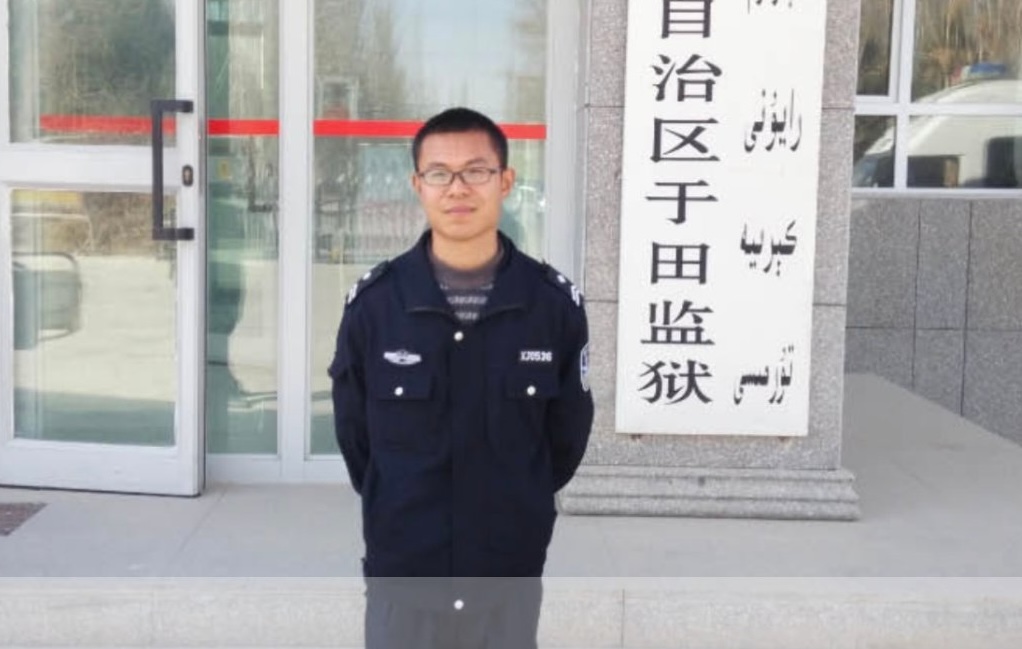
Fresh whistleblower testimony alleges Xinjiang repression continues under reworked policies, with forced labour and prison transfers still central to the system….reports Asian Lite News
The World Uyghur Congress has urged the international community to act following fresh testimony from a former Chinese police officer, saying it offers new insight into ongoing repression in China’s Xinjiang region.
In a statement, the group referenced an investigation by Der Spiegel that details the account of Zhang Yabo, who reportedly worked within China’s security apparatus in the Hotan region for nearly a decade. According to the organisation, Zhang held multiple roles between 2014 and 2023, including positions in detention facilities and local policing units.
The group alleged that Zhang oversaw the forced transfer of Uyghur men and women into state directed labour programmes, including cotton harvesting under police supervision, claims that Beijing has consistently denied. After leaving China and travelling to Europe last year, Zhang is said to have contacted the organisation in Munich and shared detailed accounts of his experience.
“The revelation and courage of Zhang Yabo confirm to the entire world that denying or hesitating to take action against China is no longer possible. These abuses are continuing, in fact they have never stopped,” said WUC President Turgunjan Alawdun, as quoted in the statement.
According to the organisation, the testimony suggests that repression in the region has not ended but has instead been restructured. It alleged that while earlier policies relied on large scale, highly visible detention centres, authorities have shifted towards more concealed methods.
The statement linked this shift to policy changes under Ma Xingrui, who became Communist Party Secretary of Xinjiang in December 2021, replacing Chen Quanguo. Rather than dismantling existing systems, authorities are accused of reorganising them by reducing overt policing while maintaining detention targets and expanding the use of formal prisons.
Citing Zhang’s account, the group said individuals released from so called reeducation camps were often transferred directly into the prison system, creating what it described as a “carceral pipeline”. It added that Zhang estimated more than half of detainees in his jurisdiction were handed lengthy prison sentences.
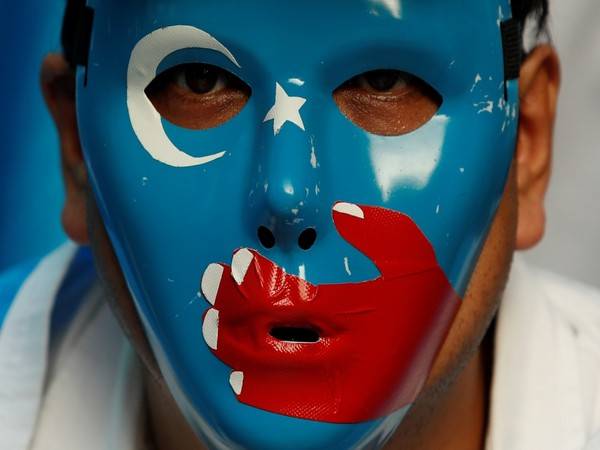
The organisation also pointed to official data indicating that more than 500,000 people were imprisoned across the region between 2017 and 2021, describing it as evidence of the scale of the system.
Zhang is further said to have described a coercive working environment in which officers were required to meet detention and labour transfer quotas, with incentives offered for compliance and penalties imposed for failure. The group claimed Zhang resisted participating in acts of excessive brutality, leading to professional consequences.
The statement also highlighted the risks surrounding Zhang’s decision to speak out, noting that he left family members behind in China who could face surveillance or retaliation. It said such pressure forms part of a broader pattern in which authorities allegedly use relatives to silence dissent.
The organisation said the testimony adds to what it described as a growing body of evidence of human rights violations against Uyghurs, and called on others with knowledge of such practices to come forward.