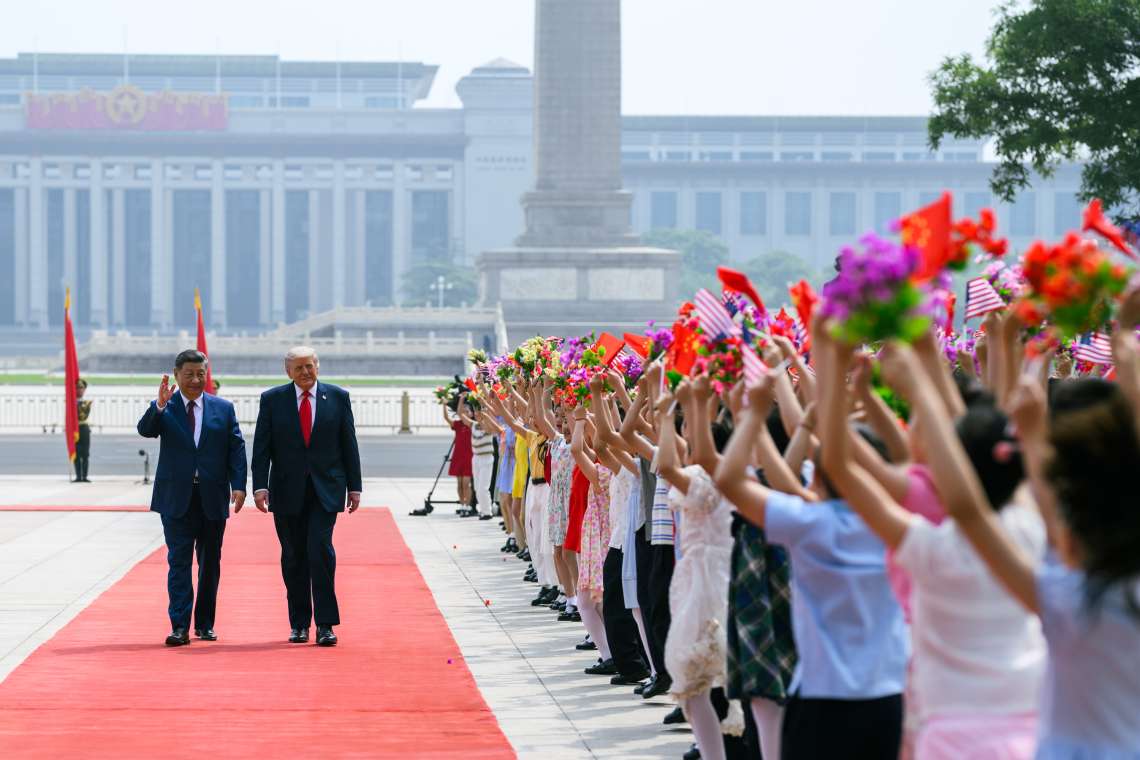
Donald Trump and Xi Jinping struck a notably warm tone during a high-profile summit in Beijing, despite continuing tensions over trade, technology and regional security. At a state banquet in the Great Hall of the People, the Chinese president described China-US ties as the world’s most important bilateral relationship and warned both sides against confrontation…reports Asian Lite News
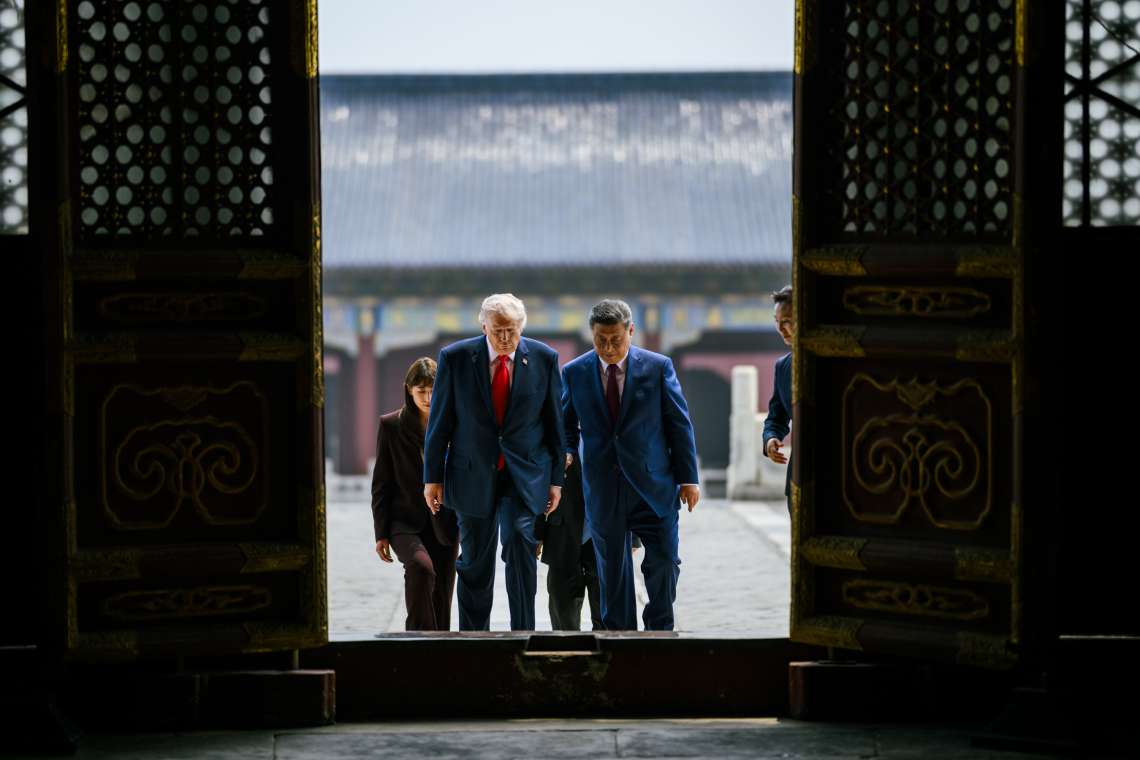
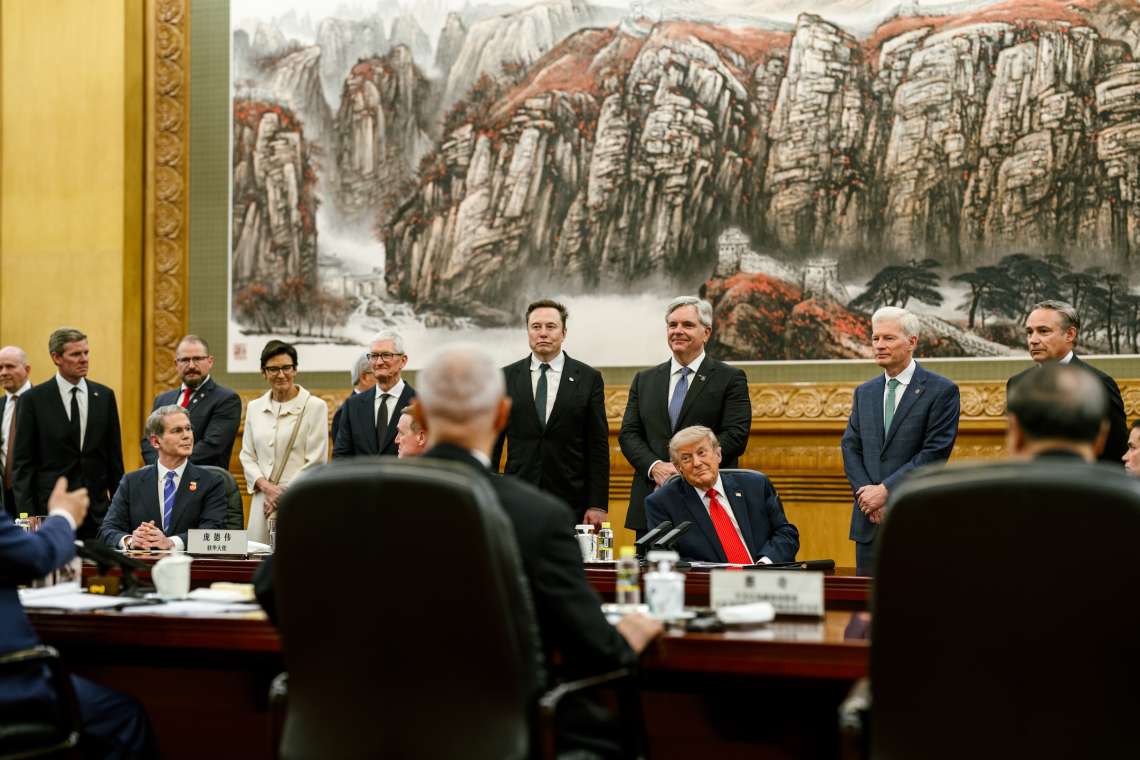
Amid the imposing grandeur of the Great Hall of the People, President Donald Trump and Chinese leader Xi Jinping struck a notably cordial, optimistic tone during a key summit in Beijing, even as major disagreements remain over trade, technology and regional security.
The visit, which ran from May 13 to 15, was marked by a full ceremonial military guard of honour and a traditional red-carpet reception for the president, underscoring the significance Beijing attached to the diplomatic engagement.
The summit culminated in a state banquet where Xi framed relations between Washington and Beijing as the world’s most consequential partnership, while warning against allowing tensions to spiral further. Reflecting on a day dominated by bilateral talks and official engagements, Xi said the two leaders had engaged in “in-depth exchanges on China-US relations and international and regional dynamics”.
He added: “We both believe that the China-US relationship is the most important bilateral relationship in the world. We must make it work and never mess it up”.
The remarks came against a backdrop of strained relations between the two powers over tariffs, semiconductor restrictions, military activity in the Indo-Pacific and broader geopolitical competition. Despite those disputes, both leaders emphasised stability and cooperation during the visit.
Xi repeatedly presented cooperation as the preferred path forward, arguing that conflict would damage both countries and the wider international community. “Both China and the United States stand to gain from cooperation and lose from confrontation,” he said, adding that “our two countries should be partners rather than rivals”.
The Chinese president also stressed the importance of long-term predictability in bilateral relations. He revealed that he and Trump had “agreed to build a constructive China-US relationship of strategic stability to promote the steady, sound and sustainable development of China-US relations and bring more peace, prosperity and progress to the world”.
Xi described “mutual respect” as the “key to whether the relationship can advance steadily”, saying such an approach was particularly important during what he called “changing and turbulent” global conditions.
The Chinese leader also sought to underline the broader international implications of the relationship between the two countries. He noted that the future of China-US ties would affect not only the 1.7 billion people living in both nations, but also the wider global population of “more than 8 billion people”.
He urged both governments to “rise” to what he described as their shared responsibility. The address opened on an especially optimistic note, with Xi attempting to align Beijing’s long-term ambitions with Trump’s political messaging in the United States.
“The people of China and the United States are both great peoples. Achieving the great rejuvenation of the Chinese nation and making America great again can go hand in hand,” Xi said. The comment combined one of the Communist Party’s defining political slogans with Trump’s signature campaign phrase, signalling an effort to frame the relationship as one based on mutual national success rather than strategic rivalry. Xi also widened his appeal beyond bilateral interests, presenting cooperation between the two countries as beneficial to global prosperity and stability.
“We can help each other succeed and advance the well-being of the whole world,” he said. While the summit produced no major public policy breakthroughs, the carefully choreographed symbolism and conciliatory language reflected a shared attempt to stabilise relations after years of mounting tension between the two powers.
For both leaders, the optics of cooperation appeared central to the visit. Trump received the highest level of ceremonial treatment from Beijing, while Xi used the state banquet to publicly reinforce the idea that constructive engagement between China and the US remains possible despite deep strategic disagreements.
The summit is likely to be closely scrutinised by allies and rivals alike, particularly as both countries continue to compete for influence across trade, defence, technology and global diplomacy.