AstraZeneca’s $15 billion China investment signals a new era for global healthcare innovation, boosting UK science, jobs and research ties while accelerating delivery of next-generation medicines worldwide….reports Asian Lite News
AstraZeneca has unveiled a $15 billion investment plan in China through 2030, marking one of the most significant commitments by a British pharmaceutical giant to the world’s second-largest economy. The move will dramatically expand the company’s manufacturing capacity and research and development footprint, deepening China’s role as a global hub for innovation while reinforcing the UK’s life sciences ambitions.
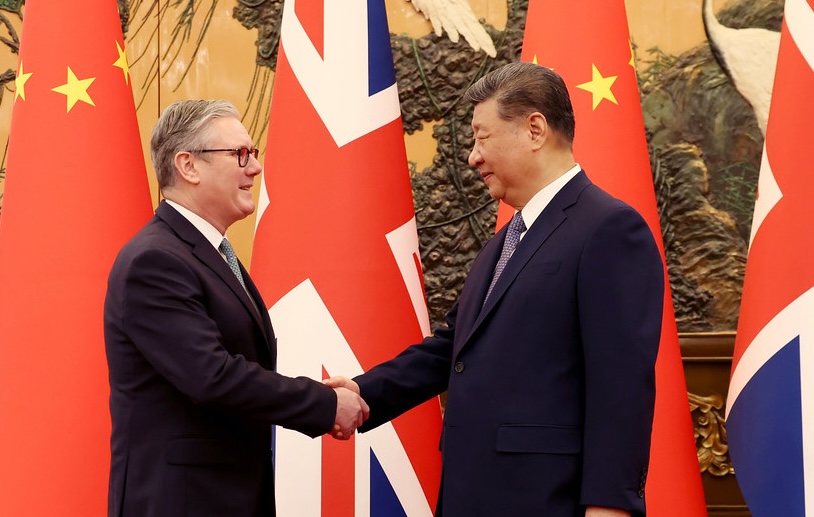
The investment, announced during UK Prime Minister Sir Keir Starmer’s official visit to China, underscores the growing strategic importance of healthcare diplomacy between London and Beijing at a time of wider geopolitical uncertainty. For AstraZeneca, China is no longer just a vast commercial market but a central pillar of its global research, clinical trials and advanced manufacturing ecosystem.
Sir Keir Starmer said the expansion demonstrated how international engagement could deliver tangible benefits at home, stressing that the company’s growth in China would continue to support thousands of high-skilled jobs in the UK. He noted that the multi-billion-pound commitment, alongside new partnerships with leading British universities, would help power the country’s world-class life sciences sector and strengthen long-term research and development capacity.
AstraZeneca’s chief executive Pascal Soriot described the investment as the beginning of a new chapter for the company in China, calling the country a critical contributor to scientific innovation, advanced manufacturing and global public health. He said expanding capabilities in cutting-edge areas such as cell therapy and radioconjugates would accelerate the delivery of next-generation treatments for patients, both in China and around the world.
A major focus of the investment will be the development of new medical modalities, particularly in oncology, haematology and autoimmune diseases. By leveraging China’s rapidly advancing scientific base, AstraZeneca aims to strengthen its pipeline across the entire value chain, from drug discovery and clinical development to large-scale manufacturing. The company said this would help bring Chinese innovation to global markets through deeper collaboration with leading domestic biotech firms, including AbelZeta, CSPC, Harbour BioMed, Jacobio and Syneron Bio.
The company’s 2024 acquisition of Gracell Biotechnologies laid the groundwork for this expansion, and AstraZeneca will now become the first global biopharmaceutical firm with end-to-end cell therapy capabilities inside China. This positions the company at the forefront of one of the most competitive and fast-moving areas of modern medicine, where speed, scale and scientific collaboration are essential.
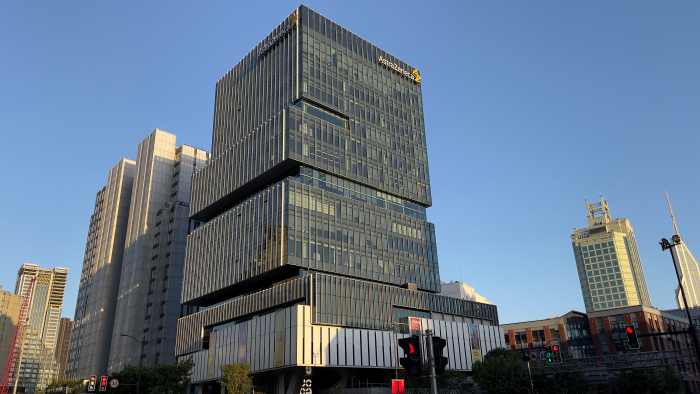
AstraZeneca already operates global strategic R&D centres in Beijing and Shanghai, working closely with more than 500 hospitals across China. Over the past three years, these centres have led a significant number of global clinical trials, reflecting the country’s growing importance in shaping international drug development pathways. The new investment will also upgrade existing manufacturing facilities in Wuxi, Taizhou, Qingdao and Beijing, which currently supply high-quality medicines to China and more than 70 international markets. Additional new sites are expected to be announced in the coming years.
The expansion will push AstraZeneca’s workforce in China beyond 20,000 employees, creating thousands of new jobs across the wider healthcare ecosystem, from research and engineering to logistics and clinical operations. For Chinese authorities, the investment aligns closely with the Healthy China 2030 strategy and the government’s “Common Health” agenda, which seeks to improve prevention, early detection and access to innovative medicines, particularly in underserved communities.
Beyond manufacturing and research, the announcement signals a strengthening of China-UK collaboration in healthcare innovation. Building on existing partnerships with the University of Cambridge, AstraZeneca is now working with the University of Oxford, the University of Glasgow, King’s College London and HSBC to create deeper links between academic, financial and industrial ecosystems in both countries. These collaborations are expected to accelerate the translation of laboratory breakthroughs into real-world treatments.
China is already AstraZeneca’s second-largest market and a strategic innovation hub, hosting two global R&D centres, four manufacturing sites and commercial operations across five regional hubs. Since 2023, the company has signed 16 global licensing agreements with 15 Chinese partners, underlining how deeply embedded it has become in the country’s biotech landscape.