UK and Canada granted 30-day visa-free access to China after Starmer-Xi talks signal diplomatic reset….reports Asian Lite News
UK and Canadian nationals will be able to travel to mainland China for up to 30 days without a visa from 17 February, in a move hailed as a significant step in efforts to reset relations between London and Beijing.
China’s foreign ministry confirmed that ordinary passport holders from the UK and Canada will be exempt from visa requirements for stays of up to 30 days for tourism, business, family visits, exchanges and transit. The policy will initially run until 31 December 2026.
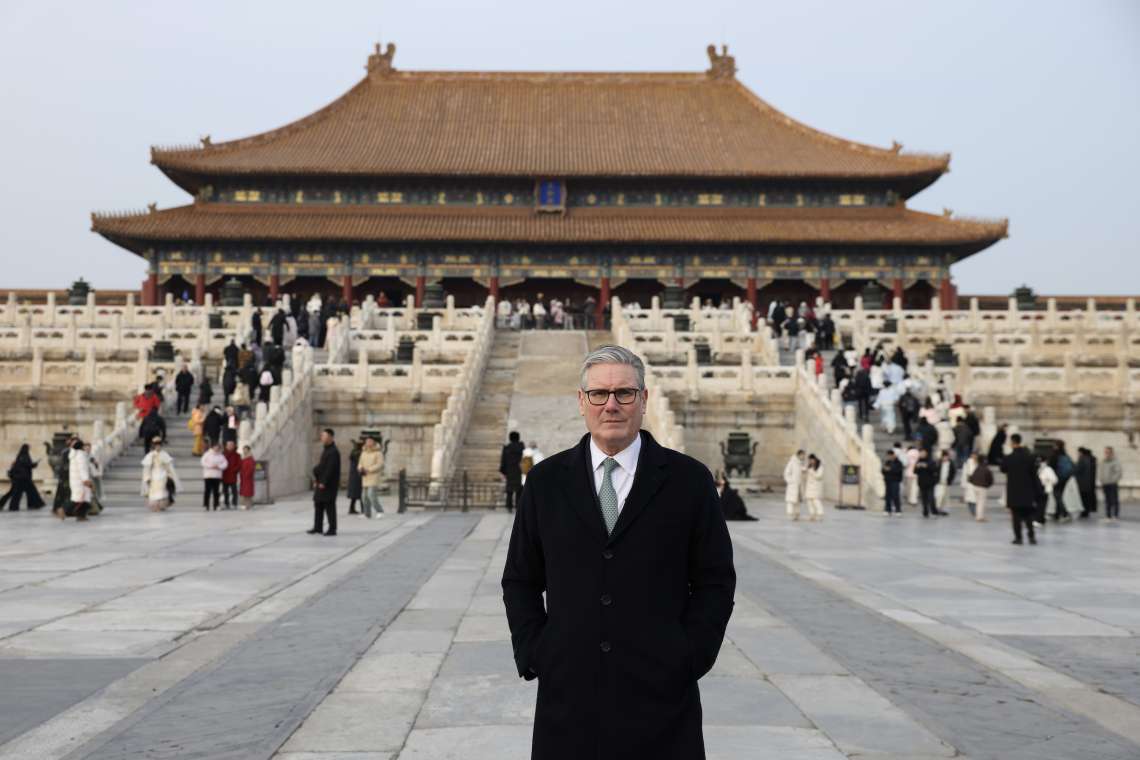
The announcement follows Prime Minister Keir Starmer’s official visit to China last month, during which he met Chinese President Xi Jinping. The two leaders agreed to relax travel rules as part of a broader effort to stabilise ties and encourage economic co-operation after several years of strained relations.
Sir Keir described the agreement as a practical measure to support British businesses seeking growth opportunities in China, saying companies had been “crying out for ways to grow their footprints” in one of the world’s largest markets. While no comprehensive free trade agreement was signed, both sides pledged to deepen engagement in services, healthcare, green technology and financial services.
The visa waiver brings the UK and Canada into line with around 50 other countries whose citizens can already enter China without a visa for short stays, including France, Germany, Italy, Australia and Japan. It forms part of a wider strategy by Beijing to revive international tourism and business travel after the strict pandemic-era controls that sharply curtailed inbound visitors.
According to the Office for National Statistics, around 620,000 UK residents travelled to China in 2024, suggesting hundreds of thousands could benefit from the simplified entry process. Business groups have welcomed the move, arguing that removing administrative barriers will make it easier for firms to explore partnerships, attend trade fairs and manage operations on the ground.
China has in recent months expanded visa-free access to multiple countries in an effort to boost economic activity and signal openness. The extension to the UK and Canada is seen by analysts as both an economic and diplomatic gesture, reflecting Beijing’s interest in improving ties with major Western economies amid global trade tensions and shifting geopolitical alliances.
Sir Keir’s January visit was the first by a British prime minister since Theresa May travelled to China in 2018. It marked a deliberate shift in tone from recent years, when relations were dominated by disputes over Hong Kong, human rights concerns in Xinjiang, and national security questions surrounding Chinese investment in UK infrastructure.
The trip also drew criticism from opposition figures and some backbenchers, who warned that efforts to “reset” relations risked overlooking human rights issues and security concerns. Shortly before travelling to Beijing, Sir Keir’s government approved plans for a major new Chinese embassy complex in central London, despite objections from campaigners who argued it could pose espionage risks.
Downing Street has insisted that engagement does not equate to endorsement, maintaining that dialogue is essential to protect UK economic interests while raising areas of disagreement directly with Chinese counterparts.
China’s foreign ministry said the visa-free scheme would “further facilitate people-to-people exchanges” and promote mutual understanding. Observers note that academic exchanges, student mobility and tourism flows are all likely to increase if the scheme proves popular and is extended beyond its initial timeframe.
For British travellers, the change removes the need for pre-travel visa applications, which previously required paperwork, fees and processing times that could stretch over several days or weeks. Travel industry representatives say the simplified regime could lead to a noticeable uptick in leisure bookings, particularly among younger tourists and small business operators.
Whether the visa waiver signals a lasting thaw in UK–China relations remains to be seen. Trade and diplomatic ties remain complex, shaped by strategic rivalry, economic interdependence and domestic political pressures on both sides.