The talks form part of a broader push to align regulatory thinking and strengthen cooperation between the two financial powerhouses….reports Asian Lite News
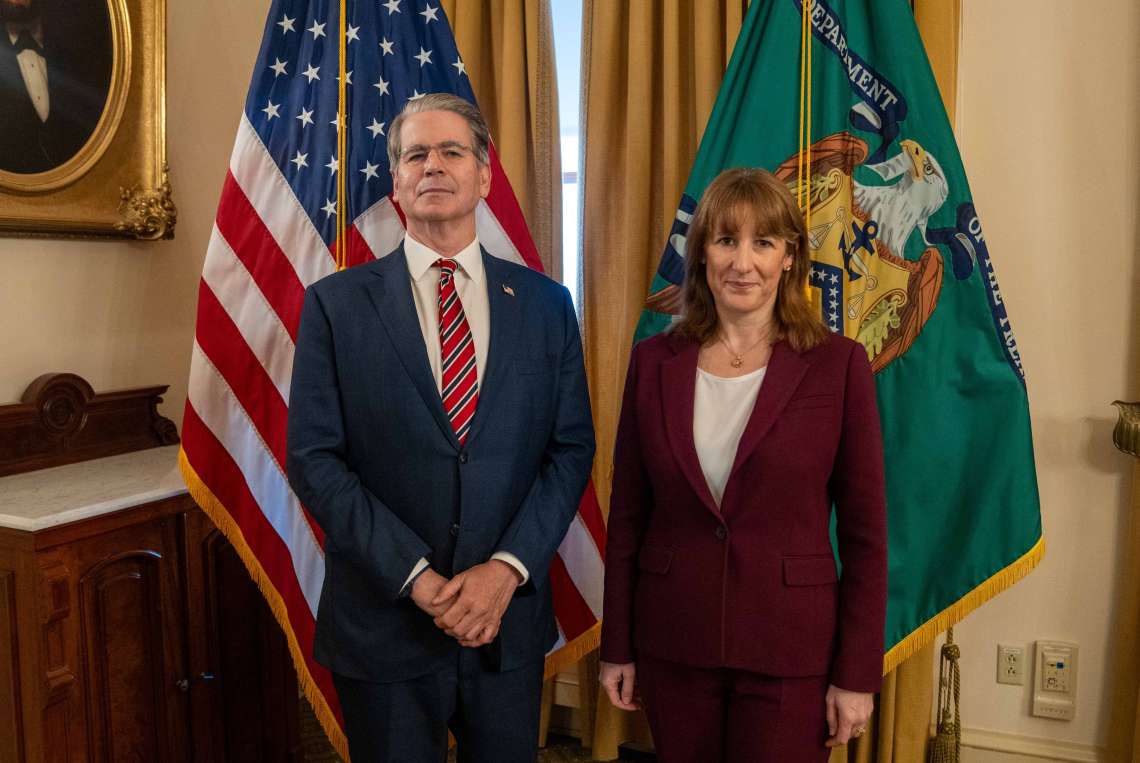
Senior officials from the UK and United States have stepped up efforts to deepen financial ties, as HM Treasury hosted American counterparts in London for high-level industry discussions under the Transatlantic Taskforce for Markets of the Future.
The meeting, held on 26 January, brought together representatives from HM Treasury and the U.S. Treasury, alongside regulatory agencies from both countries, to engage directly with industry leaders on the future direction of capital markets and digital finance. The talks form part of a broader push to align regulatory thinking and strengthen cooperation between the two financial powerhouses.
The Taskforce was established in September 2025 during President Donald Trump’s state visit to the UK. At the time, US Treasury Secretary Scott Bessent and Chancellor of the Exchequer Rachel Reeves agreed to create a formal framework aimed at reinforcing the longstanding financial partnership between London and key American markets. The initiative seeks to modernise collaboration in response to rapid technological change and intensifying global competition.
The London engagement focused on identifying practical steps to improve connectivity between UK and US capital markets. Officials explored how regulatory approaches could better support cross-border investment, encourage innovation, and maintain high standards of market integrity. Discussions also examined emerging areas such as digital assets, where both countries are working to balance innovation with consumer protection and financial stability.
Industry participants were invited to share perspectives on barriers to growth, opportunities for harmonisation, and areas where clearer regulatory pathways could unlock investment. The Taskforce has emphasised that direct engagement with market participants is central to shaping effective recommendations.
In a joint statement, officials thanked participants for what they described as “dynamic discussions and insights,” underscoring the importance of industry input in guiding the Taskforce’s work. The engagement in London is part of a series of consultations designed to ensure that proposals reflect the realities of firms operating across both jurisdictions.
The creation of the Taskforce signals recognition in both capitals that financial services remain a cornerstone of the transatlantic economic relationship. London and New York, in particular, continue to rank among the world’s leading financial centres, competing and collaborating in areas ranging from traditional banking and asset management to fintech and digital innovation.
Recent years have seen rapid change in financial technology, including the growth of tokenised assets, digital payment systems and evolving cryptoasset markets. Regulators on both sides of the Atlantic are seeking to craft frameworks that encourage responsible innovation while safeguarding market confidence. The Taskforce’s focus on “markets of the future” reflects this evolving landscape.
Beyond digital assets, the discussions also addressed broader structural themes, including capital formation, market resilience and the competitiveness of transatlantic exchanges. Officials are keen to ensure that regulatory regimes remain agile enough to support economic growth while maintaining robust oversight.
The London meeting is expected to be followed by additional joint engagements in the United States later this month. These sessions will continue to gather evidence and recommendations from industry stakeholders, with the aim of refining policy proposals.
The Taskforce plans to report back to both finance ministries through the established UK–US Financial Regulatory Working Group in summer 2026. That report is expected to outline recommendations designed to enhance cooperation, improve market access and strengthen the strategic alignment of regulatory approaches.
For policymakers, the initiative represents both an economic and geopolitical statement. At a time of shifting global trade patterns and intensifying competition from other financial centres, closer UK–US coordination is seen as a way to reinforce shared standards and preserve influence in setting global financial norms.
As consultations continue, officials from both sides have stressed that the success of the Taskforce will depend on translating dialogue into concrete, workable reforms. The coming months are therefore likely to focus on turning industry feedback into actionable proposals that reflect the depth and scale of the transatlantic financial relationship.