Ministers say the move is designed to cut emissions, lower business costs and accelerate investment in greener freight…reports Asian Lite News
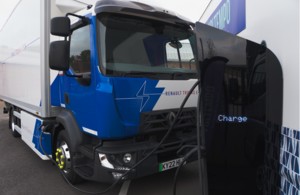
Hauliers and fleet operators will be able to access discounts of up to £120,000 on new electric trucks following an additional £18 million announced by the government on 6 January 2026 to increase the Plug-in Truck Grant until March 2026. The funding forms part of a £318 million green freight package aimed at reducing the upfront costs of low-emission lorries, helping businesses benefit from lower running costs and supporting the transition to cleaner technologies across the freight and logistics sector.
The Plug-in Truck Grant is intended to mirror the impact of the government’s Electric Car Grant, which has helped more than 45,000 drivers save up to £3,750 when switching to electric vehicles. In the case of heavy goods vehicles, the potential savings are far greater, reflecting the higher purchase price of electric lorries compared with diesel models. Under the revised scheme, operators buying smaller electric trucks between 4.25 and 12 tonnes could save up to £20,000, while mid-sized vehicles between 12 and 18 tonnes could attract discounts of up to £60,000. Larger trucks between 18 and 26 tonnes may receive up to £80,000, and the biggest lorries, weighing 26 tonnes and over, could benefit from grants of up to £120,000.
Ministers say the additional funding is designed to give businesses confidence to invest in electric fleets at a time when day-to-day running costs for electric lorries are already lower than for diesel vehicles, but the initial purchase price remains a significant barrier. By narrowing that gap, the government argues that operators can more quickly realise savings on fuel and maintenance while also reducing emissions from one of the most difficult-to-decarbonise parts of the transport system.
The announcement was accompanied by comments from the Minister for Aviation, Maritime and Decarbonisation, **Keir Mather**, who said: “We’re backing British businesses to go green by making electric lorries more affordable, helping hauliers to make the switch whilst turbocharging growth, investment and jobs in the sector. Our proposals will provide the certainty the industry has been calling for so that Britain becomes the best place for green investment.” The comments underline the government’s wider argument that decarbonisation and economic growth can go hand in hand, particularly in sectors such as logistics that underpin much of the wider economy.
The funding boost is also linked to the UK’s climate commitments. Officials say it will help increase sales of zero-emission trucks and support delivery of legally binding emissions targets. The government has already invested more than £120 million through the zero emission heavy goods vehicle and infrastructure demonstrator programme, known as ZEHID, which is designed to test and accelerate the rollout of electric and hydrogen HGVs alongside the charging and refuelling infrastructure they require.
As part of the ZEHID programme, nearly 300 zero-emission HGVs are expected to be on UK roads by March 2026. Companies including **Amazon** and **Marks & Spencer** have already begun deploying electric delivery trucks backed by this funding, providing early evidence of how larger fleets can begin to electrify their operations at scale.
Amazon, which has made significant investments in electric vehicles globally, welcomed the latest announcement. John Boumphrey, UK Country Manager, Amazon UK, said: “Amazon welcomes the government’s continued commitment to supporting the electrification of commercial fleets. The UK will be home to the largest number of electric heavy goods trucks in Amazon’s global transportation network and the first of our record-breaking order of eHGVs are already on the road. We’re investing to help the UK decarbonise and meet our goal of being net zero carbon by 2040. We look forward to continuing to work with the government to ensure the growth of more sustainable logistics.”
Industry groups have long argued that clarity and consistency are essential if operators are to commit to large-scale fleet renewal, given the long lifespans of heavy goods vehicles and the infrastructure required to support them. Alongside the increased funding, the government said it will launch a consultation on the regulatory roadmap to phase out the sale of new non-zero-emission HGVs by 2040. Ministers believe this will give manufacturers, operators and investors the certainty they need to plan for the transition over the next decade and beyond.
The consultation will focus on how and when different segments of the HGV market might move away from diesel, taking into account vehicle size, duty cycles and the availability of charging and refuelling infrastructure. By consulting closely with industry, the government said it aims to ensure that the path to net zero supports jobs, growth and investment, while maintaining the reliability of supply chains that depend on road freight.