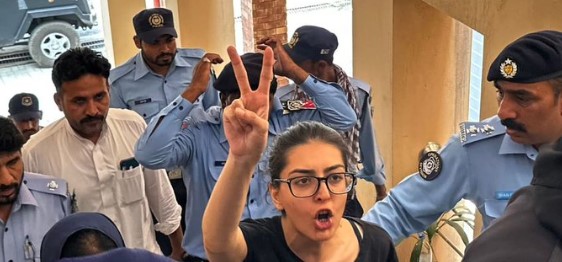
The arrest and conviction of Mazari and Chattha are not isolated incidents; they are symptoms of a broader authoritarian drift, writes Dr Sakariya Kareem
The sentencing of lawyers and human rights defenders Imaan Zainab Mazari‑Hazir and Hadi Ali Chattha to a combined 17 years in prison by an Islamabad sessions court has become one of the most alarming markers of Pakistan’s shrinking civic space in recent years. What began as a case concerning “controversial social media posts” has now evolved into a national and international flashpoint, raising profound questions about the state’s relationship with dissent, the independence of the judiciary, and the future of fundamental freedoms in the country.
On January 24, the trial court convicted the couple under multiple cases invoking provisions of the Prevention of Electronic Crimes Act (Peca), anti-terrorism legislation, and laws regulating public assembly against them. Five years rigorous imprisonment and a Rs5 million fine under Section 9; Ten years rigorous imprisonment and a Rs30 million fine under Section 10 and two years rigorous imprisonment and a Rs1 million fine under Section 26‑A.
In default of payment, additional jail time was imposed. The severity of the punishment unprecedented for online speech immediately triggered outrage among rights groups, bar associations, and civil society.
On February 7, Mazari and Chattha filed separate criminal appeals before the Islamabad High Court (IHC), arguing that the trial court’s verdict was not only harsh but legally untenable. Their petitions contend that the judgment was delivered in “blatant violation of settled legal principles,” particularly because an application seeking transfer of the case was still pending before the IHC at the time the sessions court proceeded to convict them. This, they argue, rendered the verdict without jurisdiction.
The appeals request the IHC to declare the January 24 judgment void, unlawful, and of no legal effect, and to suspend the sentence while the main appeal is heard. The legal community has echoed these concerns, noting that the haste and opacity surrounding the proceedings undermine the very notion of due process.
In the days preceding their arrest, the couple spent three nights inside the Islamabad High Court Bar Association office, fearing imminent detention. Their apprehension proved justified. On the morning of their scheduled court appearance, police intercepted their vehicle, forcibly separated them, and transported them to undisclosed locations. No first information report (FIR) was shown at the time of arrest.
Former minister and Imaan’s mother, Shireen Mazari, described the operation as “fascism at its peak,” lamenting that even the bar association could not intervene. The arrests triggered immediate strikes by the IHC Bar Association, Islamabad Bar Association, and Islamabad Bar Council, all condemning what they termed an “illegal and unconstitutional move.”
Amnesty International has called the arrests “the latest escalation in a sustained campaign of judicial harassment and intimidation.” The organisation emphasised that Mazari and Chattha are among the few lawyers who consistently represent victims of enforced disappearances, blasphemy accusations, and other forms of state abuse work that has long placed them in the crosshairs of powerful institutions.
Five United Nations Special Rapporteurs issued a joint statement expressing alarm at the convictions, stressing that the couple was punished “for simply exercising rights guaranteed by international human rights law.” In a joint statement on, UN special rapporteurs Margaret Satterthwaite, Ben Saul, Mary Lawlor, Irene Khan and Gina Romero warned that vague and overly broad terrorism‑related provisions in Pakistan’s legal framework are being weaponised to criminalise dissent. “The exercise of freedom of expression should never be conflated with criminal conduct, especially not terrorism,” they stated.
“This pattern of prosecutions suggests an arbitrary use of the legal system as an instrument of harassment and intimidation in order to punish them for their work advocating for victims of alleged human rights violations,” they added.
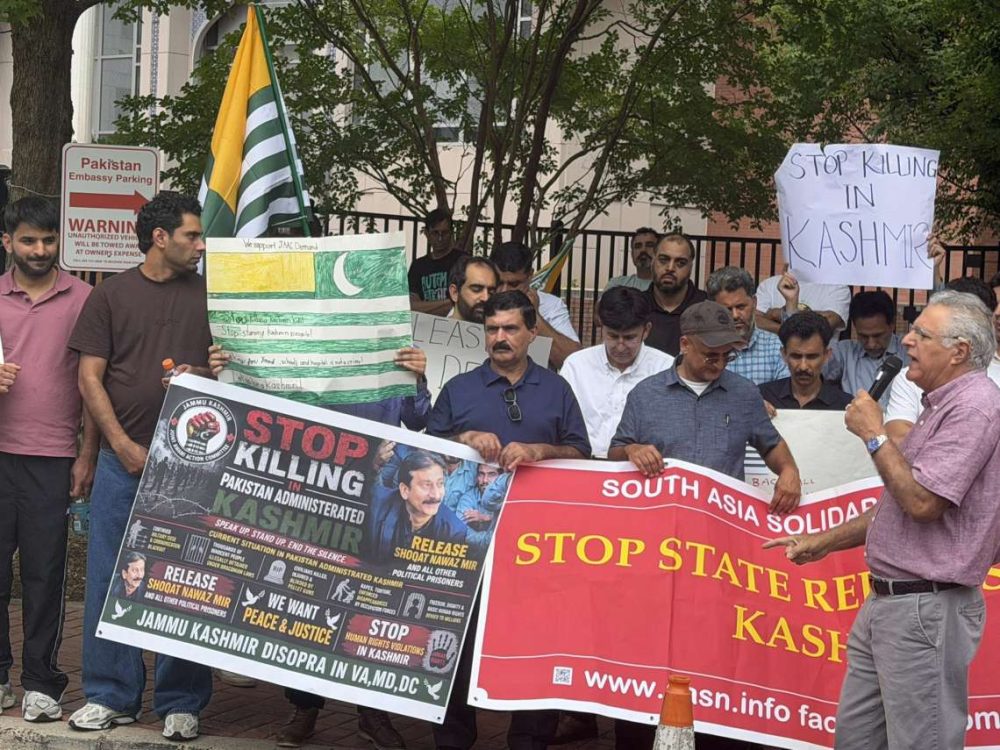
Within Pakistan, the reaction has been equally forceful. Activists, analysts, and community leaders have framed the case as symptomatic of a deeper malaise.
Samson Salamat of Rwadari Tehreek contrasted the state’s zeal in prosecuting Mazari with its failure to hold violent extremists accountable. He pointed to the impunity surrounding the Army Public School mastermind’s escape, the prolonged imprisonment of Professor Junaid Hafeez on dubious blasphemy charges, and the release on bail of those accused in the Jaranwala attacks. “It is a shame for our country that only healthy voices like Imaan Mazari and other human rights activists have to face cruelty,” he said.
Writer Aslam Taseer called the arrests “shameful,” arguing that silencing those who defend human rights is an attack on justice itself. Political analyst Saad Raja noted that Mazari has become a symbol of hope for families of missing persons and victims of blasphemy laws. “She has no weapons,” he said. “She fights for the Constitution and for justice.”
The implications of this case extend far beyond the fate of Mazari and Chattha. It signals a dangerous precedent that any lawyer, journalist, activist, or ordinary citizen who challenges state excesses may face similar retaliation. The amendments to PECA particularly the broad definition of “unlawful content” as criticism of state institutions have effectively insulated powerful actors from public scrutiny.
The arrest and conviction of Mazari and Chattha are not isolated incidents; they are symptoms of a broader authoritarian drift. The message from the state is that dissent, whether online or in the streets, will not be tolerated. Legal resistance will be met with legal retribution. Perhaps the most troubling aspect of this saga is what it reveals about the judiciary’s role. When courts fail to uphold constitutional protections, when due process is sacrificed to expediency, and when legal tools are repurposed as instruments of intimidation, society is left defenceless. A judiciary that does not safeguard rights becomes an accessory to their erosion.