April 29, 2021
2 mins read

Cops trace crores of funding in Hefazat accounts

Home Minister Asaduzzaman Khan Kamal said that agencies were identifying Hefazat’s financers and Police would seek another seven days to interrogate Mamunul…reports Asian Lite News

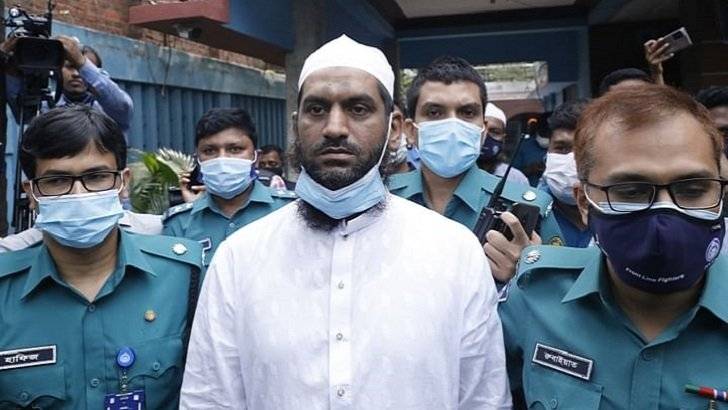
Funds for militant outfit Hefazat-e-Islam, which was behind the widespread violence last month, was deposited into two bank accounts of its senior leader Mamunul Haque and the donors have been identified, Bangladesh Police said on Wednesday.

“We’ve so far identified 313 people who have financed Hefazat on different occasions. We have found evidence of 6.47 crore takas being transacted to and from Mamunul’s two bank accounts,” Additional Commissioner, Detective Branch, of Dhaka Metropolitan Police, A.K.M. Hafiz Akhter told IANS.

Police would seek another seven days to interrogate Mamunul, he added.

Home Minister Asaduzzaman Khan Kamal told IANS that agencies were identifying Hefazat’s financers. “Detectives have identified 313 people who assisted Hefazat-e-Islam by funding it for several atrocities and massacres,” he said.

Mamunul, who has confessed his involvement in getting huge funds from militant outfits of Pakistan, stayed in Pakistan on 2005 and is brother-in-law of fugitive Major (dismissed) Shariful Haque Dalim – convicted for assassinating Bangabandhu Sheikh Mujibur Rahman.

Top militant Mamunul trained in Pakistan Bangladesh Police
Also read:Entry ban: 250 Bangladeshis stranded at border

Arrested on April 18 in connection with sabotage, the Hefazat leader is currently on remand for a week in two cases – one filed over the 2013 Shapla Chattar mayhem by the militant outfit and the other over the March 26 Baitul Mokarram clashes with the police.

Meanwhile, Mamunul also confessed the police that a meeting was held at the home of Hefazat Ameer Junayed Babunagari to remove Ahmed Shafi, the founder of the Qaumi Madarsa, seen as the breeding ground of militants.

“The meeting was held on the occasion of the wedding ceremony of Babunagari’s son… where the Hefazat leader planned to replace Shafi with himself and become the party chief,” the police official said.

Meanwhile, Dhaka Metropolitan Magistrate Baki Billah passed an order on Wednesday on fresh six-day remand of Hefazat’s former Assistant Secretary General, Ataullah Amini, and former Assistant Office Secretary of its Dhaka city unit, Ehteshamul Haque, in two cases lodged with capital’s Motijheel and Paltan Police Stations over a 2013 violence case.

The court also sent Haque, who was arrested on April 22, on two-day remand in a case lodged with the capital’s Paltan Police Station over the mayhem in Baitul Mukarram area on March 26.

The same court on April 22 had sent Amini on five-day remand in another case relating to the 2013 violence.

On April 23, Dhaka Metropolitan Magistrate Nivana Khayer Jessy had sent Haque on four-day remand in a case lodged

Also read:Cops confirm top B’desh militant Mamunul was trained in Pakistan
Previous Story

Russia, US and Commonwealth rush tonnes of aid

Next Story

Bangladesh industrialist booked for abetting suicide

Previous Story

Russia, US and Commonwealth rush tonnes of aid

Next Story

Bangladesh industrialist booked for abetting suicide

Latest from Asia News

Economic tide is turning in Bangladesh

If there is one thing that can bring some comfort to the struggling Bangladeshi economy, it is good relations with India. Bangladesh should remember that Delhi’s backing, through easy supplies of essentials

DP World Lands 15-Year Bangladesh Port Deal

The agreement between the Chittagong Port Authority (CPA) and DP World covers the New Mooring Container Terminal…reports Asian Lite News Desk Bangladesh has signed a 15-year concession agreement with global ports operator

Nepal Floods Cause $1.66 Billion In Damage, Says World Bank

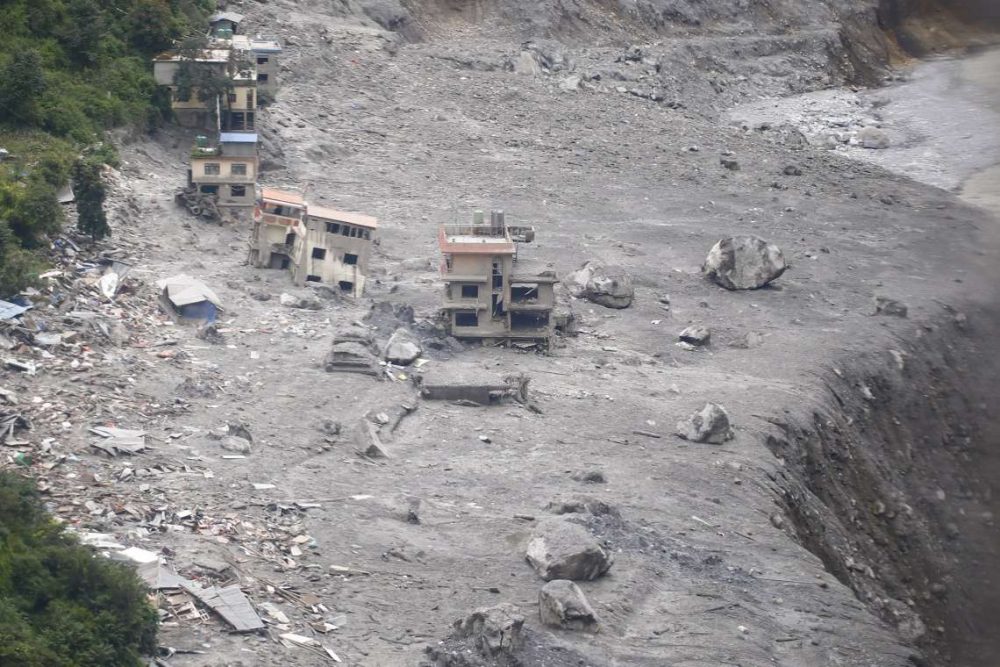
Nepal’s August 2026 floods caused an estimated US$1.66 billion in direct physical damage, with infrastructure accounting for 83 per cent of the total…reports Asian Lite News Desk Nepal’s devastating floods in August 2026 caused an estimated US$1.66 billion in direct physical damage, with infrastructure accounting for 83 per cent of the total, according to a World Bank report. The estimate, included in the World Bank’s Nepal Development Update unveiled this week, is close to the Nepal government’s preliminary Rapid Damage and Needs Assessment (RDNA), which put physical damage at US$1.81 billion. The government’s assessment also estimated losses beyond physical assets at US$883.32 million, taking the total economic effects of the disaster to approximately US$2.7 billion. The World Bank’s Global Rapid Post-Disaster Damage Estimation (GRADE) found that infrastructure suffered the greatest damage, estimated at US$1.38 billion, or 83 per cent of the total. Residential buildings accounted for US$185 million, or 11 per cent, while non-residential buildings sustained damage worth US$101 million, or 6 per cent. The floods along the Bhotekoshi and Trishuli rivers caused extensive damage to hydropower projects, solar energy facilities, electricity transmission infrastructure and transport networks. The energy sector, particularly hydropower, was among the worst affected. The August 2026 floods affected 12 hydropower projects and one solar project, involving 281.1 MW of operational capacity and 395.02 MW of capacity under construction. Damage to transmission lines and substations also disrupted the transmission of 149.6 MW of electricity to the national grid. The total affected capacity reached approximately 430.7 MW, equivalent to 10.6 per cent of Nepal’s installed hydropower and solar capacity at the end of fiscal year 2025-26, which concluded in mid-July. The disaster also severely damaged transport infrastructure along the 82-km Rasuwa trade corridor, which connects Kathmandu with the Rasuwagadhi border point with China. More than 55 km of the corridor was damaged, including 40 km that was completely destroyed. The floods also damaged 37 motorable bridges and 68 suspension bridges. The disaster resulted in significant human losses along the affected corridor and beyond. According to Nepal’s National Disaster Risk Reduction and Management Authority, 1,455 people had been confirmed dead, while 5,285 remained missing following the disaster. The World Bank report found that the physical damage was concentrated in three districts in central Nepal: Rasuwa, Nuwakot and Dhading. Rasuwa was the worst-affected district, accounting for US$1.07 billion, or 64 per cent, of the total direct damage. Nuwakot recorded an estimated US$551 million in damage, while Dhading suffered approximately US$39 million. “The findings highlight the concentration of physical damage in a small number of districts and the disproportionate impact on infrastructure, underscoring the scale of the reconstruction challenge facing the affected areas,” the World Bank said. The global development financier said the floods had demonstrated the scale and complexity of disaster risks in Nepal’s Himalayan environment. The event also showed how a single extreme weather event could trigger cascading impacts across sectors and geographical areas. The report said recovery efforts should extend beyond restoring infrastructure to its pre-disaster condition. While the principle of “Build Back Better” remained relevant, the World Bank stressed that rebuilding infrastructure to higher engineering standards in the same locations might not always be sufficient. “In some cases, simply rebuilding the same infrastructure in the same location to a higher engineering standard may not be sufficient. Nepal may need to build differently — based on a better understanding of risk, more careful decisions about location and design, greater redundancy in critical networks, stronger monitoring and early warning, and a more integrated approach to infrastructure development in the Himalayas,” the report said. The World Bank said Nepal’s recovery strategy should incorporate improved risk assessment, more informed infrastructure planning, stronger monitoring systems and better early warning mechanisms. The report emphasised that reconstruction should not only restore damaged assets but also reduce the impact of future disasters, particularly in the country’s vulnerable Himalayan regions.

Vaccine Delays Fuel Bangladesh Measles Outbreak

More than 32,000 suspected cases and over 250 deaths have been reported since mid-March, with children making up most of the fatalities….reports Asian Lite News Desk Bangladesh’s measles outbreak has intensified, with
Go toTop

Don't Miss

Election Countdown Fuels Turmoil in Bangladesh

Right now, one of the biggest challenges facing Bangladesh is

Md Shahabuddin Chuppu poised to become B’desh President

A delegation of Awami League, led by the General Secretary