October 25, 2021
3 mins read

IS-K poses widening threat to Sino-Pak nexus

There are also evident geopolitical dimensions to these attacks claimed by IS-K, as was the case with some early attacks attributed to the group….reports Asian Lite News

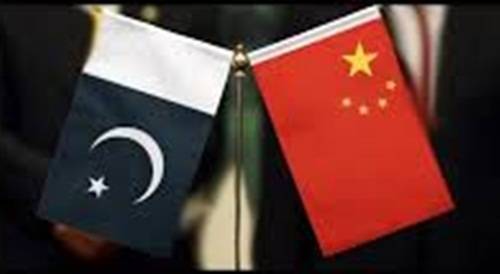
 The purported use of ethnic Baloch and Uyghur suicide bombers in the Kandahar and Kunduz attacks claimed by IS-K suggests a message is being sent to two other neighbours of Afghanistan — China and Pakistan, TRT World reported.

Beijing is already alarmed by the rise in attacks on Chinese nationals in Pakistan, which has impacted its risk appetite for infrastructure construction and investment in Pakistan. The report said IS-K may be signalling that, like other militant outfits in the region, it could leverage marginalised ethnic groups to exert veto power over the shaping of the region’s economic geography.

China is pulling back from high-risk markets. And the risk that its nationals will be targeted by IS-K will force it to maintain a distance from Afghanistan. Efforts by the Taliban to address Beijing’s security concerns may inadvertently compound the problem for the former insurgent group, if it is seen as having conceded too much, the report added.

Through targeted terrorist strikes, IS-K – or those wielding the IS-K brand – has the potential to develop a veto power over China’s economic presence in Afghanistan, much like ethnic separatist groups in Pakistan have demonstrated, the report said. And in doing so, IS-K would jeopardise not just prospects for regional connectivity and trade, but also the very viability of the Taliban state.
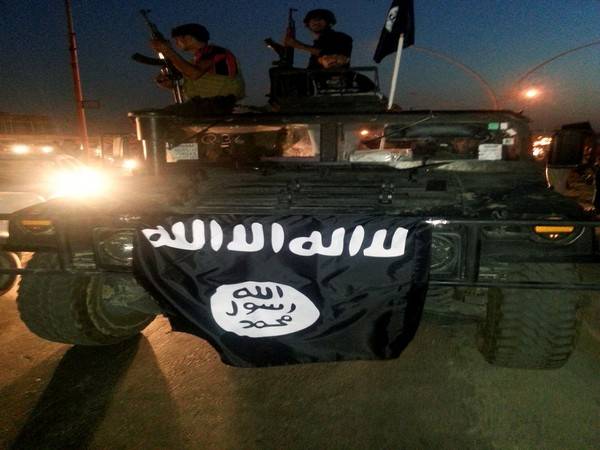
Pic credit ANI

Afghanistan is a resource-rich, conflict-ravaged, and infrastructure-poor country. It is highly dependent on foreign aid to finance its massive budget and trade deficits. The only real path toward financial solvency and sustainable economic growth is through extractives and transit trade. Chinese aid and investment would have to be an important part of this mix, though attracting inflows from Beijing will be a hard sell, the report said.

There are also evident geopolitical dimensions to these attacks claimed by IS-K, as was the case with some early attacks attributed to the group.

These attacks complicate the Taliban’s relations with Iran. Now in power, the Taliban bears the burden of protecting the population, including the Shia. But Tehran also sees itself as the defender of the world’s Shias, including in Afghanistan. And it has a proven willingness to resort to extraterritorial action, the report said.

Should the Taliban fail to curb attacks on Afghan Shias, Iran could bolster armed Shia groups in Afghanistan, including the Quds Force-run international Afghan Shia militia, the Fatemiyoun. At the same time, Taliban outreach to Shias provides material for IS-K propaganda, potentially enabling the latter to absorb disgruntled anti-Shia hardliners.
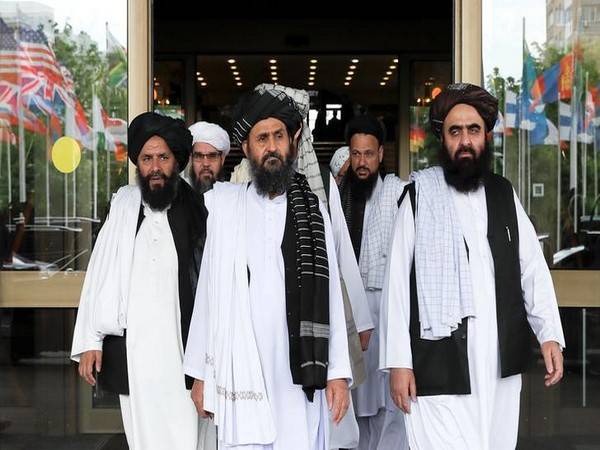
IS-K has little to lose by continuing to kill innocent Shias. But if it manages to draw Iran into the fray, it could Syrianise the Afghanistan conflict and benefit from the resultant realignment of jihadist forces in the region, the report said.

The group’s purported leader today, who goes by the nom de guerre Shahab al-Muhajir, is a man of mystery. There is very little reliable public information on him. IS-K has yet to release a biography of him, an image revealing his face, or a recording of his voice. Statements written in his name are read by a deputy. And while his nisbah, al-Muhajir, triggered speculation that he was possibly an Arab “migrant” from Iraq or Syria, some claim that he is actually a local.

In fact, a recent report by CBS News, citing unnamed security officials with the previous Afghan government, claims that al-Muhajir is not only an Afghan, but also a graduate of Kabul Polytechnic University. The report states that a raid by the previous regime’s security forces indicated that al-Muhajir had been in possession of a card “identifying him as a member of the Afghan army.”

The CBS News report, which is yet to be corroborated by other sources, also claims that al-Muhajir is actually operating clandestinely within the Taliban as an “imposter,” and even met with the Taliban’s deputy head of intelligence, who was unaware of his true identity. The deception allegedly extends to within IS-K ranks with the group’s own members meeting imposters purporting to be al-Muhajir.
ALSO READ: Record 22.8 mn people in Afghanistan to face starvation

ALSO READ: Army brings over 100 people who had left Afghanistan

Previous Story

Khalilzad objects to Biden’s current Afghanistan policy

Next Story

Record 22.8 mn people in Afghanistan to face starvation

Previous Story

Khalilzad objects to Biden’s current Afghanistan policy

Next Story

Record 22.8 mn people in Afghanistan to face starvation

Latest from -Top News

Pakistan Risks Overstretching Itself in Yemen War

Pakistan’s expanding military role in Saudi Arabia amid the Yemen conflict could strain its defence resources and fragile finances…reports Asian Lite News Desk Pakistan’s military involvement in the war in Yemen may prove unsustainable because of mounting financial pressures and competing security demands, according to a new report. Islamabad’s growing military presence in Saudi Arabia risks stretching its defence resources while exposing the country to greater strategic and economic challenges. An article by Andrew Wilson in One World Outlook describes Pakistan’s involvement as a case of “fiscal and strategic overreach”, arguing that the country lacks the financial flexibility to sustain an expanded military commitment. Pakistan’s external finances depend heavily on an International Monetary Fund (IMF) programme, financial support from Gulf countries and remittances from Pakistani workers in the region. The report argues that deeper military involvement in the conflict could place additional pressure on these sources of financial stability. It also warns that deploying troops and military equipment abroad could weaken Pakistan’s capacity to address security challenges along its eastern border and deal with two domestic insurgencies. The move could also draw Islamabad into a conflict it has sought to approach cautiously. A Reuters report in May, citing Pakistani security and government sources, said Islamabad had deployed around 8,000 troops, a squadron of approximately 16 aircraft, mostly JF-17 fighter jets, two drone squadrons and a Chinese HQ-9 air-defence battery to Saudi Arabia. According to those sources, Riyadh was financing the deployment, with Pakistani personnel operating the equipment. The sources also said a confidential agreement contemplated the possibility of deploying up to 80,000 troops. Islamabad has not confirmed those figures, although it has acknowledged its military presence in Saudi Arabia, including the deployment of fighter jets at King Abdulaziz Air Base from April. The One World Outlook article argues that Saudi financial support can cover allowances and operating expenses but cannot easily replace military equipment needed elsewhere or resolve the political and strategic challenges of participating in the Yemen conflict. Pakistan’s defence budget is another concern. For the 2026-27 financial year, the federal government allocated PKR 3 trillion, or approximately $10.8 billion, to defence services. The allocation represents an 18 per cent increase from the original PKR 2.55 trillion provision and amounts to around 2.1 per cent of projected gross domestic product (GDP). Defence spending accounts for approximately 16 per cent of the federal government’s PKR 18.8 trillion expenditure. Military pensions are budgeted separately at PKR 822 billion, while debt servicing costs stand at approximately PKR 8 trillion, more than two-and-a-half times the defence allocation. The report argues that these competing financial obligations leave little room for additional military expenditure without placing further pressure on public finances. Pakistan’s reliance on IMF assistance also limits its fiscal flexibility. The country must meet the conditions attached to the programme, including a primary budget surplus target of 2 per cent of GDP and continued restraint on development spending. According to the article, these requirements make it difficult for Islamabad to finance an additional military commitment without compromising other budgetary priorities. Pakistan’s economic indicators offer limited reassurance. Economic growth for the 2025-26 financial year is estimated at between 3.6 and 3.7 per cent, while inflation reached approximately 10.3 per cent in September following an energy price shock. Foreign exchange reserves stood at around $21.5 billion at the end of September. Although this marks an improvement from the low levels recorded in 2023, the report notes that the reserves cover only a few months of imports. Financial assistance from Gulf partners remains central to Pakistan’s external stability. The article says Islamabad holds approximately $8 billion in Saudi deposits at its central bank. In July, the State Bank of Pakistan said Riyadh had extended the maturity of $5 billion in deposits to December 2028, easing the country’s immediate external financing requirements. A further $3 billion deposit was also extended in the spring. However, the article argues that these arrangements provide temporary relief rather than long-term financial independence, particularly as regional conflict threatens the stability of the Gulf economies on which Pakistan relies. The report concludes that Pakistan faces a difficult balance between supporting Saudi Arabia militarily and preserving the financial and military resources needed to address its domestic and regional challenges.
Go toTop

Don't Miss

75% of disengagement problems sorted out with China’

Jaishankar also underlined how India and China never had an

Nawaz Sharif’s conviction order may be revoked

Late last month, the government issued a new passport with