February 28, 2022
4 mins read

India’s ‘abstaining’ spree continues on Ukraine

India’s vote on that resolution calling for unfettered humanitarian access to Ukraine. would be closely watched, as would its stance in the Assembly…writes Arul Louis

India has abstained for the third time on a Security Council vote on Ukraine and said that it welcomed the decision by Ukraine and Russia to hold talks.

As if acting as an Asian bloc, India was joined by the two others from the continent, China and the United Arab Emirates, to be the only countries to abstain on Sunday on a procedural vote to have the 193-member General Assembly take up the Russian invasion of Ukraine at an emergency meeting.

Russia’s negative vote did not have the power of a veto and it passed with the support of 11 members from Europe, the Americas and Africa in the 15-member Council.

This is the first time the Council has called for an emergency meeting of the Assembly in 40 years — the last one was in 1982 after the US vetoed a resolution on the Israeli occupation of the Syrian Golan Heights.
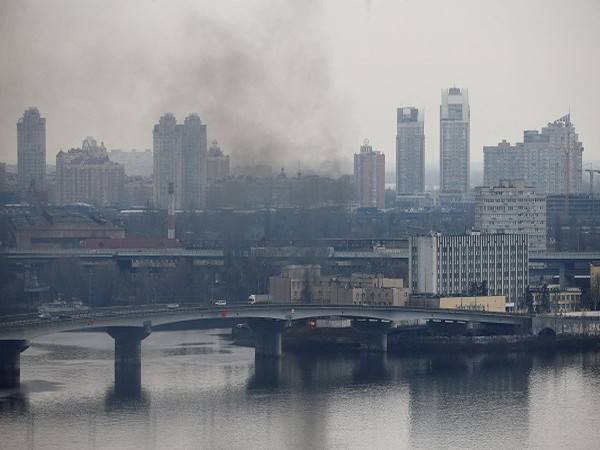
The General Assembly is scheduled to meet for the emergency session on Monday at 10 a.m. local time (8.30 p.m. in India) and consider a resolution condemning Russia’s invasion of Ukraine and demand it withdraw its troops immediately that had been vetoed by Russia in the Security Council on Friday.

India had abstained on a procedural vote in January and on the resolution on Friday.

India’s Permanent Representative T.S. Tirumirti said that “it is regrettable that the situation in Ukraine has worsened further since the council last convened on this matter”.

“We reiterate our call for immediate cessation of violence and an end to all hostilities. There is no other choice but to return back to the path of diplomacy and dialogue,” he said.

Welcoming the announcement by Ukraine and Russia to hold talks at the Belarus border, Tirumurti said that Prime Minister Narendra Modi had “strongly advocated” this course of diplomacy when he spoke with Russia’s President Vladimir Putin on Friday and with Ukraine’s President Volodymyr Zelentsky on Saturday.

The US had suggested that India and other countries having influence with Moscow to get it to stop the invasion.
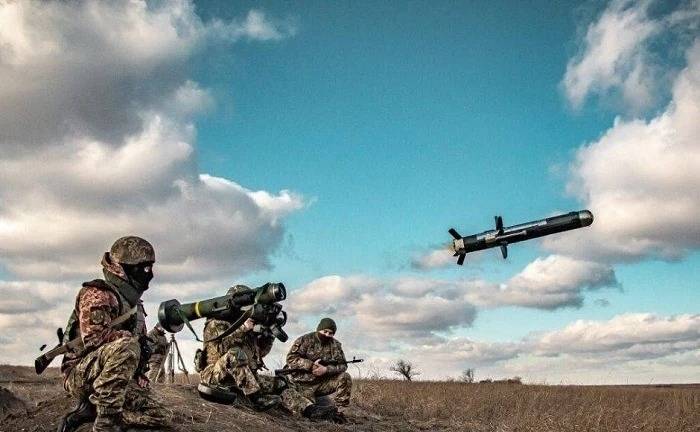
Acknowledging India’s “distinct” relationship with Russia, US State Department Spokesperson Ned Price said on Friday that the US wanted it to use its leverage with Moscow to influence it to uphold international norms.

US Permanent Representative Linda Thomas-Greenfield said after Sunday’s vote that holding Russia accountable for its actions “will take some courage from some fellow member states”.

“We need to take extraordinary actions to meet this threat to our international system and do everything we can to help Ukraine and its people,” she said.

Tirumurti raised the plight of the Indian citizens stranded in Ukraine, where Russian troops have been advancing while facing resistance from Ukrainians.

He said, “Our evacuation efforts have been adversely impacted by the complex and uncertain situation at the border crossings. It is important to maintain an uninterrupted and predictable movement of people.”

“It is an urgent humanitarian necessity that must be immediately addressed,” he stressed.

That matter is expected to be taken up on Monday at a Council meeting proposed by French President Emmanuel Macron to discuss the humanitarian situation in Ukraine.

France’s Permanent Representative Nicolas de Riviere said that his country and Mexico would present at that session a resolution calling for unfettered humanitarian access to Ukraine.

India’s vote on that resolution would be closely watched, as would its stance in the Assembly.

The resolution passed on Sunday is based on the “Uniting for Peace” resolution passed in 1950 by the Assembly for situations where the Council cannot act because the permanent members cannot agree and resulting in a “failure of the Security Council to discharge its responsibilities”.

When the Council passes a resolution calling for an emergency session of the Assembly, it meets to take it up and recommend action to UN members.

Unlike Council actions, the Assembly resolutions that can be passed by a simple majority are not enforceable but carry political and moral weight.

The Uniting for Peace resolution was adopted after the Soviet Union’s vetoes of resolutions on the Korean situation.
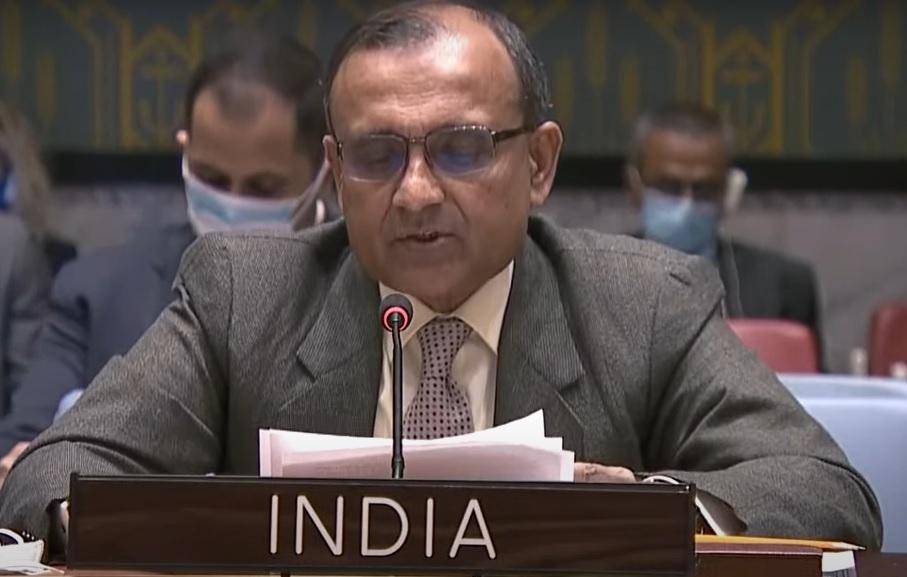
India’s Permanent Representative T S Tirumurti addresses the emergency meeting of the Security Council on Ukraine developments on Monday, February 21, 2022. (Photo: UN/IANS)

When the Council makes the referral, the Assembly has to take it up in 24 hours.

In addition, the General Assembly can also call for an emergency session.

There have been only 10 emergency sessions of the Assembly of both types and last one was in 1997, when the US vetoed a resolution on Palestine — but that was convened by the Assembly without a Council resolution.

The Security Council had not called for an Assembly emergency session since 1982.

The last time the General Assembly took up a matter relating to Ukraine was to pass a resolution in 2014 in support of that country’s territorial integrity.

But that was not in an emergency session.

The resolution was adopted with 100 votes, while there were 11 votes against and India was one of the 58 countries that abstained.

The US and its allies are frenetically working to get more countries to support the new resolution on Ukraine.
ALSO READ: Ukraine to send delegation for talks

Previous Story

Ranji Trophy: Remarkable win for Kerala with Rohan’s historic hundred

Next Story

Russia’s N-alert a distraction, says Boris

Previous Story

Ranji Trophy: Remarkable win for Kerala with Rohan’s historic hundred

Next Story

Russia’s N-alert a distraction, says Boris

Latest from -Top News

Pakistan Risks Overstretching Itself in Yemen War

Pakistan’s expanding military role in Saudi Arabia amid the Yemen conflict could strain its defence resources and fragile finances…reports Asian Lite News Desk Pakistan’s military involvement in the war in Yemen may prove unsustainable because of mounting financial pressures and competing security demands, according to a new report. Islamabad’s growing military presence in Saudi Arabia risks stretching its defence resources while exposing the country to greater strategic and economic challenges. An article by Andrew Wilson in One World Outlook describes Pakistan’s involvement as a case of “fiscal and strategic overreach”, arguing that the country lacks the financial flexibility to sustain an expanded military commitment. Pakistan’s external finances depend heavily on an International Monetary Fund (IMF) programme, financial support from Gulf countries and remittances from Pakistani workers in the region. The report argues that deeper military involvement in the conflict could place additional pressure on these sources of financial stability. It also warns that deploying troops and military equipment abroad could weaken Pakistan’s capacity to address security challenges along its eastern border and deal with two domestic insurgencies. The move could also draw Islamabad into a conflict it has sought to approach cautiously. A Reuters report in May, citing Pakistani security and government sources, said Islamabad had deployed around 8,000 troops, a squadron of approximately 16 aircraft, mostly JF-17 fighter jets, two drone squadrons and a Chinese HQ-9 air-defence battery to Saudi Arabia. According to those sources, Riyadh was financing the deployment, with Pakistani personnel operating the equipment. The sources also said a confidential agreement contemplated the possibility of deploying up to 80,000 troops. Islamabad has not confirmed those figures, although it has acknowledged its military presence in Saudi Arabia, including the deployment of fighter jets at King Abdulaziz Air Base from April. The One World Outlook article argues that Saudi financial support can cover allowances and operating expenses but cannot easily replace military equipment needed elsewhere or resolve the political and strategic challenges of participating in the Yemen conflict. Pakistan’s defence budget is another concern. For the 2026-27 financial year, the federal government allocated PKR 3 trillion, or approximately $10.8 billion, to defence services. The allocation represents an 18 per cent increase from the original PKR 2.55 trillion provision and amounts to around 2.1 per cent of projected gross domestic product (GDP). Defence spending accounts for approximately 16 per cent of the federal government’s PKR 18.8 trillion expenditure. Military pensions are budgeted separately at PKR 822 billion, while debt servicing costs stand at approximately PKR 8 trillion, more than two-and-a-half times the defence allocation. The report argues that these competing financial obligations leave little room for additional military expenditure without placing further pressure on public finances. Pakistan’s reliance on IMF assistance also limits its fiscal flexibility. The country must meet the conditions attached to the programme, including a primary budget surplus target of 2 per cent of GDP and continued restraint on development spending. According to the article, these requirements make it difficult for Islamabad to finance an additional military commitment without compromising other budgetary priorities. Pakistan’s economic indicators offer limited reassurance. Economic growth for the 2025-26 financial year is estimated at between 3.6 and 3.7 per cent, while inflation reached approximately 10.3 per cent in September following an energy price shock. Foreign exchange reserves stood at around $21.5 billion at the end of September. Although this marks an improvement from the low levels recorded in 2023, the report notes that the reserves cover only a few months of imports. Financial assistance from Gulf partners remains central to Pakistan’s external stability. The article says Islamabad holds approximately $8 billion in Saudi deposits at its central bank. In July, the State Bank of Pakistan said Riyadh had extended the maturity of $5 billion in deposits to December 2028, easing the country’s immediate external financing requirements. A further $3 billion deposit was also extended in the spring. However, the article argues that these arrangements provide temporary relief rather than long-term financial independence, particularly as regional conflict threatens the stability of the Gulf economies on which Pakistan relies. The report concludes that Pakistan faces a difficult balance between supporting Saudi Arabia militarily and preserving the financial and military resources needed to address its domestic and regional challenges.

UK and Germany Ratify Kensington Treaty

Britain and Germany ratify the Kensington Treaty, agreeing new cooperation on AI, quantum research, defence and security while targeting investment, jobs and Russian hybrid threats…reports Asian Lite News Desk Britain and Germany

Economic tide is turning in Bangladesh

If there is one thing that can bring some comfort to the struggling Bangladeshi economy, it is good relations with India. Bangladesh should remember that Delhi’s backing, through easy supplies of essentials
Go toTop

Don't Miss

Copenhagen-New Delhi bilateral ties touch new heights

Such developments took place during the just concluded three-day (October

India upset as Lanka fuels China’s warships on the sly

It was noticed that Sri Lankan vessels were loading fuel