September 25, 2022
3 mins read

Philippines, US on track to deepen alliance

Marcos, who is set to return to the Philippines on Saturday, said that he cannot envision his country without the US as a partner during an economic forum earlier in the week…reports Asian Lite news

The Philippines is on track to deepen its alliance with the US, experts said this week, as the first meeting between President Ferdinand Marcos Jr. and his US counterpart Joe Biden showed mutual intention to revive long-standing ties that were undermined during the previous Philippine presidency.

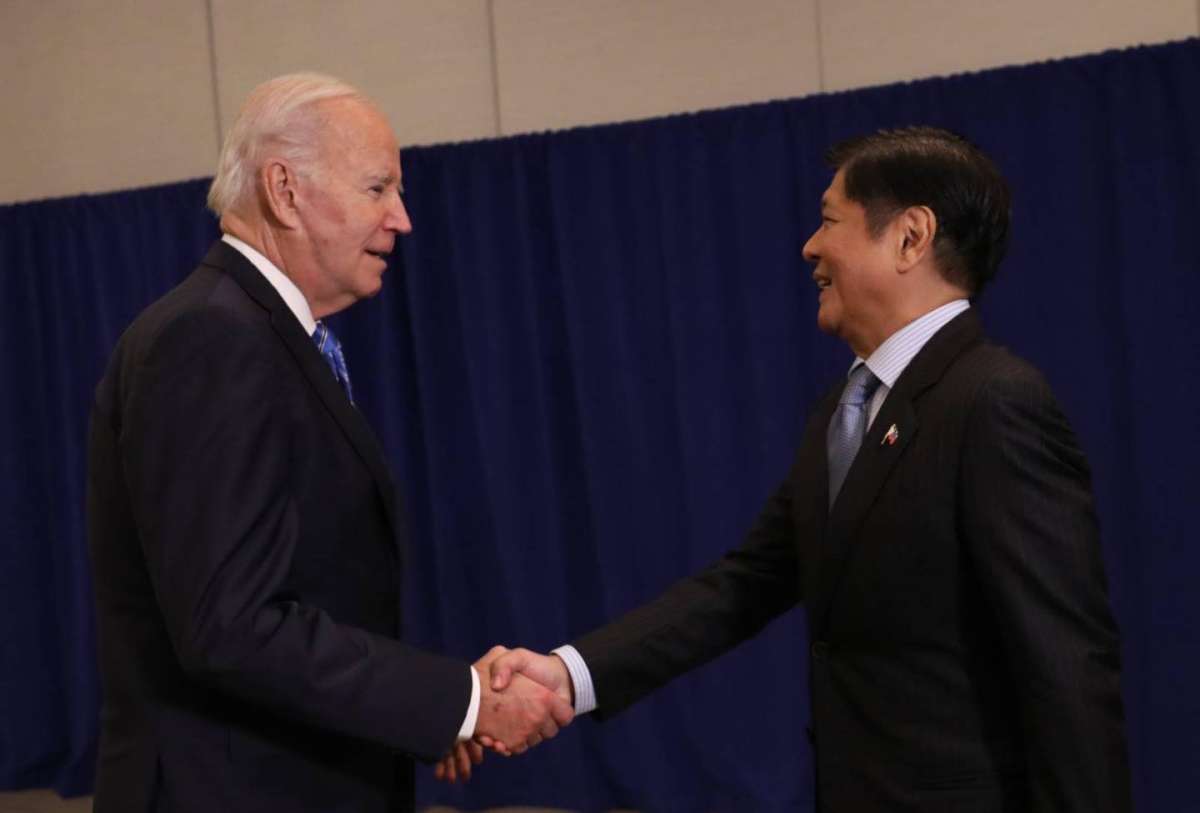
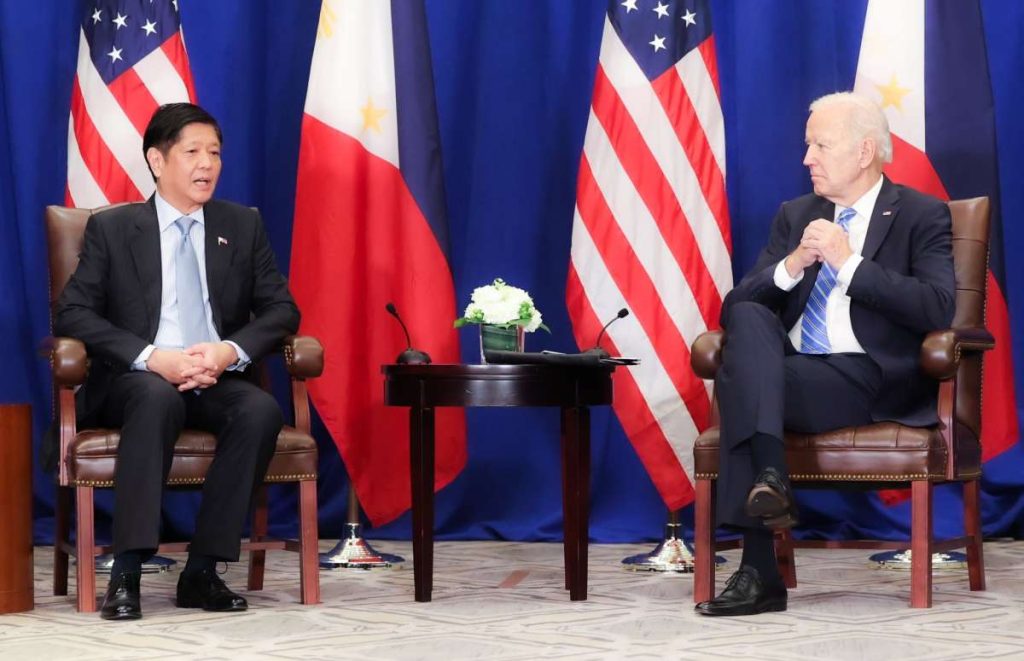
Marcos and Biden held their inaugural face-to-face talks on the sidelines of the UN General Assembly in New York City, a few months after the son of the late dictator took office following a landslide victory in the Philippine elections.

Since becoming president, Marcos has held meetings with a number of top US officials, including US Secretary of State Antony Blinken, in a foreign policy shift from the days of former president Rodrigo Duterte, who oversaw a strategy to distance Manila from Washington and embrace a Beijing-friendly direction.

“We are your partners, we are your allies, we are your friends. And in like fashion, we have always considered the US our partner, our ally and our friend,” Marcos told Biden during their meeting.
Marcos, who is set to return to the Philippines on Saturday, said that he cannot envision his country without the US as a partner during an economic forum earlier in the week.

Biden had reaffirmed the US’ “ironclad commitment” to the defense of the Philippines during the occasion, the White House said in a statement, as they discussed various other issues, including tensions in the South China Sea and the Russian invasion of Ukraine.

“The relationship between the US and the Philippines, to state the obvious, has very deep roots. We’ve had some rocky times but the fact is it’s a critical, critical relationship from our perspective,” Biden said.

Their meeting conveyed eagerness on both sides to strengthen ties, Southeast Asia expert Gregory Poling of the Center for Strategic and International Studies in Washington D.C., told Arab News.

“The meeting certainly shows both sides are eager to deepen the relationship, and that doing so is a high priority for the Biden administration,” Poling said.

As the White House “doesn’t organize a ton of meetings like this” on the sidelines of the UN General Assembly, Poling said that “prioritizing this one sends its own message.

“The US-Philippines alliance is undergoing a process of modernization that started last year and is moving rather quickly,” he added.

Victor Andres Manhit, president of the Stratbase ADR Institute for Strategic and International Studies in Manila, said the meeting showed how Manila is “strengthening and believes” in its partnership with Washington.

“Hopefully, this could be a fresh start in how to strengthen this alliance and turn this alliance beyond defense and security but really a consistent support from the US with regard to trade, investments that can generate jobs, that can then generate more growth for the Philippines,” Manhit said.

He added that strong relations between the two countries have “always been what the Filipinos want.”

Marcos said that the Philippines will be “a friend to all, and an enemy to none” during his first address to the nation in July, with his administration’s approach toward the US showing a marked contrast to his predecessor, who went to China in the early days of his presidency and announced a “separation” from Washington, its former colonial master.

ALSO READ: Russia toughens penalty for soldiers who surrender

Previous Story

Mumbai to Host Arabian Sea Dialogue

Next Story

NASA calls off Tuesday moon launch  

Previous Story

Mumbai to Host Arabian Sea Dialogue

Next Story

NASA calls off Tuesday moon launch  

Latest from -Top News

Pakistan Risks Overstretching Itself in Yemen War

Pakistan’s expanding military role in Saudi Arabia amid the Yemen conflict could strain its defence resources and fragile finances…reports Asian Lite News Desk Pakistan’s military involvement in the war in Yemen may prove unsustainable because of mounting financial pressures and competing security demands, according to a new report. Islamabad’s growing military presence in Saudi Arabia risks stretching its defence resources while exposing the country to greater strategic and economic challenges. An article by Andrew Wilson in One World Outlook describes Pakistan’s involvement as a case of “fiscal and strategic overreach”, arguing that the country lacks the financial flexibility to sustain an expanded military commitment. Pakistan’s external finances depend heavily on an International Monetary Fund (IMF) programme, financial support from Gulf countries and remittances from Pakistani workers in the region. The report argues that deeper military involvement in the conflict could place additional pressure on these sources of financial stability. It also warns that deploying troops and military equipment abroad could weaken Pakistan’s capacity to address security challenges along its eastern border and deal with two domestic insurgencies. The move could also draw Islamabad into a conflict it has sought to approach cautiously. A Reuters report in May, citing Pakistani security and government sources, said Islamabad had deployed around 8,000 troops, a squadron of approximately 16 aircraft, mostly JF-17 fighter jets, two drone squadrons and a Chinese HQ-9 air-defence battery to Saudi Arabia. According to those sources, Riyadh was financing the deployment, with Pakistani personnel operating the equipment. The sources also said a confidential agreement contemplated the possibility of deploying up to 80,000 troops. Islamabad has not confirmed those figures, although it has acknowledged its military presence in Saudi Arabia, including the deployment of fighter jets at King Abdulaziz Air Base from April. The One World Outlook article argues that Saudi financial support can cover allowances and operating expenses but cannot easily replace military equipment needed elsewhere or resolve the political and strategic challenges of participating in the Yemen conflict. Pakistan’s defence budget is another concern. For the 2026-27 financial year, the federal government allocated PKR 3 trillion, or approximately $10.8 billion, to defence services. The allocation represents an 18 per cent increase from the original PKR 2.55 trillion provision and amounts to around 2.1 per cent of projected gross domestic product (GDP). Defence spending accounts for approximately 16 per cent of the federal government’s PKR 18.8 trillion expenditure. Military pensions are budgeted separately at PKR 822 billion, while debt servicing costs stand at approximately PKR 8 trillion, more than two-and-a-half times the defence allocation. The report argues that these competing financial obligations leave little room for additional military expenditure without placing further pressure on public finances. Pakistan’s reliance on IMF assistance also limits its fiscal flexibility. The country must meet the conditions attached to the programme, including a primary budget surplus target of 2 per cent of GDP and continued restraint on development spending. According to the article, these requirements make it difficult for Islamabad to finance an additional military commitment without compromising other budgetary priorities. Pakistan’s economic indicators offer limited reassurance. Economic growth for the 2025-26 financial year is estimated at between 3.6 and 3.7 per cent, while inflation reached approximately 10.3 per cent in September following an energy price shock. Foreign exchange reserves stood at around $21.5 billion at the end of September. Although this marks an improvement from the low levels recorded in 2023, the report notes that the reserves cover only a few months of imports. Financial assistance from Gulf partners remains central to Pakistan’s external stability. The article says Islamabad holds approximately $8 billion in Saudi deposits at its central bank. In July, the State Bank of Pakistan said Riyadh had extended the maturity of $5 billion in deposits to December 2028, easing the country’s immediate external financing requirements. A further $3 billion deposit was also extended in the spring. However, the article argues that these arrangements provide temporary relief rather than long-term financial independence, particularly as regional conflict threatens the stability of the Gulf economies on which Pakistan relies. The report concludes that Pakistan faces a difficult balance between supporting Saudi Arabia militarily and preserving the financial and military resources needed to address its domestic and regional challenges.

UK and Germany Ratify Kensington Treaty

Britain and Germany ratify the Kensington Treaty, agreeing new cooperation on AI, quantum research, defence and security while targeting investment, jobs and Russian hybrid threats…reports Asian Lite News Desk Britain and Germany

Economic tide is turning in Bangladesh

If there is one thing that can bring some comfort to the struggling Bangladeshi economy, it is good relations with India. Bangladesh should remember that Delhi’s backing, through easy supplies of essentials
Go toTop

Don't Miss

ISIS Attack: Trump vows ‘serious retaliation’

Trump said in a Truth Social post that three soldiers

Hurricane Melissa leaves Caribbean in chaos

Hurricane Melissa leaves a trail of destruction across the Caribbean,