October 9, 2022
2 mins read

Musk in soup over Taiwan remarks

Most agreed that Musk is largely driven by the business interests and stakes he has in China and therefore holds a subjective view of cross-strait issues…reports Asian Lite News

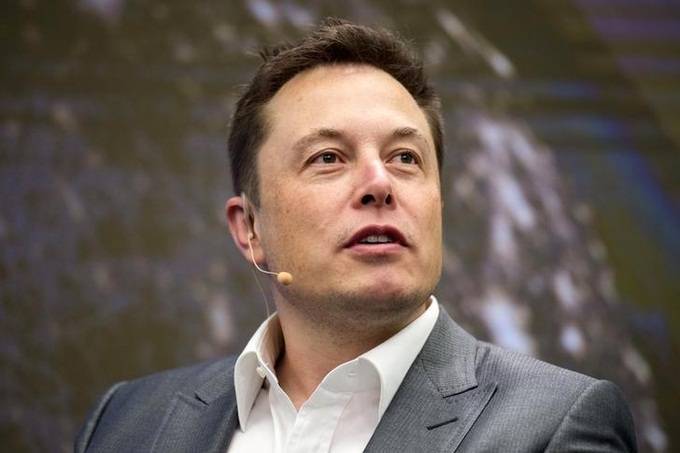
A suggestion by Tesla Inc. CEO Elon Musk that Taiwan could be made a special administrative zone of China has provoked a backlash both from China and the self-governing island.

Musk’s comment not only infringes national sovereignty but also harms democracy, Democratic Progressive Party Spokesperson Huang Tsai-lin said on Saturday, reported Taiwan News.

China’s state-run Central Television News issued an article titled, “Musk steps out of line in discussing China’s Taiwan issue, Foreign Ministry responds.”

The article reported that during a routine press conference held by the country’s Ministry of Foreign Affairs, Spokesperson Mao Ning responded to a question about Musk’s “inappropriate statement.”

Mao claimed in her answer that “the Taiwan issue is China’s domestic politics.” She added that China will “resolutely suppress interference by foreign forces,” a familiar statement often used in Chinese propaganda which, in this case, appears to refer to Musk, reported Taiwan News. Meanwhile, Huang said Musk does not condemn the Chinese Communist Party’s (CCP) misconduct, but he instead “caters to the threat of the aggressor by sacrificing Taiwan’s independence, completely ignoring the limitless ambitions of authoritarian rulers.”

In a Friday (October 7) interview with the Financial Times titled, “Elon Musk: ‘Aren’t you entertained?'” the world’s richest man admitted to being a fan of China. He recommended figuring out “a special administrative zone for Taiwan that is reasonably palatable” and “more lenient than Hong Kong.”

The statement immediately sparked outrage in Taiwan, with politicians from major political parties including the Democratic Progressive Party, Kuomintang, New Power Party, and Taiwan People’s Party issuing statements denouncing Musk’s remarks, reported Taiwan News.

Most agreed that Musk is largely driven by the business interests and stakes he has in China and therefore holds a subjective view of cross-strait issues.

The CCP’s series of actions in recent years include conducting military exercises around Taiwan after US House of Representatives Speaker Nancy Pelosi visited Taiwan in August, establishing a military base in the South China Sea to expand its sphere of influence, and influencing the United Nations (UN), the World Health Organization (WHO), and other international organizations.

Huang said the actions of the CCP threaten global and regional peace and stability and have caused the US, EU, and other nations to pay more attention to such behaviour and jointly condemn them. The tension in the Taiwan Strait is entirely caused by the CCP’s desire to unilaterally change the status quo. (ANI)
ALSO READ: Musk activates Starlink in Iran amid internet shutdown

Previous Story

Pakistan: 2 terrorists killed, 4 soldier injured in operations

Next Story

Anti-govt protesters hack Iran’s state-run television

Previous Story

Pakistan: 2 terrorists killed, 4 soldier injured in operations

Next Story

Anti-govt protesters hack Iran’s state-run television

Latest from -Top News

Pakistan Risks Overstretching Itself in Yemen War

Pakistan’s expanding military role in Saudi Arabia amid the Yemen conflict could strain its defence resources and fragile finances…reports Asian Lite News Desk Pakistan’s military involvement in the war in Yemen may prove unsustainable because of mounting financial pressures and competing security demands, according to a new report. Islamabad’s growing military presence in Saudi Arabia risks stretching its defence resources while exposing the country to greater strategic and economic challenges. An article by Andrew Wilson in One World Outlook describes Pakistan’s involvement as a case of “fiscal and strategic overreach”, arguing that the country lacks the financial flexibility to sustain an expanded military commitment. Pakistan’s external finances depend heavily on an International Monetary Fund (IMF) programme, financial support from Gulf countries and remittances from Pakistani workers in the region. The report argues that deeper military involvement in the conflict could place additional pressure on these sources of financial stability. It also warns that deploying troops and military equipment abroad could weaken Pakistan’s capacity to address security challenges along its eastern border and deal with two domestic insurgencies. The move could also draw Islamabad into a conflict it has sought to approach cautiously. A Reuters report in May, citing Pakistani security and government sources, said Islamabad had deployed around 8,000 troops, a squadron of approximately 16 aircraft, mostly JF-17 fighter jets, two drone squadrons and a Chinese HQ-9 air-defence battery to Saudi Arabia. According to those sources, Riyadh was financing the deployment, with Pakistani personnel operating the equipment. The sources also said a confidential agreement contemplated the possibility of deploying up to 80,000 troops. Islamabad has not confirmed those figures, although it has acknowledged its military presence in Saudi Arabia, including the deployment of fighter jets at King Abdulaziz Air Base from April. The One World Outlook article argues that Saudi financial support can cover allowances and operating expenses but cannot easily replace military equipment needed elsewhere or resolve the political and strategic challenges of participating in the Yemen conflict. Pakistan’s defence budget is another concern. For the 2026-27 financial year, the federal government allocated PKR 3 trillion, or approximately $10.8 billion, to defence services. The allocation represents an 18 per cent increase from the original PKR 2.55 trillion provision and amounts to around 2.1 per cent of projected gross domestic product (GDP). Defence spending accounts for approximately 16 per cent of the federal government’s PKR 18.8 trillion expenditure. Military pensions are budgeted separately at PKR 822 billion, while debt servicing costs stand at approximately PKR 8 trillion, more than two-and-a-half times the defence allocation. The report argues that these competing financial obligations leave little room for additional military expenditure without placing further pressure on public finances. Pakistan’s reliance on IMF assistance also limits its fiscal flexibility. The country must meet the conditions attached to the programme, including a primary budget surplus target of 2 per cent of GDP and continued restraint on development spending. According to the article, these requirements make it difficult for Islamabad to finance an additional military commitment without compromising other budgetary priorities. Pakistan’s economic indicators offer limited reassurance. Economic growth for the 2025-26 financial year is estimated at between 3.6 and 3.7 per cent, while inflation reached approximately 10.3 per cent in September following an energy price shock. Foreign exchange reserves stood at around $21.5 billion at the end of September. Although this marks an improvement from the low levels recorded in 2023, the report notes that the reserves cover only a few months of imports. Financial assistance from Gulf partners remains central to Pakistan’s external stability. The article says Islamabad holds approximately $8 billion in Saudi deposits at its central bank. In July, the State Bank of Pakistan said Riyadh had extended the maturity of $5 billion in deposits to December 2028, easing the country’s immediate external financing requirements. A further $3 billion deposit was also extended in the spring. However, the article argues that these arrangements provide temporary relief rather than long-term financial independence, particularly as regional conflict threatens the stability of the Gulf economies on which Pakistan relies. The report concludes that Pakistan faces a difficult balance between supporting Saudi Arabia militarily and preserving the financial and military resources needed to address its domestic and regional challenges.
Go toTop

Don't Miss

Twitter CEO worried about firm’s future, not his job

Agrawal has said that “despite the noise” coming from Musk

Taiwan sends submarine near disputed South China Sea island

Currently, the Taiwanese navy operates two submarines built in the