April 26, 2023
3 mins read

‘Brits need to accept they are now poorer’

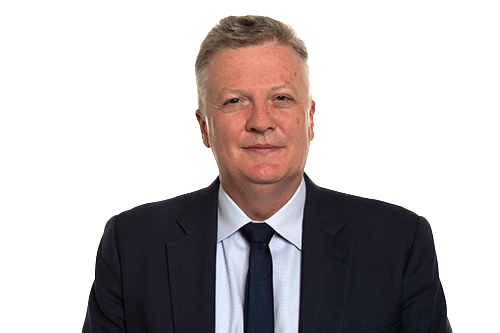
Pill was discussing the “series of inflationary shocks” that had fueled inflation over the last 18 months, from pandemic supply disruption …reports Asian Lite News

Companies and workers are trying to pass the impact of inflation onto each other — and that risks persistent inflation, according to Huw Pill, the Bank of England’s chief economist.

“What we’re facing now is that reluctance to accept that yes we’re all worse off, we all have to take our share,” Pill said on an episode of Columbia Law School and the Millstein Center’s “Beyond Unprecedented” podcast, released on Tuesday.

“To try and pass that cost on to one of our compatriots and say, we’ll be alright but they will have to take our share — that pass the parcel game … is one that is generating inflation,” he said.

Pill was discussing the “series of inflationary shocks” that had fueled inflation over the last 18 months, from pandemic supply disruption and government household support programs boosting demand, to the Russian invasion of Ukraine and resulting spike in European energy prices. That has been followed by adverse weather and an outbreak of avian flu driving up food prices.

But Pill said that was not the whole story, and that it was “natural” that the behavior of price-setters and wage-setters in economies including the U.K. and U.S. would change when living costs such as energy bills rise, with workers asking for higher salaries and businesses raising prices.

“Of course, that process is ultimately self-defeating,” said Pill.

He added that the U.K., which is a net importer of natural gas, faced a situation where the goods it buys from the rest of the world had gone up a lot relative to what it is selling to the rest of the world, primarily services. The U.K. imports nearly half its food.

“If what you’re buying has gone up a lot relative to what you’re selling, you’re going to be worse off,” Pill said.

“So somehow in the U.K., someone needs to accept that they’re worse off and stop trying to maintain their real spending power by bidding up prices, whether higher wages or passing energy costs through on to customers, etcetera.”

Pill’s comments have been widely published across U.K. media. In February 2022, Bank of England Governor Andrew Bailey came under scrutiny when he said wage bargaining could create domestic inflationary pressures and urged workers and employers to show “restraint” in pay discussions. Bailey’s comments were criticized by unions for focusing on how wages, not corporate profits, can fuel inflation.

The concept of a wage-price spiral, when rising wages create a loop of inflationary pressures by increasing costs for businesses and boosting demand, is debated within economics. Several policymakers — including U.S. Treasury Secretary Janet Yellen and European Central Bank officials — have said they do not see evidence of it in the U.S. or euro zone.

Economists, including IMF Chief Economist Pierre-Olivier Gourinchas, have said wages can rise further without risking growth since they have not risen significantly when adjusted for inflation and the corporate world has maintained comfortable margins.

But some argue the U.K. is particularly at risk due to its import-heavy economy, weakness in the British pound and a tight labor market which has been constrained by Brexit.

U.K. inflation was expected to drop into the single digits in March, but came in at 10.1%, with core inflation — which excludes food and energy and is closely watched by the Bank of England — at 5.7%.


ALSO READ: Investment minister to visit India’s tech capital

Previous Story

It’s not (just) curry!

Next Story

Ukraine receives $6.6 bn in direct budget support from EU

Previous Story

It’s not (just) curry!

Next Story

Ukraine receives $6.6 bn in direct budget support from EU

Latest from -Top News

Pakistan Risks Overstretching Itself in Yemen War

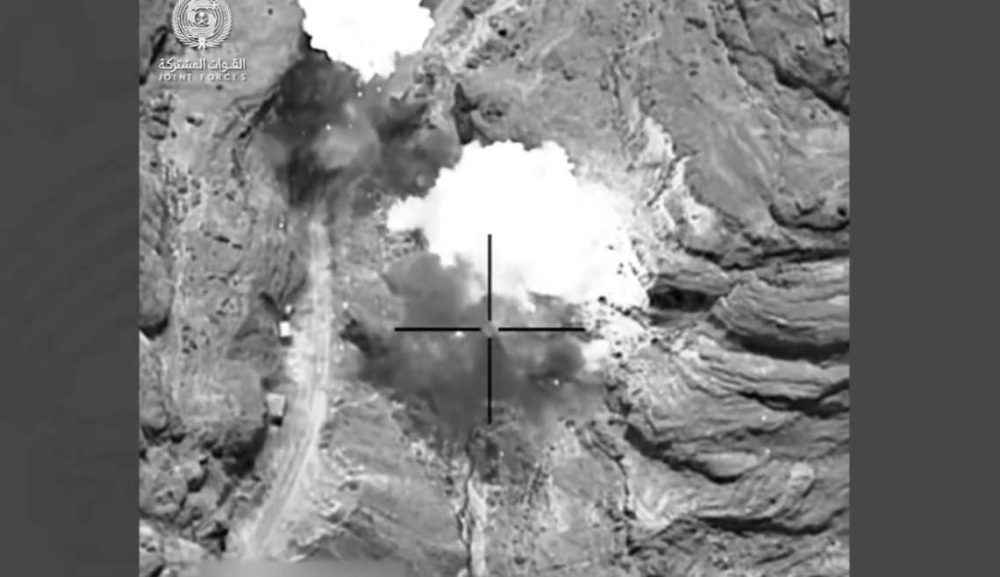
Pakistan’s expanding military role in Saudi Arabia amid the Yemen conflict could strain its defence resources and fragile finances…reports Asian Lite News Desk Pakistan’s military involvement in the war in Yemen may prove unsustainable because of mounting financial pressures and competing security demands, according to a new report. Islamabad’s growing military presence in Saudi Arabia risks stretching its defence resources while exposing the country to greater strategic and economic challenges. An article by Andrew Wilson in One World Outlook describes Pakistan’s involvement as a case of “fiscal and strategic overreach”, arguing that the country lacks the financial flexibility to sustain an expanded military commitment. Pakistan’s external finances depend heavily on an International Monetary Fund (IMF) programme, financial support from Gulf countries and remittances from Pakistani workers in the region. The report argues that deeper military involvement in the conflict could place additional pressure on these sources of financial stability. It also warns that deploying troops and military equipment abroad could weaken Pakistan’s capacity to address security challenges along its eastern border and deal with two domestic insurgencies. The move could also draw Islamabad into a conflict it has sought to approach cautiously. A Reuters report in May, citing Pakistani security and government sources, said Islamabad had deployed around 8,000 troops, a squadron of approximately 16 aircraft, mostly JF-17 fighter jets, two drone squadrons and a Chinese HQ-9 air-defence battery to Saudi Arabia. According to those sources, Riyadh was financing the deployment, with Pakistani personnel operating the equipment. The sources also said a confidential agreement contemplated the possibility of deploying up to 80,000 troops. Islamabad has not confirmed those figures, although it has acknowledged its military presence in Saudi Arabia, including the deployment of fighter jets at King Abdulaziz Air Base from April. The One World Outlook article argues that Saudi financial support can cover allowances and operating expenses but cannot easily replace military equipment needed elsewhere or resolve the political and strategic challenges of participating in the Yemen conflict. Pakistan’s defence budget is another concern. For the 2026-27 financial year, the federal government allocated PKR 3 trillion, or approximately $10.8 billion, to defence services. The allocation represents an 18 per cent increase from the original PKR 2.55 trillion provision and amounts to around 2.1 per cent of projected gross domestic product (GDP). Defence spending accounts for approximately 16 per cent of the federal government’s PKR 18.8 trillion expenditure. Military pensions are budgeted separately at PKR 822 billion, while debt servicing costs stand at approximately PKR 8 trillion, more than two-and-a-half times the defence allocation. The report argues that these competing financial obligations leave little room for additional military expenditure without placing further pressure on public finances. Pakistan’s reliance on IMF assistance also limits its fiscal flexibility. The country must meet the conditions attached to the programme, including a primary budget surplus target of 2 per cent of GDP and continued restraint on development spending. According to the article, these requirements make it difficult for Islamabad to finance an additional military commitment without compromising other budgetary priorities. Pakistan’s economic indicators offer limited reassurance. Economic growth for the 2025-26 financial year is estimated at between 3.6 and 3.7 per cent, while inflation reached approximately 10.3 per cent in September following an energy price shock. Foreign exchange reserves stood at around $21.5 billion at the end of September. Although this marks an improvement from the low levels recorded in 2023, the report notes that the reserves cover only a few months of imports. Financial assistance from Gulf partners remains central to Pakistan’s external stability. The article says Islamabad holds approximately $8 billion in Saudi deposits at its central bank. In July, the State Bank of Pakistan said Riyadh had extended the maturity of $5 billion in deposits to December 2028, easing the country’s immediate external financing requirements. A further $3 billion deposit was also extended in the spring. However, the article argues that these arrangements provide temporary relief rather than long-term financial independence, particularly as regional conflict threatens the stability of the Gulf economies on which Pakistan relies. The report concludes that Pakistan faces a difficult balance between supporting Saudi Arabia militarily and preserving the financial and military resources needed to address its domestic and regional challenges.
Go toTop

Don't Miss

UK urged to break with France, Russia on UN N-war resolution

The resolution, drafted by Ireland and New Zealand, is expected

Lovegrove warns of N-war risk  

He said that mutual understanding helped ensure the world did