October 6, 2023
2 mins read

Fukushima Starts Release of 2nd Batch of Radioactive Water

For the purpose of measuring the level of dilution, the mixture is kept in a pit known as a discharge vertical shaft….reports Asian Lite News

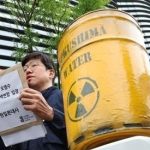
Japan’s Fukushima nuclear plant has begun the release of second batch of its treated and diluted water into the sea, NHK World reported.

Tokyo Electric on Tuesday started to prepare for the second round of water release by adding around 1,200 tonnes of saltwater to one tonne of purified water.

For the purpose of measuring the level of dilution, the mixture is kept in a pit known as a discharge vertical shaft.

The tritium level was determined to be between 63 and 87 becquerels per litre, significantly below both the utility’s own guideline of 1,500 becquerels and Japan’s environmental discharge requirement of 60,000 becquerels, according to Japan-based media publication, NHK World reported.

The second release began at 10:18 a.m (local time) today.

On August 24, Tokyo Electric Power Company began the first round after diluting the treated water to lower tritium to around one-seventh of the World Health Organization’s drinking water quality advisory limit.

As scheduled, the release was finished on September 11.

Within three kilometres of the facility, the seawater samples had a maximum tritium concentration of 10 becquerels per litre, which is much lower than the 700 becquerels required to cease the release.

This time, Tokyo Electric intends to release 7,800 tonnes of treated water over the course of 17 days from 10 tanks. The sum is the same as it was in the preliminary round, NHK World reported.

By the end of March, 40 tanks containing about 31,200 tonnes of treated water is expected to be discharged.

It was in August this year that the Japanese government had announced that it would begin discharging the water used to cool melted nuclear fuel at the plant that has been treated through a state-of-the-art liquid processing system capable of removing most radionuclides, except tritium.

In April 2021, Yoshihide Suga, Kishida’s predecessor, gave his approval for the water release into the Pacific Ocean “in about two years”.

While several European nations have relaxed import restrictions on Japanese food, China has instituted blanket radiation testing on its neighbour’s seafood exports in an apparent effort to persuade Tokyo to abandon its plan, causing diplomatic strain.

Beijing has been opposed to the proposed water discharge for years, refusing to adopt the pseudo-scientific term “treated” to minimise the dangers of the “nuclear-contaminated water,” according to Kyodo News.

Local fishermen in Japan have opposed the water release proposal because they fear it will further damage the reputation of their seafood goods.

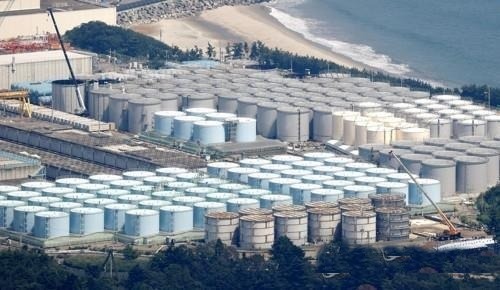
Since the nuclear disaster, water has been stored at the site in more than a thousand tanks. It has been treated using an advanced liquid processing system, which is thought to be able to remove all radionuclides but tritium.

Tokyo Electric Power Company Holdings Inc., the facility’s operator, has asserted that the tanks are getting close to capacity and may approach their maximum as early as 2024 if the operator doesn’t start releasing the treated water. (ANI)
ALSO READ: Putin Hints at Russia’s Return to Nuclear Testing

Previous Story

Pakistan Enforces Export Ban on 212 Items to Afghanistan

Next Story

MEDIA: Remitly & Simba Join ICC Cricket Sponsorship Fold

Previous Story

Pakistan Enforces Export Ban on 212 Items to Afghanistan

Next Story

MEDIA: Remitly & Simba Join ICC Cricket Sponsorship Fold

Latest from Asia News

Economic tide is turning in Bangladesh

If there is one thing that can bring some comfort to the struggling Bangladeshi economy, it is good relations with India. Bangladesh should remember that Delhi’s backing, through easy supplies of essentials

DP World Lands 15-Year Bangladesh Port Deal

The agreement between the Chittagong Port Authority (CPA) and DP World covers the New Mooring Container Terminal…reports Asian Lite News Desk Bangladesh has signed a 15-year concession agreement with global ports operator

Nepal Floods Cause $1.66 Billion In Damage, Says World Bank

Nepal’s August 2026 floods caused an estimated US$1.66 billion in direct physical damage, with infrastructure accounting for 83 per cent of the total…reports Asian Lite News Desk Nepal’s devastating floods in August 2026 caused an estimated US$1.66 billion in direct physical damage, with infrastructure accounting for 83 per cent of the total, according to a World Bank report. The estimate, included in the World Bank’s Nepal Development Update unveiled this week, is close to the Nepal government’s preliminary Rapid Damage and Needs Assessment (RDNA), which put physical damage at US$1.81 billion. The government’s assessment also estimated losses beyond physical assets at US$883.32 million, taking the total economic effects of the disaster to approximately US$2.7 billion. The World Bank’s Global Rapid Post-Disaster Damage Estimation (GRADE) found that infrastructure suffered the greatest damage, estimated at US$1.38 billion, or 83 per cent of the total. Residential buildings accounted for US$185 million, or 11 per cent, while non-residential buildings sustained damage worth US$101 million, or 6 per cent. The floods along the Bhotekoshi and Trishuli rivers caused extensive damage to hydropower projects, solar energy facilities, electricity transmission infrastructure and transport networks. The energy sector, particularly hydropower, was among the worst affected. The August 2026 floods affected 12 hydropower projects and one solar project, involving 281.1 MW of operational capacity and 395.02 MW of capacity under construction. Damage to transmission lines and substations also disrupted the transmission of 149.6 MW of electricity to the national grid. The total affected capacity reached approximately 430.7 MW, equivalent to 10.6 per cent of Nepal’s installed hydropower and solar capacity at the end of fiscal year 2025-26, which concluded in mid-July. The disaster also severely damaged transport infrastructure along the 82-km Rasuwa trade corridor, which connects Kathmandu with the Rasuwagadhi border point with China. More than 55 km of the corridor was damaged, including 40 km that was completely destroyed. The floods also damaged 37 motorable bridges and 68 suspension bridges. The disaster resulted in significant human losses along the affected corridor and beyond. According to Nepal’s National Disaster Risk Reduction and Management Authority, 1,455 people had been confirmed dead, while 5,285 remained missing following the disaster. The World Bank report found that the physical damage was concentrated in three districts in central Nepal: Rasuwa, Nuwakot and Dhading. Rasuwa was the worst-affected district, accounting for US$1.07 billion, or 64 per cent, of the total direct damage. Nuwakot recorded an estimated US$551 million in damage, while Dhading suffered approximately US$39 million. “The findings highlight the concentration of physical damage in a small number of districts and the disproportionate impact on infrastructure, underscoring the scale of the reconstruction challenge facing the affected areas,” the World Bank said. The global development financier said the floods had demonstrated the scale and complexity of disaster risks in Nepal’s Himalayan environment. The event also showed how a single extreme weather event could trigger cascading impacts across sectors and geographical areas. The report said recovery efforts should extend beyond restoring infrastructure to its pre-disaster condition. While the principle of “Build Back Better” remained relevant, the World Bank stressed that rebuilding infrastructure to higher engineering standards in the same locations might not always be sufficient. “In some cases, simply rebuilding the same infrastructure in the same location to a higher engineering standard may not be sufficient. Nepal may need to build differently — based on a better understanding of risk, more careful decisions about location and design, greater redundancy in critical networks, stronger monitoring and early warning, and a more integrated approach to infrastructure development in the Himalayas,” the report said. The World Bank said Nepal’s recovery strategy should incorporate improved risk assessment, more informed infrastructure planning, stronger monitoring systems and better early warning mechanisms. The report emphasised that reconstruction should not only restore damaged assets but also reduce the impact of future disasters, particularly in the country’s vulnerable Himalayan regions.

Vaccine Delays Fuel Bangladesh Measles Outbreak

More than 32,000 suspected cases and over 250 deaths have been reported since mid-March, with children making up most of the fatalities….reports Asian Lite News Desk Bangladesh’s measles outbreak has intensified, with
Go toTop

Don't Miss

China imposes Japan food ban over Fukushima water release

China’s foreign ministry has cautioned against considering the IAEA report

Japan to start releasing Fukushima water on Thursday

The announcement came despite opposition from fishermen and protests by