June 14, 2024
3 mins read

Macron urges moderate politicians to regroup

The decision to send to the polls voters who just expressed their discontent with Macron’s politics was a risky move that could result in the French far-right leading a government for the first time since World War II…reports Asian Lite News

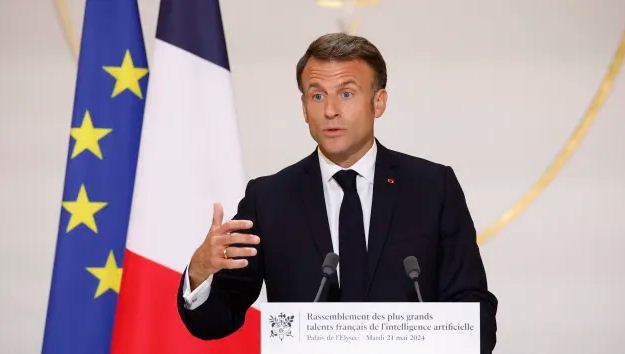
French President Emmanuel Macron urged Wednesday moderate politicians from the left and the right to regroup to defeat the far right in the upcoming national legislative elections he had called for after his party’s crushing defeat in the European parliamentary vote.

A somber-looking Macron addressed French voters for the first time since his stunning decision on Sunday to dissolve the National Assembly, France’s lower house of parliament.

His move triggered an early legislative election that will take place in two rounds on June 30 and July 7, three weeks after the far-right National Rally party of Marine Le Pen triumphed at the election for the European Union Parliament.

During a press conference on Wednesday, Macron said he decided on the risky move because he could not ignore the new political reality after his pro-European party was handed a chastening defeat and garnered less than half the support of the National Rally with its star leader, Jordan Bardella.

Unlike in his recent national addresses in which Macron focused on Russia’s war in Ukraine and ways Europe should forge a common defense policy, independent of the United States, and shore up trade protections against China, the French president stuck to his country’s internal issues favored by the surging right, including curbing immigration, fighting crime and Islamic separatism in France.

Macron, who has three years left of his second presidential term, hopes voters will band together to contain the far right in national elections in a way they didn’t in European ones. He called on “men and women of goodwill who were able to say ‘no’ to extremes to join together to be able to build a joint project” for the country.

“Things are simple today: we have unnatural alliances at both extremes, who quite agree on nothing except the jobs to be shared, and who will not be able to implement any program,” Macron said during his opening address at a press conference in Paris.

As for his own centrist alliance, Macron said: “We’re not perfect, we haven’t done everything right, but we have results… and above all, we know how to act.”

The decision to send to the polls voters who just expressed their discontent with Macron’s politics was a risky move that could result in the French far-right leading a government for the first time since World War II.

Potential alliances and France’s two-round voting system in national elections make the outcome of the vote highly uncertain. Macron was adamant in his faith in the French voters’ intent to refuse to choose the extremes of both sides of the political spectrum.

He assured that he is not failing into defeatism and said he will serve out his second presidential term regardless of the outcome of the legislative vote.

“I think the French are intelligent, they see what’s being done, what’s coherent and what’s not, and they know what to do,” Macron said. He added: “I don’t believe at all that the worst can happen. You see, I’m an indefatigable optimist.”

He rebuffed accusations that his move to call snap elections would help the far-right take power in France. “It’s about allowing political forces chosen by the French to be able to govern,” he said and added that it’s “awkward to think it has to be the extreme right or political extremes. Or maybe you’ve got the spirit of defeat spread everywhere. If that’s what people are afraid of, it’s time now to take action,” he said.

ALSO READ-Macron urges French to make ‘right choice’ in election gamble

Previous Story

Greece shuts schools and Acropolis as heatwave hits

Next Story

PM Modi Arrives in Italy for G7 Summit, Bilateral Talks

Previous Story

Greece shuts schools and Acropolis as heatwave hits

Next Story

PM Modi Arrives in Italy for G7 Summit, Bilateral Talks

Latest from -Top News

Pakistan Risks Overstretching Itself in Yemen War

Pakistan’s expanding military role in Saudi Arabia amid the Yemen conflict could strain its defence resources and fragile finances…reports Asian Lite News Desk Pakistan’s military involvement in the war in Yemen may prove unsustainable because of mounting financial pressures and competing security demands, according to a new report. Islamabad’s growing military presence in Saudi Arabia risks stretching its defence resources while exposing the country to greater strategic and economic challenges. An article by Andrew Wilson in One World Outlook describes Pakistan’s involvement as a case of “fiscal and strategic overreach”, arguing that the country lacks the financial flexibility to sustain an expanded military commitment. Pakistan’s external finances depend heavily on an International Monetary Fund (IMF) programme, financial support from Gulf countries and remittances from Pakistani workers in the region. The report argues that deeper military involvement in the conflict could place additional pressure on these sources of financial stability. It also warns that deploying troops and military equipment abroad could weaken Pakistan’s capacity to address security challenges along its eastern border and deal with two domestic insurgencies. The move could also draw Islamabad into a conflict it has sought to approach cautiously. A Reuters report in May, citing Pakistani security and government sources, said Islamabad had deployed around 8,000 troops, a squadron of approximately 16 aircraft, mostly JF-17 fighter jets, two drone squadrons and a Chinese HQ-9 air-defence battery to Saudi Arabia. According to those sources, Riyadh was financing the deployment, with Pakistani personnel operating the equipment. The sources also said a confidential agreement contemplated the possibility of deploying up to 80,000 troops. Islamabad has not confirmed those figures, although it has acknowledged its military presence in Saudi Arabia, including the deployment of fighter jets at King Abdulaziz Air Base from April. The One World Outlook article argues that Saudi financial support can cover allowances and operating expenses but cannot easily replace military equipment needed elsewhere or resolve the political and strategic challenges of participating in the Yemen conflict. Pakistan’s defence budget is another concern. For the 2026-27 financial year, the federal government allocated PKR 3 trillion, or approximately $10.8 billion, to defence services. The allocation represents an 18 per cent increase from the original PKR 2.55 trillion provision and amounts to around 2.1 per cent of projected gross domestic product (GDP). Defence spending accounts for approximately 16 per cent of the federal government’s PKR 18.8 trillion expenditure. Military pensions are budgeted separately at PKR 822 billion, while debt servicing costs stand at approximately PKR 8 trillion, more than two-and-a-half times the defence allocation. The report argues that these competing financial obligations leave little room for additional military expenditure without placing further pressure on public finances. Pakistan’s reliance on IMF assistance also limits its fiscal flexibility. The country must meet the conditions attached to the programme, including a primary budget surplus target of 2 per cent of GDP and continued restraint on development spending. According to the article, these requirements make it difficult for Islamabad to finance an additional military commitment without compromising other budgetary priorities. Pakistan’s economic indicators offer limited reassurance. Economic growth for the 2025-26 financial year is estimated at between 3.6 and 3.7 per cent, while inflation reached approximately 10.3 per cent in September following an energy price shock. Foreign exchange reserves stood at around $21.5 billion at the end of September. Although this marks an improvement from the low levels recorded in 2023, the report notes that the reserves cover only a few months of imports. Financial assistance from Gulf partners remains central to Pakistan’s external stability. The article says Islamabad holds approximately $8 billion in Saudi deposits at its central bank. In July, the State Bank of Pakistan said Riyadh had extended the maturity of $5 billion in deposits to December 2028, easing the country’s immediate external financing requirements. A further $3 billion deposit was also extended in the spring. However, the article argues that these arrangements provide temporary relief rather than long-term financial independence, particularly as regional conflict threatens the stability of the Gulf economies on which Pakistan relies. The report concludes that Pakistan faces a difficult balance between supporting Saudi Arabia militarily and preserving the financial and military resources needed to address its domestic and regional challenges.

UK and Germany Ratify Kensington Treaty

Britain and Germany ratify the Kensington Treaty, agreeing new cooperation on AI, quantum research, defence and security while targeting investment, jobs and Russian hybrid threats…reports Asian Lite News Desk Britain and Germany

Economic tide is turning in Bangladesh

If there is one thing that can bring some comfort to the struggling Bangladeshi economy, it is good relations with India. Bangladesh should remember that Delhi’s backing, through easy supplies of essentials
Go toTop

Don't Miss

Xi holds talk with Macron

Emmanuel Macron held a telephonic conversation with US President Joe

France to supply Mirage warplanes to Ukraine, says Macron

The French president also announced plans for Ukrainian pilots to