March 14, 2025
3 mins read

Sheikh Mohammed Hosts Ramadan Gathering 

His Highness Sheikh Mohammed bin Rashid emphasised that this year’s Ramadan coincides with “The Year of Community,” offering a significant opportunity to reinforce national unity and strengthen social bonds. 

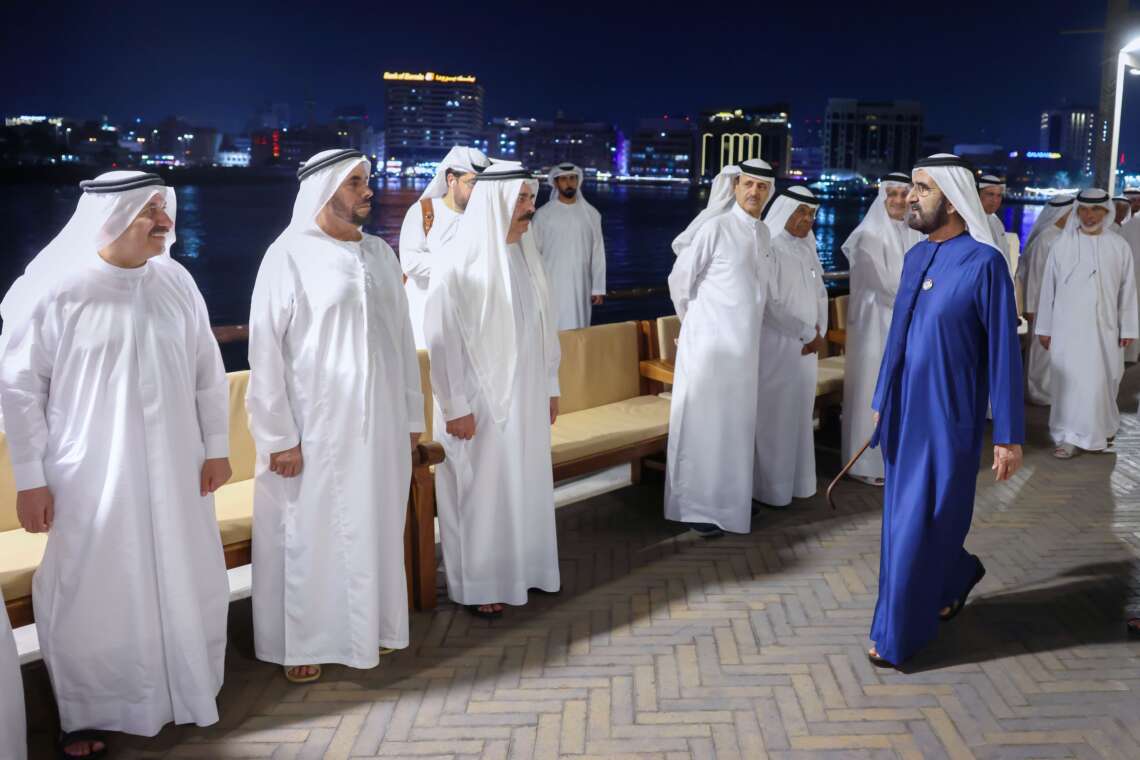
His Highness Sheikh Mohammed bin Rashid Al Maktoum, Vice President and Prime Minister of the UAE and Ruler of Dubai, welcomed Ramadan well-wishers at Al Shindagha Majlis, marking the beginning of the holy month with a gathering of dignitaries, officials, and business leaders. 

The reception was attended by His Highness Sheikh Maktoum bin Mohammed bin Rashid Al Maktoum, First Deputy Ruler of Dubai and Deputy Prime Minister and Minister of Finance, alongside His Highness Sheikh Ahmed bin Mohammed bin Rashid Al Maktoum, Second Deputy Ruler of Dubai. Together, they received greetings from a host of local dignitaries, senior officials, investors, and members of the business community. 

During the gathering, Sheikh Mohammed exchanged Ramadan greetings and extended his best wishes for continued peace and prosperity in the UAE and across the Arab and Islamic world. He emphasised that this year’s Ramadan coincides with “The Year of Community,” offering a significant opportunity to reinforce national unity and strengthen social bonds. 

Sheikh Mohammed underscored the importance of passing down the UAE’s deep-rooted values, customs, and heritage to younger generations. He highlighted how these traditions play a vital role in shaping the UAE as a global model for harmony, coexistence, and peace. 

The event was also attended by senior members of Dubai’s leadership, including His Highness Sheikh Ahmed bin Saeed Al Maktoum, President of Dubai Civil Aviation Authority and Chairman of Emirates Group; His Highness Sheikh Mansoor bin Mohammed bin Rashid Al Maktoum, Chairman of Dubai Sports Council; and several other dignitaries and high-ranking officials. 

The reception served as a moment of reflection and unity, bringing together leaders and citizens in the spirit of Ramadan to celebrate the values of compassion and community. 

Recently, His Highness Sheikh Mohammed met with His Highness Sheikh Mansour bin Zayed Al Nahyan, Vice President, Deputy Prime Minister, and Chairman of the Presidential Court, at Al Marmoom, Dubai. 

Their Highnesses prayed for the UAE and its people, seeking continued prosperity and blessings under the leadership of His Highness Sheikh Mohamed bin Zayed Al Nahyan, President of the UAE. 

During the meeting, they reflected on the values of Ramadan, particularly generosity, giving, and spreading happiness. They emphasised the UAE’s strong traditions of charity and its global leadership in humanitarian aid, highlighting its role in uplifting communities and inspiring hope for a brighter future. 

Balance of Emirati Identity 

The first session of the Ministry of Interior’s Ramadan Councils (Al Majalis) explored “The Balance of Emirati Identity,” focusing on three key themes: preserving national values while embracing scientific progress, representing the UAE positively abroad, and fostering constructive engagement with diverse cultures. 

Held under the overarching theme “The Emirati Family… A Shared National Responsibility,” this year’s councils aim to promote societal and family stability while reinforcing national, social, and security awareness. Inspired by the UAE’s leadership, the discussions emphasise strengthening social cohesion and fostering positive interaction among different segments of society. 

At the Abu Dhabi session, participants delved into ways to safeguard Emirati identity and instil traditional values amid the country’s rapid modernisation. The Abu Dhabi Women’s Council underscored the importance of sustaining the UAE’s legacy of excellence and leadership by nurturing a strong national identity and honouring the heritage of past generations. 

Meanwhile, at the Ministry of Interior Council in Dubai, speakers highlighted the need for enhanced national media efforts to promote Emirati values and traditions. Recommendations included the development of a multilingual digital platform to share Emirati culture with the country’s diverse residents and global audiences. 

Across various emirates, discussions stressed the importance of maintaining strong family and social ties, preserving cultural heritage, and striking a balance between tradition and modernity. The councils also focused on fostering intergenerational connections and reinforcing shared responsibility in shaping a cohesive and forward-thinking Emirati society. 
Previous Story

Saudi Film Festival Unveils 11th Edition Plans

Next Story

Syrian leader signs constitutional declaration 

Previous Story

Saudi Film Festival Unveils 11th Edition Plans

Next Story

Syrian leader signs constitutional declaration 

Latest from -Top News

Pakistan Risks Overstretching Itself in Yemen War

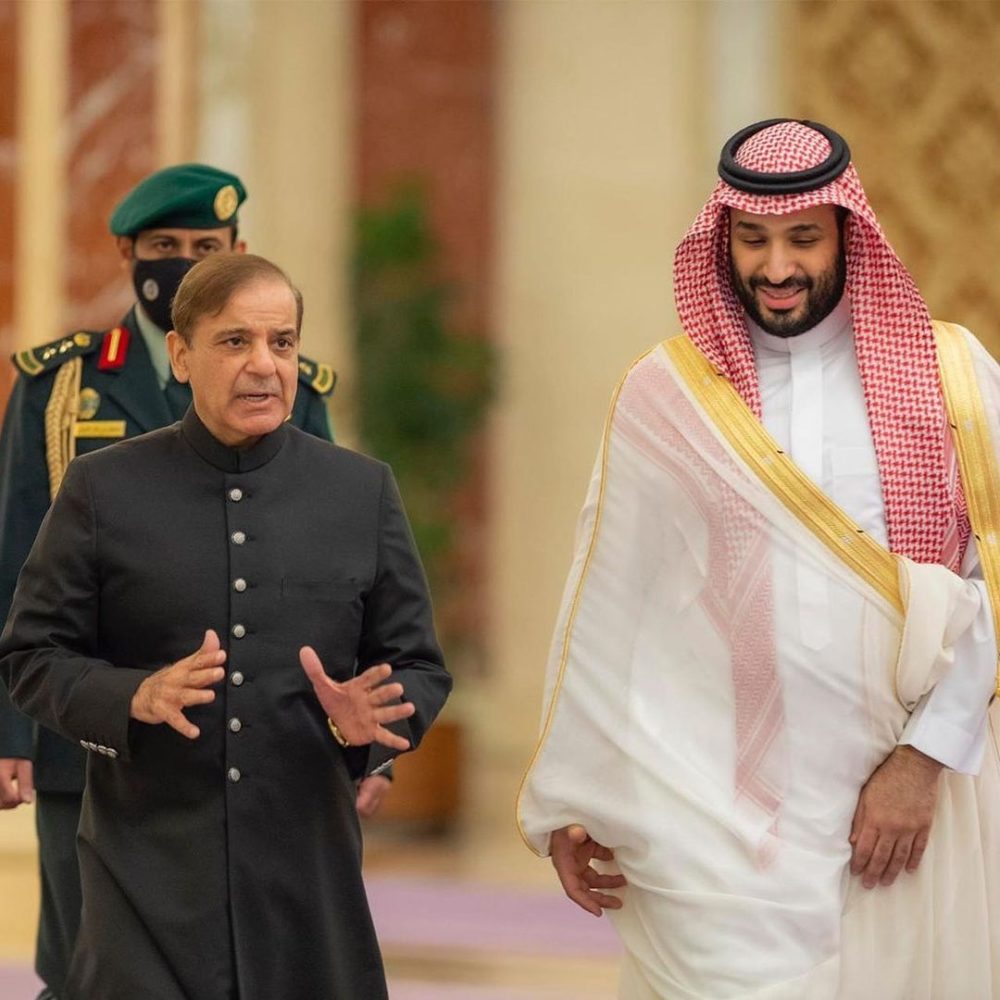
Pakistan’s expanding military role in Saudi Arabia amid the Yemen conflict could strain its defence resources and fragile finances…reports Asian Lite News Desk Pakistan’s military involvement in the war in Yemen may prove unsustainable because of mounting financial pressures and competing security demands, according to a new report. Islamabad’s growing military presence in Saudi Arabia risks stretching its defence resources while exposing the country to greater strategic and economic challenges. An article by Andrew Wilson in One World Outlook describes Pakistan’s involvement as a case of “fiscal and strategic overreach”, arguing that the country lacks the financial flexibility to sustain an expanded military commitment. Pakistan’s external finances depend heavily on an International Monetary Fund (IMF) programme, financial support from Gulf countries and remittances from Pakistani workers in the region. The report argues that deeper military involvement in the conflict could place additional pressure on these sources of financial stability. It also warns that deploying troops and military equipment abroad could weaken Pakistan’s capacity to address security challenges along its eastern border and deal with two domestic insurgencies. The move could also draw Islamabad into a conflict it has sought to approach cautiously. A Reuters report in May, citing Pakistani security and government sources, said Islamabad had deployed around 8,000 troops, a squadron of approximately 16 aircraft, mostly JF-17 fighter jets, two drone squadrons and a Chinese HQ-9 air-defence battery to Saudi Arabia. According to those sources, Riyadh was financing the deployment, with Pakistani personnel operating the equipment. The sources also said a confidential agreement contemplated the possibility of deploying up to 80,000 troops. Islamabad has not confirmed those figures, although it has acknowledged its military presence in Saudi Arabia, including the deployment of fighter jets at King Abdulaziz Air Base from April. The One World Outlook article argues that Saudi financial support can cover allowances and operating expenses but cannot easily replace military equipment needed elsewhere or resolve the political and strategic challenges of participating in the Yemen conflict. Pakistan’s defence budget is another concern. For the 2026-27 financial year, the federal government allocated PKR 3 trillion, or approximately $10.8 billion, to defence services. The allocation represents an 18 per cent increase from the original PKR 2.55 trillion provision and amounts to around 2.1 per cent of projected gross domestic product (GDP). Defence spending accounts for approximately 16 per cent of the federal government’s PKR 18.8 trillion expenditure. Military pensions are budgeted separately at PKR 822 billion, while debt servicing costs stand at approximately PKR 8 trillion, more than two-and-a-half times the defence allocation. The report argues that these competing financial obligations leave little room for additional military expenditure without placing further pressure on public finances. Pakistan’s reliance on IMF assistance also limits its fiscal flexibility. The country must meet the conditions attached to the programme, including a primary budget surplus target of 2 per cent of GDP and continued restraint on development spending. According to the article, these requirements make it difficult for Islamabad to finance an additional military commitment without compromising other budgetary priorities. Pakistan’s economic indicators offer limited reassurance. Economic growth for the 2025-26 financial year is estimated at between 3.6 and 3.7 per cent, while inflation reached approximately 10.3 per cent in September following an energy price shock. Foreign exchange reserves stood at around $21.5 billion at the end of September. Although this marks an improvement from the low levels recorded in 2023, the report notes that the reserves cover only a few months of imports. Financial assistance from Gulf partners remains central to Pakistan’s external stability. The article says Islamabad holds approximately $8 billion in Saudi deposits at its central bank. In July, the State Bank of Pakistan said Riyadh had extended the maturity of $5 billion in deposits to December 2028, easing the country’s immediate external financing requirements. A further $3 billion deposit was also extended in the spring. However, the article argues that these arrangements provide temporary relief rather than long-term financial independence, particularly as regional conflict threatens the stability of the Gulf economies on which Pakistan relies. The report concludes that Pakistan faces a difficult balance between supporting Saudi Arabia militarily and preserving the financial and military resources needed to address its domestic and regional challenges.

UK and Germany Ratify Kensington Treaty

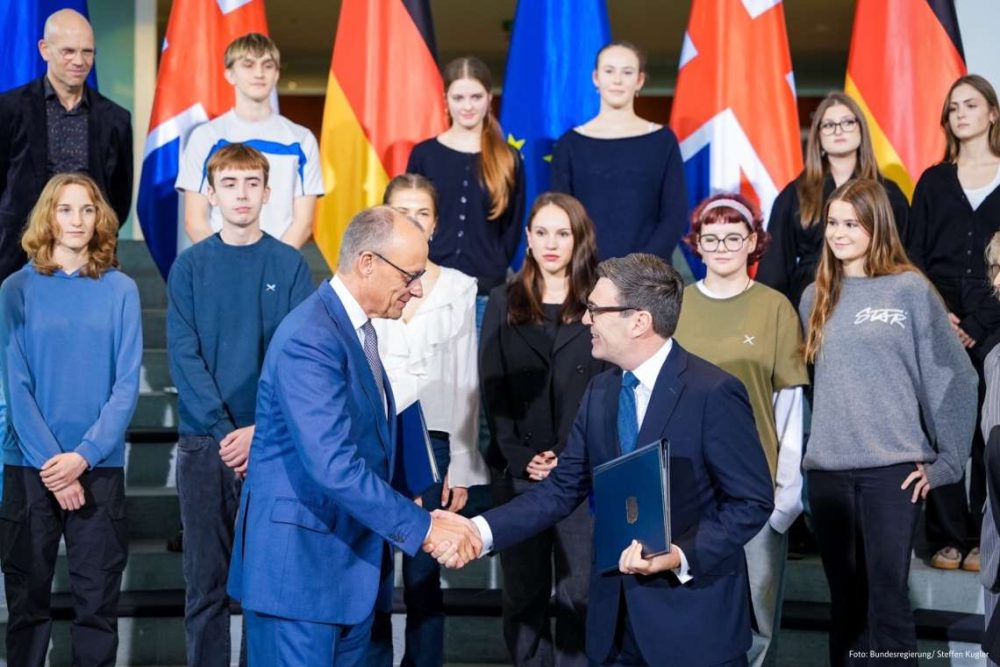
Britain and Germany ratify the Kensington Treaty, agreeing new cooperation on AI, quantum research, defence and security while targeting investment, jobs and Russian hybrid threats…reports Asian Lite News Desk Britain and Germany
Go toTop

Don't Miss

CBUAE sees Covid-19 increasing money-laundering risks

The number of so-called “money mules” increased during the pandemic,

UAE Balloon to launch 1st edition of Abraham Balloon Festival

The UAE Balloon Team is set to launch the first