The UK and China have struck a landmark border security deal to disrupt small boat supply chains, targeting engines at source and dealing a major blow to people-smuggling gangs….reports Asian Lite News
The UK and China are set to launch a landmark border security agreement aimed at disrupting the supply chains that fuel small boat crossings of the English Channel, marking one of the most significant international efforts yet to tackle people-smuggling networks at their source. The deal, expected to be signed in Beijing, will focus on cutting off the flow of Chinese-made engines and boat parts before they ever reach criminal gangs operating in Europe.
At the heart of the agreement is a commitment to joint UK–Chinese law enforcement action, allowing authorities in both countries to intervene earlier in the smuggling process. More than half of the engines used in small boat crossings are manufactured in China, according to British officials, with last year’s figures suggesting the proportion exceeded 60 per cent. These engines, often fitted to inflatable dinghies assembled using parts sourced from China, have enabled gangs to launch increasingly dangerous crossings, packing more than 100 people onto single vessels in some cases.
British officials say the new pact represents a strategic shift away from purely reactive border enforcement towards a preventative approach that targets the criminal business model itself. Under the agreement, UK agencies such as the National Crime Agency (NCA) will work directly with Chinese law enforcement to share intelligence, identify smuggling supply routes and engage with manufacturers to ensure legitimate businesses are not exploited by organised crime.
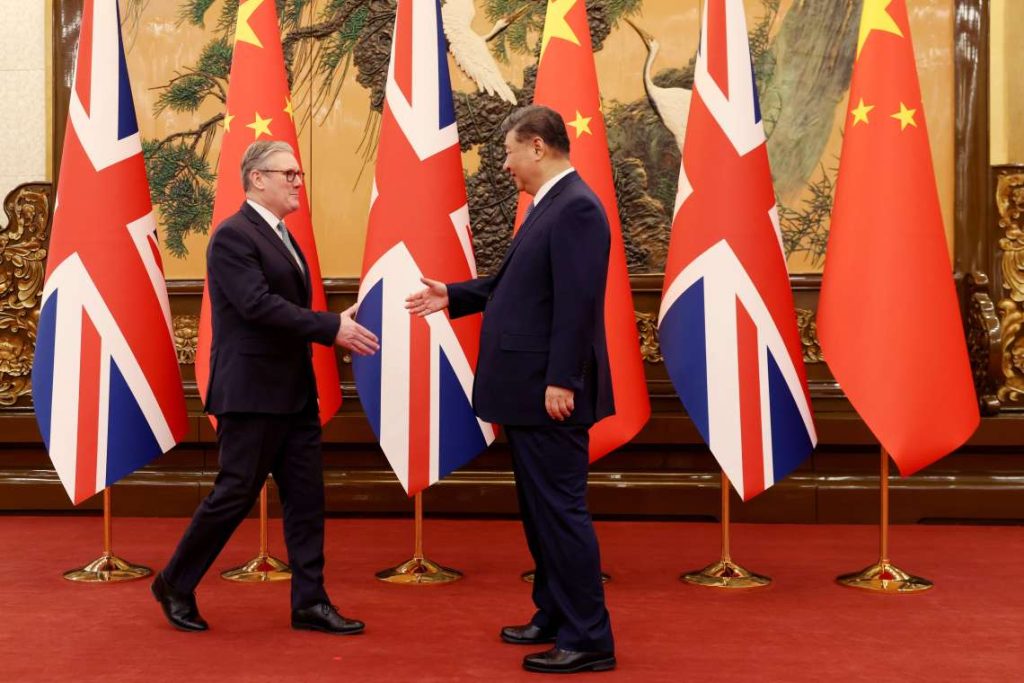
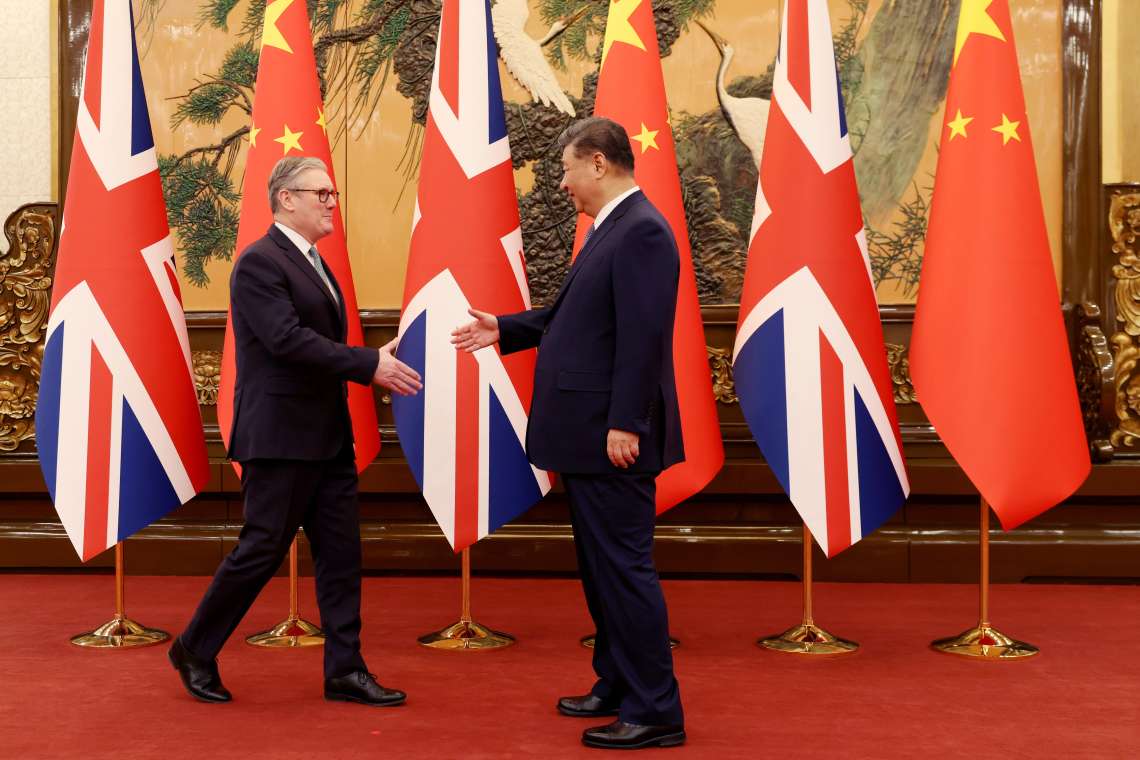
The agreement is expected to be formally concluded following talks between Starmer, President Xi Jinping and Premier Li Qiang, and reflects the Labour government’s broader policy of “hard-headed engagement” with global powers. Downing Street has made clear that tackling irregular migration requires international cooperation that extends far beyond the UK’s borders, and that partnerships with manufacturing and transit countries are essential to stopping crossings before they begin.
In addition to targeting small boat supply lines, the deal will also strengthen cooperation on removals of individuals with no right to remain in the UK. Officials say this will help accelerate returns and reinforce the credibility of the UK’s asylum system, alongside tougher enforcement against criminal gangs that profit from illegal migration.
The agreement will also widen cooperation on serious and organised crime, particularly the production and trafficking of synthetic opioids such as nitazenes. These highly potent drugs, which UK authorities say are often produced in China or using Chinese precursor chemicals, have been linked to more than 750 deaths across the country. Under the new framework, British and Chinese agencies will intensify joint efforts to disrupt manufacturing networks and prevent the export of these substances to the UK.
Prime Minister Sir Keir Starmer said the deal demonstrated a renewed determination to confront organised immigration crime at every stage of its operations. He said smuggling gangs operate across borders, and that any effective response must do the same. By cutting off the supply of boats and engines at source, he said, the agreement would help stop crossings before lives are put at risk and restore control to Britain’s borders. He described the pact as evidence that Britain was once again “back at the top table”, using international relationships to deliver concrete results for the public.
Senior law enforcement officials have also welcomed the deal. Rick Jones, deputy director of the National Crime Agency, said targeting the business models of smuggling networks was a top priority and that cooperation with international partners had already proved effective. He said the agreement would enable closer collaboration with Chinese authorities to tackle gangs that exploit vulnerable people and to prevent legitimate companies from being drawn into criminal supply chains.
The UK government says the deal builds on recent successes achieved through enhanced international cooperation. Earlier this month, the NCA announced that a key figure responsible for supplying thousands of boats to Channel smuggling networks had been jailed for 11 years in Belgium, with co-defendants receiving sentences totalling 38 years. Officials said the investigation was made possible by tighter cross-border working and would serve as a model for future operations under the new China agreement.
Since early 2023, British authorities, working with international partners, have seized more than 950 boats and engines destined for smuggling gangs. Joint efforts with France have prevented an estimated 40,000 attempted crossings since the Labour government took office, while disruptions to smuggling operations have increased by 33 per cent, with nearly 4,000 operations halted since July 2024 alone.
The China pact also builds on existing agreements with France, Germany, Iraq and several Western Balkan states, forming part of what ministers describe as the largest global effort ever launched to combat organised immigration crime. By extending cooperation to manufacturing hubs thousands of miles from the Channel, the government hopes to make the smuggling model unviable and reduce the deadly crossings that have claimed hundreds of lives in recent years.