The resolution, titled “Support for Lasting Peace in Ukraine”, was adopted by the 193-member United Nations General Assembly on the fourth anniversary of Russia’s full-scale invasion. It secured 107 votes in favour, 12 against and 51 abstentions….reports Asian Lite News
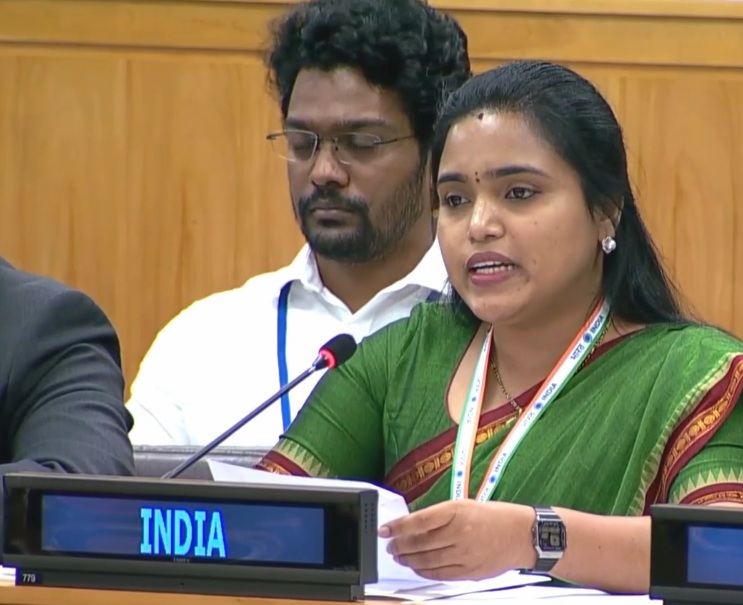
India has abstained from voting on a United Nations General Assembly resolution calling for an immediate, complete and unconditional ceasefire between Russia and Ukraine, maintaining its long-held position of strategic neutrality as the war enters its fifth year.
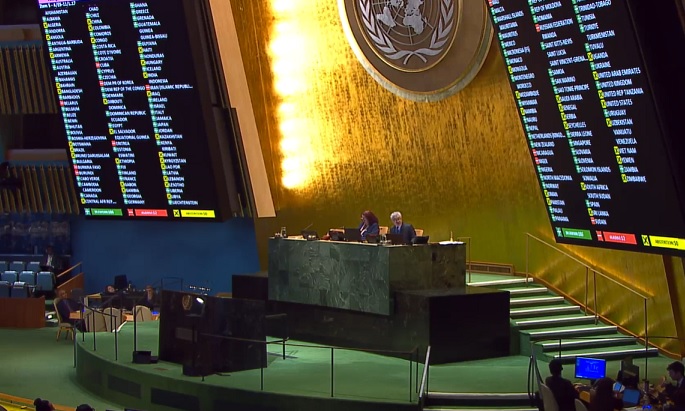
The resolution, titled “Support for Lasting Peace in Ukraine”, was adopted by the 193-member United Nations General Assembly on the fourth anniversary of Russia’s full-scale invasion. It secured 107 votes in favour, 12 against and 51 abstentions.
India was among the countries that chose not to back the measure, joining a group that included Bahrain, Bangladesh, Brazil, China, South Africa, Sri Lanka, the United Arab Emirates and the United States. The draft was introduced by Kyiv and called for a full ceasefire and steps towards a lasting peace in line with the principles of the UN Charter.
New Delhi has consistently refrained from directly condemning Moscow at the UN, instead urging dialogue and diplomacy. While it has emphasised respect for sovereignty and territorial integrity, it has also maintained defence and energy ties with Russia, reflecting what Indian officials describe as a policy guided by national interest and strategic autonomy.
Ukrainian President Volodymyr Zelenskyy thanked the 107 nations that supported the resolution, describing the vote as an important step towards ending the conflict. In a message posted on X, he expressed gratitude to countries that stood with Ukraine “in defence of life” and reiterated calls for a full ceasefire and the return of Ukrainian citizens affected by the war.
Zelenskyy said the resolution’s adoption underscored international backing for a just and durable peace. He pledged that Ukraine would continue working with global partners to secure an end to hostilities.

Marking the anniversary, UN Secretary-General Antonio Guterres described the invasion as a violation of international law and a continuing threat to global peace and security. He said the war remained a stain on the world’s collective conscience and warned that the longer it persisted, the deadlier it would become. Guterres called for an immediate, full and unconditional ceasefire as the first step towards a comprehensive and just settlement consistent with Ukraine’s sovereignty and territorial integrity.
The anniversary also saw renewed diplomatic pressure and sharp rhetoric from Kyiv. In an interview in the Ukrainian capital, Zelenskyy made a pointed appeal to Donald Trump, urging the United States to remain firmly aligned with Ukraine. He stressed that Washington, as a leading democratic power, had a decisive role in shaping the conflict’s outcome and should continue to stand with Kyiv.
Zelenskyy criticised what he characterised as insufficient pressure on Russian President Vladimir Putin and rejected suggestions that territorial concessions could pave the way for peace. He warned that relinquishing territory in eastern Ukraine, including parts of Donetsk with large civilian populations, would amount to abandoning citizens and weakening the country’s defences. Ukraine, he said, would not withdraw its forces simply to satisfy Moscow’s demands.
Reflecting on four years since the invasion began, Zelenskyy argued that Ukraine had preserved its independence and statehood despite Russia’s initial expectation of a swift victory. He said Moscow had failed to achieve its strategic objectives and that Ukrainian resistance had endured against formidable odds.
For India, the latest abstention highlights the delicate balancing act it continues to perform. As a major power with historic ties to Russia and deepening partnerships with Western countries, New Delhi has sought to avoid alignment with either bloc. Its repeated abstentions at the UN have drawn criticism from some Western capitals but are seen domestically as consistent with its doctrine of non-alignment and independent foreign policy decision-making.